-

Ten key points to always keep in mind when vaccinating chickens
1. Chicken vaccines, also called antigens, are biological products. They can be divided into attenuated vaccines, moderately virulent vaccines, and virulent vaccines. In terms of production methods, they are further divided into freeze-dried vaccines and wet vaccines, and their storage methods also differ. Freeze-dried vaccines must be stored in a quick-freeze freezer, while wet vaccines, also called liquid vaccines, must be stored in a refrigerator at 0°C~8°C. Because rural refrigeration equipment is incomplete, most @#@230@#@ households are not well-off and do not have refrigerators, so the vaccine must be used immediately after being taken out. Especially in summer, when bringing the vaccine home, ice cubes must be added to lower the temperature, and it is best to add ice water to the drinking water when administering the vaccine in drinking water. Direct sunlight must also be avoided to ensure effectiveness.
-
Prevent Allergic Reactions When Using Streptomycin in Pigs and Cattle
Some pigs and cattle develop allergic reactions after being given streptomycin. If rescue treatment is not timely or not appropriate, it can cause death, just like penicillin allergy. Therefore, streptomycin use in pigs and cattle must not be taken lightly; after administration, observe the animals carefully and be prepared for emergency treatment. Streptomycin allergy in pigs and cattle mostly occurs acutely. With the first dose, the allergic reaction develops somewhat slowly, with symptoms appearing in about 10-15 minutes; with the second dose, the allergic reaction develops more quickly, with symptoms appearing in about 5 minutes. The main symptoms are: pigs and cattle tremble all over
-
What to Do When Chickens Get Cecal Hepatitis? A Detailed Guide to Comprehensive Prevention and Treatment Measures
Cecal hepatitis is an infectious disease caused by Histomonas meleagridis of the family Trichomonadidae, mainly infecting chickens and turkeys, and can cause varying degrees of inflammation in the ceca and liver, with severe cases leading to death. Because the skin on the head and face of affected chickens turns purplish-blue or black, it is also known as "blackhead disease." To treat affected chickens, 0.05% metronidazole is often mixed into the feed, while 0.05% vitamin C and 1% glucose are added to the drinking water, fed continuously for 3 to 5 days as one course of treatment, then stopped for 3 days, followed by another course. This method can effectively control the condition. Onset
-
What to do when white ants (termites) infest Ganoderma lucidum?
The white ant (Coptotermes formosanus Shiraki), also known as the termite or house termite, belongs to the class Insecta, order Isoptera. 1. Morphology and habits: Each colony contains three morphological forms and different functional types of termites. The large-winged ant (a type of reproductive ant), also called the flying ant, has a body length of 7.5-8.5 mm, wing length of 11 mm, a nearly round brown head, inconspicuous secretory pores, and 21 antennal segments. The thorax and abdomen are yellowish-brown. The wings are grayish-white and transparent, with the wings and front margins pale yellowish-brown. The soldier ant has a body
-
When to plant Taiwan Indian jujube? A detailed guide to cultivation methods
1 Timing It is usually planted from February to March (in frost-free areas of the south, planting can be advanced to December to February), with a high survival rate and good growth, and it can flower and bear fruit in the same year. After the fruit is harvested the following year, superior varieties are grafted again between February and March. 2 Density Moderate close planting can follow (1) 3m x 4m, 55 plants per 666.7 sq m; (2) 3m x 5m, 44 plants per 666.7 sq m; after 3 years it can be changed to the two methods of 6m x 4m and 6m x 5m. 3 Carry out mixed planting or interplanting Because
-
Five points to note when introducing spring potatoes
At present, it is exactly the season for planting potatoes. When transferring and purchasing seed potatoes, be sure to understand in detail the latitude, altitude, climatic conditions and other circumstances of the production area of the potato seed tubers, and correctly choose the production area and variety according to the rules of potato introduction. Specifically, pay attention to the following five aspects: 1. Latitude and altitude. Trials show that introduction from high altitude to low altitude and from high latitude to low latitude is likely to succeed. The reason is that during the growth period of potatoes at high altitude and high latitude, the temperature is relatively low, the seed tubers are less infected by viruses and degenerate slowly, and when introduced to low altitude and low latitude for planting, they generally perform well
-
Yellow croaker is most nutritious when eaten in summer, don't miss the seasonal catch
Eating fish is also a matter of season. Professor Wang Cunxin, a fish expert at the Institute of Oceanology, Chinese Academy of Sciences, suggests that right now, fish nearing their spawning season, such as yellow croaker, are the top choice for summer. It is currently the spawning season for large yellow croaker, small yellow croaker, chub mackerel, Spanish mackerel, as well as salmon and turbot, so summer is the best time to eat these fish. Professor Wang explains that different fish have different spawning seasons, spread across different seasons. When fish are nearing their spawning season, they have accumulated a lot of fat and nutrients in their bodies, becoming plump and firm, so the flesh tastes the most delicious, with
-
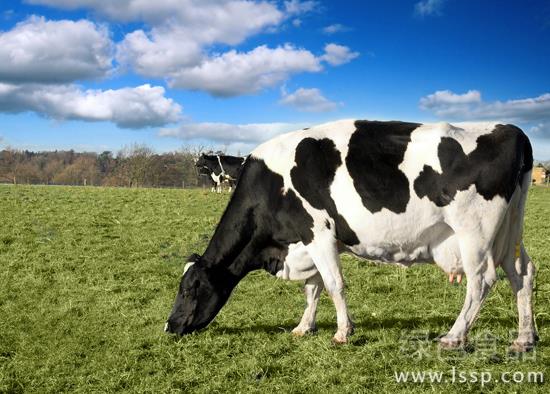
Be cautious when feeding silage to dairy cows in spring: master these feeding key points
Be cautious when using silage in spring: key points for feeding silage to dairy cows
-
What to Do When Oyster Mushroom Pinheads Die? Cause Analysis and Control Methods
In oyster mushroom production, due to unsuitable mushroom house environmental conditions and compost, as well as improper management or severe weather and other reasons, pinheads on the mushroom bed often shrink, turn yellow, and eventually die; sometimes pinheads on the bed surface die in batches, seriously affecting yield and economic benefits. For this, the author conducted extensive observational research and summarized the causes of mushroom death and control methods, presented as follows: 1 Continuous high temperatures In autumn mushroom production in northern regions, temperatures go from high to low, which is suitable for the growth and development of oyster mushroom fruiting bodies
-
When is the best breeding time for dogs?
After a puppy is born and reaches a certain age, the male dog can produce sperm capable of fertilization, which is called sexual maturity. Maturity does not mean that the period for possible breeding has arrived, because the dog's body has not yet fully developed and matured. About 12 months of age is the suitable time to begin breeding. Generally, small dogs reach sexual maturity earlier, while large dogs reach sexual maturity later. It is generally believed that sexual maturity occurs at 8-12 months after birth, and some as early as 6 months. It also varies across different regions of the country. For small and medium-sized dogs, 1-1.5 years of age, the survival rate of offspring is high.
条件筛选