-
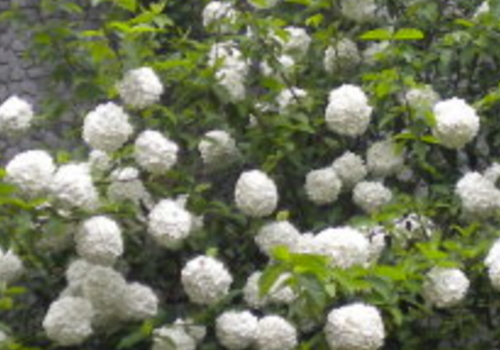
A Detailed Guide to the Cultivation and Propagation Methods of Guelder Rose
Guelder rose is a plant that many people like and is very popular. How do you grow guelder rose? How do you propagate it? How to grow guelder rose: 1. Soil: Guelder rose has strong adaptability and can be cultivated in sandy soil, clay soil, and general soil. Seedlings grown in sandy soil have well-developed root systems. 2. Transplanting: Guelder rose is easy to transplant and survive.
-
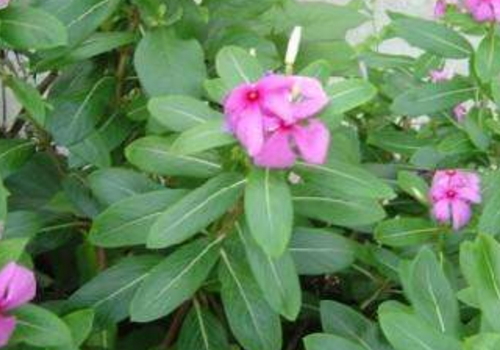
How do you grow Madagascar periwinkle (Catharanthus roseus) so it bursts into a full pot? Solve yellowing leaves this way
Many people grow Madagascar periwinkle in their daily lives, and they run into some problems. How do you grow Madagascar periwinkle so it bursts into a full pot? What should you do about yellowing leaves? How to grow Madagascar periwinkle so it bursts into a full pot: 1. Soil: when planting Madagascar periwinkle, you must never choose saline-alkaline soil, and the soil must have good drainage and air permeability.
-

Rose cultivation should be carried out according to differentiated needs
Different people appreciate roses from different angles, and different rose varieties may have different uses. Therefore, rose producers need to be good at discovering these situations and actively explore cultivation methods for different rose varieties to respond to ever-changing market demands. Overall, roses have certain weaknesses
-

Evening primrose, tuberose, mountain sesame, wild sesame
Scientific name: Oenothera biennis. Common names: tuberose, mountain sesame, wild sesame. Type: perennial herbaceous plant. Origin: native to North America, introduced to Europe and then spread throughout the world. Family and genus: Onagraceae, genus Oenothera. Growth characteristics: evening primrose is cold-tolerant, drought-tolerant, tolerant of poor soil, light-loving, and intolerant of waterlogging; bolting and flowering require a certain low-temperature stimulus. Morphological characteristics: biennial plants are 100-140 cm tall; annual plants are 60-90 cm tall. Basal leaves grow in a rosette
-
Detailed Explanation of Key Cultivation Techniques for African Roselle (Red Peach K)
"Red Peach K", whose proper name is roselle (Hibiscus sabdariffa), is a plant of the genus Hibiscus in the Malvaceae family, native to Africa. "Red Peach K" has been introduced and cultivated in China, with a fruit yield per plant reaching as high as 5 kg, a yield per mu (1 mu = 667 sq m, the same below) exceeding 3000 kg, and an output value per mu reaching over 30,000 yuan. The "Red Peach K" fruit is actually the calyx of roselle. The calyx and bracteoles are used to make fruit pulp, beverages, extract pigments, etc. "Red Peach K" also has pharmacological functions such as lowering blood pressure, quenching thirst, promoting bile secretion, aiding digestion and enriching the blood. After several years of cultivation practice, we have explored
-
Other names for the rose myrtle (Rhodomyrtus tomentosa) include renzi, shanren, gangren and shanru.
Other names: renzi, shanren, gangren, commonly known as "shanru". Morphological characteristics: the plant is short, 1-2 m tall, with opposite leaves and short petioles, 4-6 mm; leaves are leathery, elliptical or obovate, 3-6 cm long and 1.5-3 cm wide, with a blunt apex and a wedge-shaped base, dark green and hairless on the surface, grayish-green and densely covered with down on the underside. Cymes are axillary, with 1-3 flowers about 2 cm in diameter, in red, pink, white, http://www.cnefs.com">rose
-
Detailed Explanation of Key Fertilization Techniques for Lilies and Roses
Ms. Xi from Quanjiao, Anhui, asks: I grow lilies for their bulbs. How should I fertilize them to achieve high quality and high yield? Expert: Lilies are perennial plants and should be given heavy applications of organic fertilizer. The seedling stage is relatively long, so organic fertilizer should be the mainstay, reasonably combined with nitrogen, phosphorus and potassium chemical fertilizers. First, choose a sandy loam soil with deep soil layers and good drainage. Before planting, in conjunction with deep plowing and soil preparation, apply 2000-3000 kg of decomposed organic fertilizer, 10 kg of urea, 20-30 kg of superphosphate, and 10-15 kg of potash fertilizer per mu. Topdressing is divided into three applications, applied in conjunction with shallow plowing and weeding
-
Introduction to the cultivation techniques and management methods of the rose apple (water rose apple)
The rose apple (water rose apple) is an evergreen tree of the Myrtaceae family, 6-12 m tall. Bark smooth, grayish-brown, branching low, clear trunk height 1.5-3 m; crown oblate-spherical. Leaves opposite, leathery, lanceolate or long elliptic, 11-20 cm long, 3-5 cm wide, apex acuminate, base broadly cuneate, margin entire, leaf surface glossy, with transparent glands and marginal veins; petiole 7-10 mm long. Cyme terminal; flowers white, 3-4 cm in diameter; stamens numerous, about 25 cm long, delicately fragrant. Drupaceous ber
-
How to Grow Primroses? A Detailed Guide to Primrose Cultivation Techniques
Primrose (Primula spp.), also known as yingcao or nianjinghua, belongs to the family Primulaceae and the genus Primula. It is widely cultivated around the world and has developed rapidly in recent years, becoming an important garden flower. Blooming in early spring is an important characteristic of this genus. (I) Morphological characteristics and species: perennial herbaceous plants with persistent roots, but most are cultivated as annual or biennial flowers. The plants are low-growing, with all leaves basal, forming a rosette-like leaf cluster. Flowers come in red, yellow, orange, blue, purple, white and other colors, arranged on the flower buds in
-
What are the control methods for primrose leaf spot disease?
Symptoms The disease occurs on the leaves. The spots are usually 3-4 mm in diameter and brown; in severe cases, the diseased leaves wither and die, causing defoliation. The disease spreads from the lower leaves to the upper leaves. The pathogen is Ramularia primulae Thumen, the primrose Ramularia fungus. It belongs to the Deuteromycotina fungi. The conidiophores emerge from the stomata, growing in clusters of several branches, very short, unbranched, colorless, with slightly curved tips; the conidia are cylindrical or short club-shaped, single-celled or two-celled, colorless, measuring 16-24 x 3-4 micrometers. Transmission routes and conditions for disease development
条件筛选