-

The plane tree fluff problem is expected to be solved: Huazhong Agricultural University has cultivated hairless plane trees
It was learned from Huazhong Agricultural University that the university has cultivated hairless plane trees, which is expected to solve the problem of plane tree fluff pollution. The scientific name of the French plane tree is "Platanus", and it has advantages such as fast growth and a large, dense canopy, and is known as one of the "world's five major street trees." But from April to June each year, the seed balls of Platanus scatter and the pappus flies about, not only polluting the environment but also affecting people's health. For this flying fluff pollution, chemical pruning is mostly used in China, that is, spraying chemical agents to promote early shedding of the seed balls. But this method is labor-intensive and time-consuming, and is not easy to promote on a large scale.
-
How to solve the weeding problem in dry Pinellia ternata? An analysis of practical methods
Dry Pinellia ternata is a dicotyledonous plant. In the cultivation process of this medicinal material, the weeding problem is rather tricky, and there is currently no clear and effective method; it is still mainly manual weeding, and no herbicide weeding trials have been conducted. It is said that an expert specializing in Pinellia once used glufosinate after sowing dry Pinellia, with slight effect, but we do not know the specific dilution concentration. You might try using glufosinate starting from a low concentration (100-fold solution), testing in a small area with a gradient of ratios, and after observation, once it is confirmed that the herbicide has a clear killing effect on other weeds and
-
Common problems and countermeasures during the black fry stage of Japanese eel
At the turn of spring and summer, Japanese eel farming in various regions is mostly in the black fry stage, and it is commonly reported that there are phenomena such as a decline in feeding rate and a tendency for gill rot and tail rot syndrome to occur, seriously affecting the healthy, sustainable, and steady development of Japanese eel farming. The main problems existing in the black fry stage of Japanese eel farming are now analyzed, and some corresponding countermeasures are proposed for reference. 1. Decline in feeding rate: In Japanese eel black fry farming, the phenomenon of a decline in feeding rate or difficulty in increasing the feeding amount occurs, and the main triggering factors are
-
Technical Problems and Solutions for the "Two No" Cotton Cultivation Technique
The "Two No" cotton cultivation technique refers to cotton seedling raising in soilless substrate and transplanting of bare-root seedlings without carrier. From 2004 to 2005, after demonstrations at more than 80 county sites across the country, some technical problems were found, and the following solutions are proposed: 1. Excessive seedbed density Main causes: First, rows were not marked out at 10 cm row spacing and 3 cm plant spacing; second, the sowing rate was too high with too many seeds; third, after emergence, seedlings were not thinned in time, resulting in leggy or spindly seedlings. Solutions: First, mark out rows at 10 cm row spacing and 3 cm plant spacing; second, sow according to plant spacing,
-
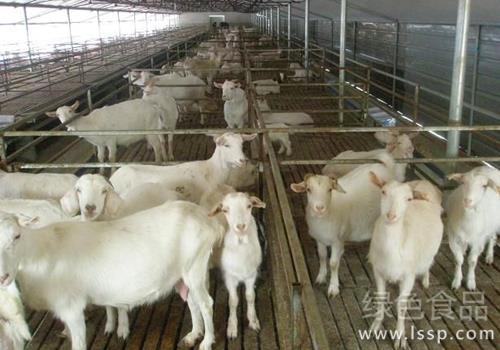
Key points of goat barn feeding technology, solving the problem of limited environments for traditional grazing
Technical points of goat barn feeding due to environmental restrictions on traditional grazing
-
Analysis of the Current Status and Existing Problems of Upland Rice Production
Upland rice, also known as dryland rice, is a type of cultivated rice with strong drought resistance, tolerance to poor soil, and suitability for dryland direct seeding and dryland management. It can be planted in any soil suitable for growing major dryland grain crops such as wheat and corn. It does not require water layer management throughout the entire growth period, and its irrigation volume is only 1/4 to 1/10 that of paddy rice. Upland rice is more drought-tolerant and barren-tolerant than paddy rice, and has the water-saving characteristics of low input and high output. I. Overview of World Upland Rice Production Currently, the world's upland rice planting area is 0.18 billion hectares. In West Africa, upland rice accounts for more than 75% of the rice growing area, and in
-
Current Status, Existing Problems and Future Development Directions of Sericulture in Guizhou
1 Current Status of Development As a traditional export industry of China, the cocoon and silk industry, since entering the "10th Five-Year Plan" period, has adhered to a market-oriented approach, taken development as its theme, and relied on reform, opening up and scientific and technological progress as its driving forces. By comprehensively applying the state's reform and development policies, strengthening macro-control, and intensifying structural adjustment, it has effectively overcome the phenomenon of "drastic fluctuations," enabling the entire industry to emerge from the trough and basically maintain sustained and steady development. The quality of economic operation has improved markedly, with production capacity, efficiency and export earnings surpassing the best historical years. "Chinese silk
-
8 common appearance problems of bagged Emerald pear and their solutions
Emerald is an excellent new pear variety bred by the Zhengzhou Fruit Research Institute, developed by crossing New Century and Zaosu. Since 2000, after 6 years of bagged cultivation through top-grafting to change the canopy in our city, we have found that this variety has a regular fruit shape, a smooth and glossy fruit surface, creamy white flesh, a crisp and tender texture with abundant juice, and few stone cells, making it an early-maturing pear variety of excellent quality. However, in production we have found that bagged pears often show abnormal phenomena such as black wrinkling, fruit russeting, tiger-skin markings, floral green coloration on the fruit surface, black spots, cracking, and deformities that affect the external quality of the fruit. For this reason we conducted an investigation and analysis and proposed solutions.
-
What problems exist in disease prevention for urban dog keeping?
Abstract: Currently, pets are developing rapidly in both urban and rural areas of China, especially the keeping of pet dogs in cities. In order to avoid and reduce the spread of canine diseases and zoonoses, this paper proposes standardizing the pet market, improving medical standards, and raising awareness and adopting countermeasures for rabies, canine distemper, and dog-human shared parasitic diseases. Urban residents mostly treat dogs as pets, and even when a dog dies, they cannot bear to eat it or send it to a restaurant; this is the custom of people's love for pet dogs over thousands of years. According to historical records, as early as 10,000 years ago, Persians and
-
What problems exist in deer disease prevention and control in our country?
For half a century, with the development of the deer farming industry, the number of farmed deer has grown increasingly large, deer have come into broader contact with the external environment, and the variety of deer diseases has continued to increase. At some deer farms, the mortality rate has reached over 10% (including deer that should have been culled but were not). Deer diseases have become one of the important risks in deer farming production. 1 Historical review. Understanding of deer diseases has advanced and improved along with the development of deer farming production. Our country has a history of deer farming spanning several thousand years, but it truly flourished after the founding of New China. In the early days after the founding of the People's Republic, few deer were farmed and deer diseases were also few
条件筛选