-
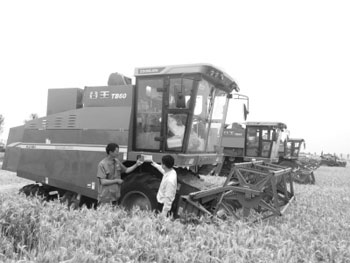
New wheat harvesters help summer harvest, one-touch repair request solves breakdown problems
New wheat harvesters welcome summer harvest, one-touch repair request frees you from worry
-

Ugly pears in Inner Mongolia earn 10,000 yuan per mu - no problem growing them
No problem for people in Inner Mongolia to grow ugly pears and earn 10,000 yuan per mu
-
Feeding Fresh Milk to Pigs Reflects the Deep-Seated Problems Behind the Global Dairy Industry Cold Snap
Feeding Fresh Milk to Pigs: The "Illnesses" Behind the Global Dairy Industry Cold Snap
-
What to Do About Abandoned Farmland? Multiple Measures to Tackle the Problem of Abandonment
Multiple Measures to Tackle the Problem of Abandoned Farmland
-
Survey of China's Urbanization: New Problems and New Trends
Survey of New Problems and New Trends in China's Urbanization
-
Solving the rural finance problem cannot rely solely on the market
Solving the rural finance problem cannot rely solely on the market
-
Brittle-stem rice: a new variety from the Chinese Academy of Sciences tackles the straw-returning problem
New brittle-stem rice variety from the Chinese Academy of Sciences helps solve the straw-returning challenge
-
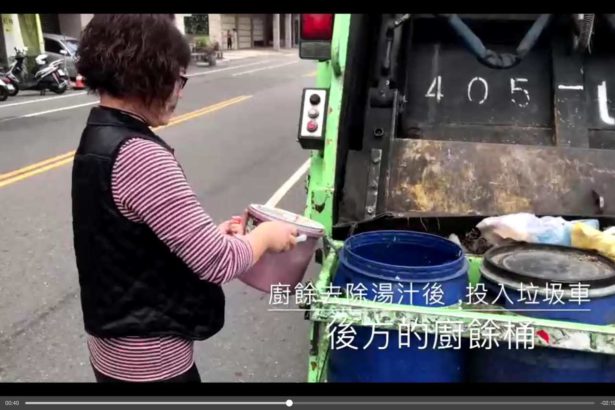
How many tons of food waste are produced every day? An analysis of disposal problems and organic fertilizer output
The battle between epidemic prevention and food waste, part 06: A full inventory of food waste generation and disposal capacity across Taiwan (the six special municipalities)
-
Current Status, Existing Problems and Future Development Directions of Sericulture in Guizhou
1 Current Status of Development As a traditional export industry of China, the cocoon and silk industry, since entering the "10th Five-Year Plan" period, has adhered to a market-oriented approach, taken development as its theme, and relied on reform, opening up and scientific and technological progress as its driving forces. By comprehensively applying the state's reform and development policies, strengthening macro-control, and intensifying structural adjustment, it has effectively overcome the phenomenon of "drastic fluctuations," enabling the entire industry to emerge from the trough and basically maintain sustained and steady development. The quality of economic operation has improved markedly, with production capacity, efficiency and export earnings surpassing the best historical years. "Chinese silk
-
Common problems and countermeasures during the black fry stage of Japanese eel
At the turn of spring and summer, Japanese eel farming in various regions is mostly in the black fry stage, and it is commonly reported that there are phenomena such as a decline in feeding rate and a tendency for gill rot and tail rot syndrome to occur, seriously affecting the healthy, sustainable, and steady development of Japanese eel farming. The main problems existing in the black fry stage of Japanese eel farming are now analyzed, and some corresponding countermeasures are proposed for reference. 1. Decline in feeding rate: In Japanese eel black fry farming, the phenomenon of a decline in feeding rate or difficulty in increasing the feeding amount occurs, and the main triggering factors are
条件筛选