-

-

How much exactly does planting affect the flowering period?
The flowering time of campanula is also closely related to the planting time. Campanula likes a cool environment, so planting in spring or autumn is most suitable. But different planting times lead to earlier or later flowering. Under natural conditions (open-field planting), if sown in January or February with a suitable environment, campanula will grow to full size by summer.
-
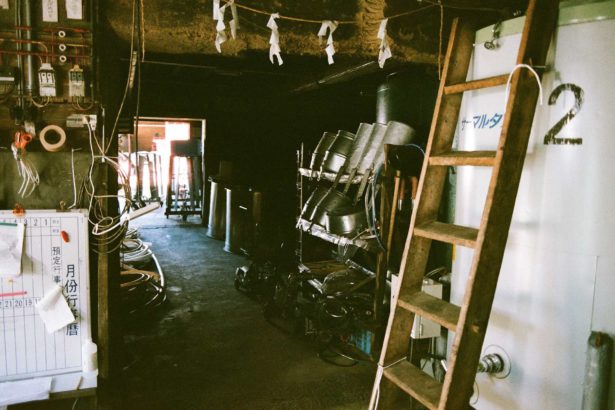
How exactly is Japanese sake brewed? How rice, water, and microorganisms dance together
Li Jianwei / The Heart of Sake 02: How exactly is Japanese sake brewed? Rice, water, and microorganisms dancing together
-
Water-seeded direct-seeded rice has many advantages; what exactly are they?
Depending on the soil moisture conditions at the time of land preparation and the method of land preparation and sowing, direct-seeded rice can be divided into dry direct seeding and water direct seeding. Dry direct seeding can further be divided into methods such as sowing on stubble first followed by shallow rotary tillage, and rotary tillage first followed by sowing. The land preparation and sowing procedure for water direct seeding is roughly as follows: after applying base fertilizer, add water and rotary tillage, open furrows, level the field with water, then sow and press the seeds into the soil. Compared with dry direct-seeded rice, water direct seeding has the following advantages. First, more seedlings emerge and emergence is uniform, which is conducive to cultivating strong seedlings. In water direct-seeded fields, the bed surface is level, and there is mud slurry on top; after pressing the seeds into the soil, no seeds are left exposed, emergence is fast and
-
What exactly are the morphological characteristics of privet (Ligustrum)?
It generally grows about 6 m tall. The leaves are leathery and brittle, ovate, broadly ovate, elliptic, or ovate-lanceolate, 6-12 cm long, hairless. The panicle is 12-20 cm long. The drupe is oblong, purplish-blue, about 1 cm long. It is an evergreen tree with an ovate crown. The bark is grayish-green, smooth, and does not crack. The branches spread out, smooth and hairless. The leaves are simple and opposite, ovate or ovate-lanceolate, with an acuminate apex and a cuneate or nearly rounded base, entire, dark green and glossy on the surface, hairless, and light green and leathery on the underside. It blooms from June to July, with white flowers in terminal panicles.
-
What exactly is dog hand fear syndrome
When dealing with dogs, the handler should try to play only the role of showing affection and giving commands. And must never leave the dog with any impression of threat or intimidation. Now let us talk about dog "hand fear syndrome." This "hand fear syndrome" in dogs is caused by improper hand movements by the handler during daily training, which create an impression of danger and fear in the dog. So much so that afterward every gesture of the handler, whether it is a command given to it or an expression of affection, makes the dog feel frightened and uneasy, and some dogs, as soon as they see a gesture from the handler or other people,
-
Black locust is easy to establish when planted in autumn, and autumn is exactly the right season for planting
In the past dozen years or so, spring drought has been severe in Lincheng County, with temperatures rising quickly and soil temperatures rising slowly. Especially after newly planted black locust seedlings are watered, the soil temperature remains low for a long time, causing the aboveground parts to sprout and grow while the root system recovers slowly, which reduces the survival rate of black locust. In autumn, by contrast, temperatures gradually drop, transpiration is lower, soil moisture content is relatively stable, and black locust seedlings have accumulated relatively rich nutrients. Tree roots have no natural dormant period, and when the soil temperature is still high, the roots of black locust planted in autumn can still resume growth. As long as the winter frozen soil layer is not thick,
-
What exactly causes garlic to grow in clusters?
Recently, in Anqiu, Cangshan, Zhucheng and other places, most of the garlic has already had its garlic scapes harvested, and at this time the underground garlic can still grow for a while, but according to vegetable growers in the above areas, the garlic has shown an abnormal growth condition, namely the clustering phenomenon. In this regard, researcher Liu Mingjie, chief expert of the Shouguang Vegetable Association and the "Rural Mass Shandong Vegetables" weekly, personally went down to the fields to investigate this poor growth condition of garlic. The specific manifestation is that at the junction of the leaf sheath and leaf blade of the garlic plant, 1 to 6 new leaves grow. Pulling
-
September is exactly the right time to plant honeysuckle
Cutting propagation: Carry out cuttings in early spring before the new buds sprout, or in autumn from September to October. The seedbed should be close to a water source, with the soil deeply plowed and plenty of base fertilizer applied. Make raised beds 1.3 m wide. Select robust, pest- and disease-free 1- to 2-year-old branches, cut them into cuttings about 33 cm long, and remove the lower leaves. Then open horizontal trenches on the bed at a row spacing of 27-30 cm, with the trench depth depending on the length of the cuttings. Place 10-15 cuttings in each trench, bury 2/3 of each cutting in the soil, and firm the soil after filling.
-
What exactly is inbreeding in dogs?
Inbreeding is a method of breeding in which male and female dogs that are very closely related by blood are mated to produce offspring. That is, matings between father and daughter, mother and son, and brother and sister. From the standpoint of moral norms and scientific principles, humans consider inbreeding absolutely harmful to the evolution of the breed, but from the perspective of dog breeding, inbreeding can reduce genetic variation and preserve the original superior qualities. However, inbreeding may produce particularly outstanding puppies, and it may also produce puppies that are weak in constitution, deformed, intellectually disabled, and incapable of reproducing. From the standpoint of medicine and eugenics
条件筛选