-

Observation of the embryonic development process of Neosalanx taihuensis
In order to master the artificial breeding technology of Neosalanx taihuensis and improve the success rate of stock enhancement and release of icefish, we conducted systematic observation experiments on the development process of fertilized eggs of Neosalanx taihuensis. The experiment report is as follows: 1. Materials and Methods 1. Materials: The fertilized eggs of Neosalanx taihuensis used in the experiment were obtained from the artificial breeding base of Neosalanx taihuensis at Xintang Bridge, Zhicheng Town, Changxing County, and the incubation water was filtered water from Basan Reservoir. 2. Time: April 30 to May 13, 1999,
-
A Comprehensive Interpretation of the Development of the Ornamental Fish Industry
I. Overview of the Development of China's Ornamental Fish Industry 1. The Development History of China's Ornamental Fish Industry China is the hometown of the goldfish. Goldfish have been kept by Chinese people for more than 2,000 years, and were introduced to the West in the early 16th century, where they were highly favored by European and American countries and called the "sacred fish of the East." Goldfish have become a worldwide species and occupy an important position among ornamental fish. 2. The Current Development Status of China's Ornamental Fish Industry The rapid development of ornamental fish in China began in the late 1980s and early 1990s
-
What are the prospects for snake farming? An introduction to the development prospects of snake farming
Because snakes have significant economic value, many people, directly driven by profit, have taken up professional snake catching as a trade to gain substantial economic benefits. Therefore, it is recommended that the relevant departments strictly crack down on and ban this destructive and predatory illegal behavior, and resolutely stop it. In this way, the sharp decline in the natural population of wild snakes can be reduced, in order to prevent severe damage to the ecological environment and cause even greater losses that harm future generations. Therefore, active and effective protection measures should be taken to promote the recovery and expansion of snake populations as quickly as possible in a short period of time, and restore the ecological balance necessary for humanity.
-
Analysis and Reflections on the Disease Development Trends of Laying Hens and Broilers
At present, with the scaling up and intensification of poultry farming, poultry diseases are gradually tending toward younger age of onset and increasing complexity, especially diseases of laying (and meat) chickens, which are becoming more and more complex. Once an outbreak occurs, it is very difficult to eradicate, greatly reducing economic returns. The following is a summary of the new characteristics of disease epidemics in laying (and meat) chickens during production, for the reference of fellow farmers. I. Tendency toward younger age of onset and early disease onset: respiratory symptoms appear as early as 3-5 days of age in meat poultry, manifesting as slight nasal shaking and coughing, especially after the first vaccination with the small triple vaccine, due to immune
-
What to Do When Cattle and Sheep Develop Acute Bloat? A Detailed Guide to Emergency Measures
When cattle and sheep consume large amounts of peanut vines, pea vines, alfalfa, or other legume stems and leaves, or dew-covered grass, they are prone to developing acute gastrointestinal bloat. For severely affected animals, the first step should be to release gas and reduce pressure. After venting, inject vegetable oil or paraffin oil through the trocar opening: 20-40 ml for cattle and 10-15 ml for sheep; Lysol may also be injected: 15-20 ml for cattle and 5-10 ml for sheep. To stop fermentation of rumen contents, administer orally the clear supernatant of 10% quicklime water: 500-1500 ml for cattle and 100-50 for sheep
-
Key Technical Points and Management Methods for Uniform Silkworm Larva Development
Uniform silkworm larva development is the primary guarantee for implementing automated mounting of silkworms (spinning on frames), and an important prerequisite for ensuring high-quality and high-yield silkworm cocoons. To achieve uniform silkworm larva development, the following aspects of work must be done well: 1. Properly protect the silkworm eggs after receiving them to promote uniform hatching. Immediately after receiving the silkworm eggs, pour them out and spread them evenly in a foil-lined tray with white paper, and keep them in an environment with a temperature of 26°C, a wet-dry difference of 1.5-2°C, and darkness (covered with black cloth) for protection. On the morning of the hatching day at 4-5 o'clock, uncover the covering, turn on
-
Current Status, Existing Problems and Future Development Directions of Sericulture in Guizhou
1 Current Status of Development As a traditional export industry of China, the cocoon and silk industry, since entering the "10th Five-Year Plan" period, has adhered to a market-oriented approach, taken development as its theme, and relied on reform, opening up and scientific and technological progress as its driving forces. By comprehensively applying the state's reform and development policies, strengthening macro-control, and intensifying structural adjustment, it has effectively overcome the phenomenon of "drastic fluctuations," enabling the entire industry to emerge from the trough and basically maintain sustained and steady development. The quality of economic operation has improved markedly, with production capacity, efficiency and export earnings surpassing the best historical years. "Chinese silk
-
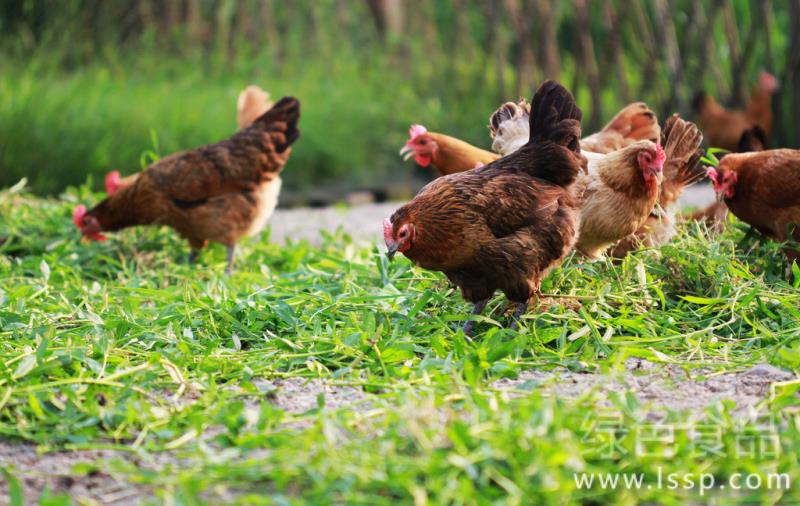
Feeding green fodder to chickens can promote growth and development, but what precautions should be taken?
Green fodder promotes chicken growth and development; precautions for feeding green fodder to chickens
-
Analysis of the Current State of Snakehead Farming and Interpretation of Its Future Development Prospects
People customarily refer to fish of the family Channidae collectively as snakehead, blackfish, caiyu, shengyu, and so on. The snakehead (Channa argus) is the most widely distributed and highest-yielding species among the Channidae. As market demand grows, the snakehead may become one of the most promising aquaculture species in China in the early 21st century. China has a total of 7 species of Channidae, namely the snakehead (Channa argus), the spotted snakehead (Channa maculata), the dwarf snakehead (Channa asiatica), the broad-headed snakehead (Channa gachua), the striated snakehead (Channa striata), the slender snakehead (Channa limbata) and the elongated snakehead (Channa elongata). Among them, only the snakehead is a widespread species, distributed across all the major river systems of the country and also the highest in yield, while the spotted snakehead, the dwarf snakehead and the broad-headed snakehead are distributed only in South
-
The development prospects for Butterfly Bush are extremely broad
Butterfly Bush is the most popular landscaping tree species in Europe and America, and is highly suitable for promotion in North China, Central China, East China, and parts of Northeast and Northwest China. In terms of landscaping effects, this tree species has many advantages. It is a perennial, fast-growing, semi-evergreen shrub with grayish-green leaves that are large and opposite, about 25 cm long. From summer to late autumn, it continuously blooms with lush panicles, the inflorescences about 40 cm long, in diverse colors including purple, blue, pink, white, and yellow. The flowering period lasts up to 6 months, which can compensate for the scarcity of blooming plants in summer. The flowers have a strong fragrance, attracting many
条件筛选