-

Identification and Control Methods for White Grub Infestation in Codonopsis pilosula
Belonging to the order Coleoptera, family Scarabaeidae. It is the larva of the scarab beetle, mainly active in the soil, damaging the roots of Codonopsis pilosula. White grubs generally have one generation per year, with larvae or adults overwintering in the soil. After temperatures rise in the following spring, white grubs gradually move upward in the soil; when the soil temperature reaches above 15°C, they move into the topsoil layer above 10cm to feed. When summer temperatures rise and the soil dries out, they descend to deeper soil layers and stop feeding or moving. In autumn they return to the topsoil layer to be active, and after October they successively burrow down below 30cm to overwinter.
-
Understanding a Dog's Tail Language: Decoding the Meaning Behind Tail Movements
A dog's tail conveys certain meanings through movement, reflecting its level of intelligence, social status and inner feelings. Tail wagging can appear in dogs as early as 20 days of age. Information is generally conveyed through three channels: posture, movement and shape. Because a dog's eyes are more sensitive to movement than to colour or shape, it uses tail wagging to communicate. 1. Stiff and extended straight out: this generally carries an aggressive meaning, a way of issuing a challenge when facing strangers and intruders. It can also be used when two dogs that do not know each other meet for the first time, as a rather cautious greeting.
-
Detailed Explanation of the Morphological Characteristics and Suitable Growing Environment of Codonopsis pilosula
[Morphological characteristics] Codonopsis pilosula is a perennial herbaceous vine. The root is cylindrical, with a light gray surface layer and a chrysanthemum-heart pattern inside. The stem twines, and its cut surface exudes white milky sap; the stem is long and much branched, with short rough hairs on the lower part and smooth on the upper part. The leaves are opposite or alternate, stalked, with ovate or broadly ovate blades and entire margins. The flowers are borne singly in leaf axils or at the tips; the corolla is broadly bell-shaped, pale yellow-green, with pale purple spots, 5-lobed at the apex, with triangular lobes. The capsule is conical. The seeds are small, brown, and glossy. The flowering period is August to September, and the fruiting period is September to October.
-
What are the biological characteristics of Codonopsis pilosula? A comprehensive guide
Codonopsis pilosula has strong adaptability and prefers a mild, cool climate. Its requirements for water, temperature, and sunlight differ at different growth stages. The suitable temperature for seed germination is 18-20°C. Seedlings prefer shade, while mature plants prefer light. It can tolerate high temperatures of 33°C and can also overwinter safely at -30°C. Root rot is prone to occur under poor drainage and high temperature and humidity conditions. Codonopsis pilosula is a deep-rooted plant, and the ideal soil pH is 6.5-7.0. It is not suitable for continuous cropping, and generally should be replanted after an interval of 3-4 years. The previous crop is best as legumes or grasses. Codonopsis
-
What kind of ecological environment does Codonopsis pilosula need to grow?
One-year-old Codonopsis pilosula seedlings are trailing and rarely flower. Plants more than two years old are twining and generally flower. During the growing period, it has strong adaptability to the environment. Wild Codonopsis pilosula is distributed vertically at altitudes of 1400-2100 m, growing in zones with half shade and half sun or on shady slopes, with a slope of about 15°-20°. Codonopsis pilosula is a deep-rooted plant, suitable for growing in deep, loose, well-drained sandy loam rich in humus. The soil pH should preferably be neutral or slightly acidic, generally with a pH value between 5.5 and 7.5. Codon
-
Broadcasting Methods and Key Sowing Techniques for Codonopsis pilosula
First rake off the surface dry soil, use a scraper to level the bed surface, evenly broadcast the seeds over the bed surface, lightly sweep the bed surface several times with a broom, mix the seeds into the topsoil, and then compact. After sowing, cover the bed surface with 1 layer of rice straw, millet straw, corn stalks, etc., and then water appropriately, keeping the soil moist regularly to facilitate seedling emergence. Sowing rate: 15 kg per hectare for drilling, 15-20 kg per hectare for broadcasting. Codonopsis pilosula seeds are small; to sow evenly, the seeds can be mixed with an appropriate amount of fine sand before sowing. Direct
-
Detailed Explanation of Harvesting Methods and Primary Processing Techniques for Codonopsis pilosula
1. Harvesting and Storage of Codonopsis pilosula Seeds Although one-year-old Codonopsis pilosula plants can produce a small amount of flowers and seeds, many of the seeds are shriveled and do not easily sprout after sowing, or the seedlings that emerge are weak in growth, so they are not suitable for seed use. Two- to three-year-old Codonopsis pilosula plants produce more flowers and seeds, with plump grains, high yield, and good quality, and the seedlings grown from them are robust, making them suitable for seed use. Codonopsis pilosula seeds are generally harvested from September to October, when the fruits of two- to three-year-old Codonopsis pilosula turn yellowish-white and the seeds turn brown. After harvesting, dry them in the shade, place them in cloth bags or burlap bags, and store them at low temperature; the suitable temperature is below 10°C. 2. Codonopsis pilosula
-
Methods for Weed Control in Codonopsis pilosula and Key Technical Points
For fields where annual grass weeds such as barnyardgrass, crabgrass, foxtail, and giant foxtail are the main weeds, use herbicides such as napropamide (sethoxydim), quizalofop-p-ethyl, and fluazifop-p-butyl. ①2% sethoxydim emulsifiable concentrate at 75-100 g per 667 sq m. ②5% quizalofop-p-ethyl emulsifiable concentrate at 75-100 g. ③15% fluazifop-p-butyl emulsifiable concentrate at 75-100 g. Dilute the application rate in 15-20 kg of clean water and spray the stems and leaves of the weeds. Choose a sunny, windless day between 9-11 a.m. or after 4 p.m.
-
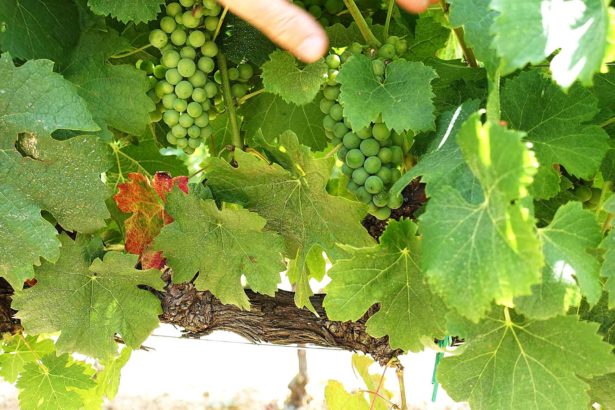
Sicilian Wine: Humans Crack the Code of Terroir and Varieties, Letting Grapes Shine
Sicilian Wine | Humans Crack the Code of Terroir and Varieties, Humbly Playing a Supporting Role, Giving Grapes a Hand to Shine
-

How to grow Codonopsis pilosula so it thrives? Key points of Codonopsis pilosula cultivation techniques
How to grow Codonopsis pilosula well
条件筛选