-

Lithops is a succulent plant in the Aizoaceae family
Lithops is native to southern Africa and the southwestern region, and is commonly found in crevices of rock beds and among gravel. It is described as a "living stone." It grows and blooms outside the rainy season, and when in full bloom, lithops seem to cover the desert with a huge flower carpet. But when the arid summer arrives, the desert once again returns to a world of "stones."
-

My private collection of lithops and thumb-pot succulents, this small town is full of girlish surprises
4 days?Foreword Qian Yan Love Succulents Love Life (WeChat ID: duorou91) Reply "Community" and 200K succulent friends to show off together! Reply in the backend "Beautiful Succulents", "Summer Survival, Watering, Leaf Cuttings, Soil Mixing, Pest Removal, Black Rot" to view related...
-

There are countless reasons why Lithops turn to mush, but there is only one solution
Many friends have asked why their Lithops turned to mush and died, and they could never keep them alive. In fact, the big problem is the soil, not the watering. In their native environment there is a severe lack of organic matter and humus, so Lithops adapt...
-

A pot of living stones (Lithops) grown to such stunning effect - his method is worth learning
Today I accidentally came across a couple's "High-Profile Succulent Love Show-Off Method" and found it really creative, so I'm sharing it with everyone! This is a young couple, and one day the girl suddenly said she wanted to go back to her parents' home to stay for a few days. Such a good opportunity - the guy absolutely would not...
-
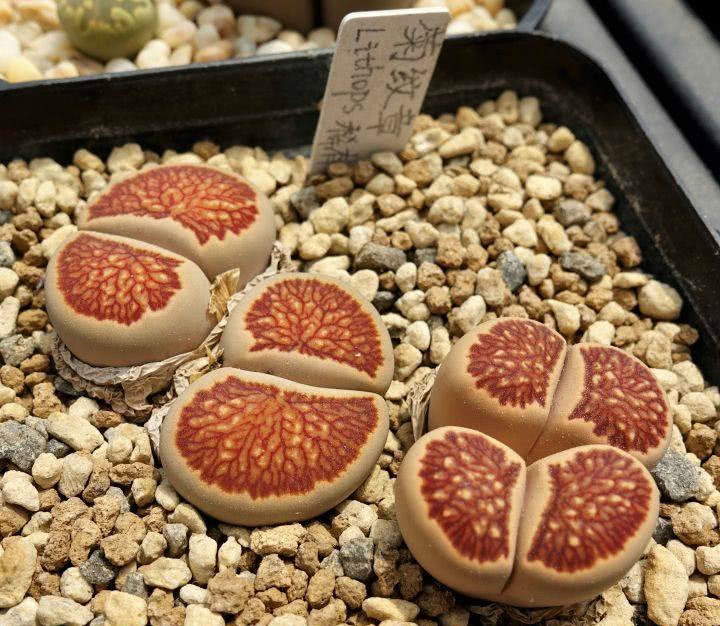
Lithops expert shares succulent care experience: quality matters more than quantity
Thanks to xiaoyi163 and timing for the material. The so-called experts are basically greenhouse growers - they pollinate by hand in large areas, just jabbing randomly and pollinating all over the place. How is that like hobbyists, who pollinate one plant to one plant with a single brush? The truly good ones basically will never be sold to you! And the price is not cheap either. ...
-
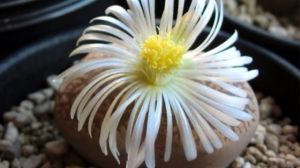
How to Care for Living Stones (Lithops)? Detailed Guide to Care Methods and Precautions
Growing living stones requires loose, well-aerated sandy loam soil and a consistently moist environment. The most suitable growing temperature is 15-25°C. In spring and autumn, they can be placed in direct sunlight. They can be propagated by seed sowing and by cuttings. Also, watch out for leaf spot disease and leaf rot disease.
-
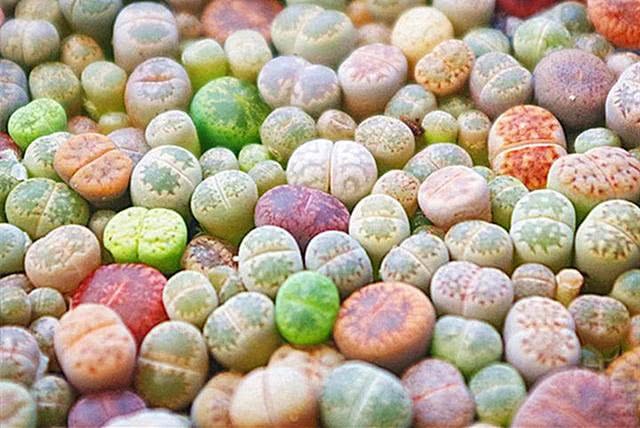
Growing Lithops this way, from dry and shriveled to plump and chubby, adorably cute beyond compare
A normal Lithops is adorably cute and beyond compare. But the ones we get from online orders often fall far short, all wrinkled, especially the underage little seedlings that look half-dead and simply unbearable to look at. This is because most...
-

7 big pitfalls to avoid in Lithops cultivation
Text and images: Curator Dark Wine-Red Dark Wine-Red is the only horticultural variety among Lithops that is precisely defined as wine-red. Besides, its name literally means wine-red! If you don't believe it, go translate it yourself. However, since people first came to know this...
-
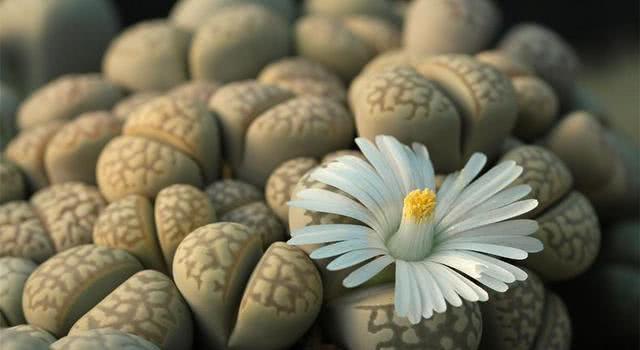
This is how you should water your Lithops - it's not too late to learn now
Because it has rained a lot these past two months. Although Lithops usually won't get frost damage in this season and can tolerate rain, that only applies to the rain from two months ago, which lasted just a few days. Nowadays, if you're not careful, the rain lasts for several weeks, and the succulents are very...
-
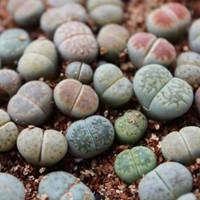
A Detailed Guide to the Distribution and Growth Habits of Lithops pseudotruncatella
Lithops pseudotruncatella is a succulent in the genus Lithops of the family Aizoaceae, and is a small variety among living stones. Its body is egg-shaped, often growing in clusters of around 20 heads, with pale gray-blue spherical leaves and distinct brown-green tree-branch-like markings on top.
条件筛选