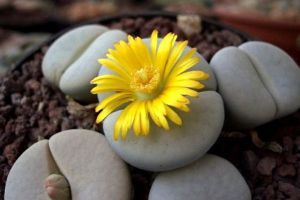
Lithops is a succulent plant in the Aizoaceae family
Other names for lithops
Stone flower, stone grass, elephant hoof, yuanbao, female immortal, butt flower.
Growth habits of lithops
Lithops likes a climate that is warm in winter and cool in summer, and is suitable for growing in a warm, dry environment with plenty of sunlight. It fears low temperatures and avoids strong light. The suitable growth temperature is 10~30°C, and it is best grown in loose, breathable, neutral sandy loam.
The growth form of lithops is rather special, and it undergoes molting during its dormant period. Appropriately reducing water in winter and summer helps with molting.
3-4-year-old lithops bloom in autumn from the gap between the opposite leaves, producing flowers in colors such as yellow, white, and pink. They mostly open in the afternoon, close in the evening, and open again the next afternoon. A single flower can stay open for 3-7 days. When blooming, the flower covers almost the entire plant, and it is very delicate and beautiful. In addition, some varieties will split into heads and form clusters after reaching a certain age. After the flowers fade, they produce fruit, from which very tiny seeds can be harvested.
The symbolic meaning of lithops
The symbolic meaning of lithops - tenacity, living gem, a sheep in wolf's clothing.
Related Articles
- How to prevent and control pests and diseases on desert rose? Ventilation and dryness are the key to prevention
- The three main causes of cotton diseases: climate, seeds and cultivation
- How to Grow Bird's Nest Fern in Water? Master Temperature, Light, and Water Change Techniques
- A Complete Guide to Identifying and Controlling Common Potted Flower Pests
- Do Carnivorous Plants Need Watering? Pot Watering and Wet/Dry Assessment Methods
- How to manage cotton during the flowering and boll-setting stage? Apply flowering and boll fertilizer heavily, use chemical regulation and pruning to prevent premature senescence
- How to Grow Chinese Hibiscus? Master These 5 Key Points for Blooms All Year Round
- How to Grow Tulips in Water? The Complete Process from Bulb Preparation to Blooming