-

What are the main varieties of loach known as "ginseng of the water"
Loach is also called fish loach or loach fish, and is more widely distributed in the south and less common in the north. They live in lakes and ponds and have high nutritional value, so they are also called
-
"Longevity food" sweet potato: what temperature is suitable for its growth? What cultivation and management techniques must be mastered to achieve high yields?
Sweet potato, also known as yam, red yam, sweet potato, fan shu, fan yu, and di gua (in the north), is rich in protein, starch, pectin, cellulose, amino acids, vitamins and various minerals, and has
-
<strong>How to Propagate Sedum pachyphyllum (Jelly Beans Succulent): Watering Tips</strong>
Sedum pachyphyllum is a succulent that does not like to grow in clusters, so it usually grows as a solitary single plant and rarely produces offsets. Therefore, when it comes to propagating Sedum pachyphyllum, the available options besides sowing seeds are only leaf cuttings and beheading cuttings. So how
-
"Environmental Guardian" Is Oleander Poisonous? Can It Be Grown Indoors? When Does It Bloom?
Oleander, also known as Bitao, Baiyangtao, Jiujiezhong, Liuyetao and so on, is often cultivated in parks, scenic areas, along roadsides, and around rivers and lakes. So is oleander poisonous? Can it be grown indoors? When does it bloom? Oleander is native to India and has strong adaptability.
-
"A delicacy at the banquet" - what is the market price of dried daylily flowers per jin? What nutrition do they have? How do you soak and rehydrate them after buying? Which cooking method tastes best?
Dried daylily flowers are a traditional vegetable deeply loved by people, originally called xuancao, known in ancient times as "forget-your-worries grass." They look golden yellow in color, smell fresh and fragrant, taste tender and smooth, and have very high nutritional value, so they are regarded as a delicacy at the banquet. They are grown throughout both northern and southern parts of our country.
-
"Wood ear fungus: what trees does it grow on? Is it a "feng-wu" (trigger food)? How long can it be soaked before it becomes toxic? What symptoms appear after eating it?
Wood ear has a delicious taste, can be prepared as a vegetarian or meat dish, and is rich in nutrients. Wood ear is sweet in flavor and neutral in nature, and has many medicinal benefits. So, what trees does wood ear grow on? Is it a "feng-wu" (trigger food)? How long can it be soaked before it becomes toxic? What symptoms appear after eating it? 1. What trees does wood ear grow on?
-
"The King of the Five Grains" Tartary buckwheat: what are its benefits and effects? What is the best way to eat it? Can you drink tartary buckwheat tea every day?
Tartary buckwheat is very common in daily life. Chinese people began eating tartary buckwheat very early on, and tartary buckwheat is hailed as
-
Matsutake is called the king of mushrooms, how much does it cost per jin?
The places where matsutake grows most are Sichuan, Yunnan and Nyingchi, and among them the matsutake of Nyingchi, Tibet is the most nutritious. The growing conditions of matsutake are rather unique: it needs to grow in forests where pine trees and gravel trees are mixed, and it cannot be cultivated artificially. Because it is scarce, it is
-
Can "high-protein" bee pupae be eaten raw? What are their effects and functions? Who should not eat them?
Bee pupae, as a delicious food, have been popular among the people for a long time. They generally refer to the larvae and pupae of wild bees such as hornets, wasps, black bees and ground bees. In many places in the southwestern region, the custom of gathering and eating bee pupae has been preserved to this day. So can bee pupae be eaten raw?
-
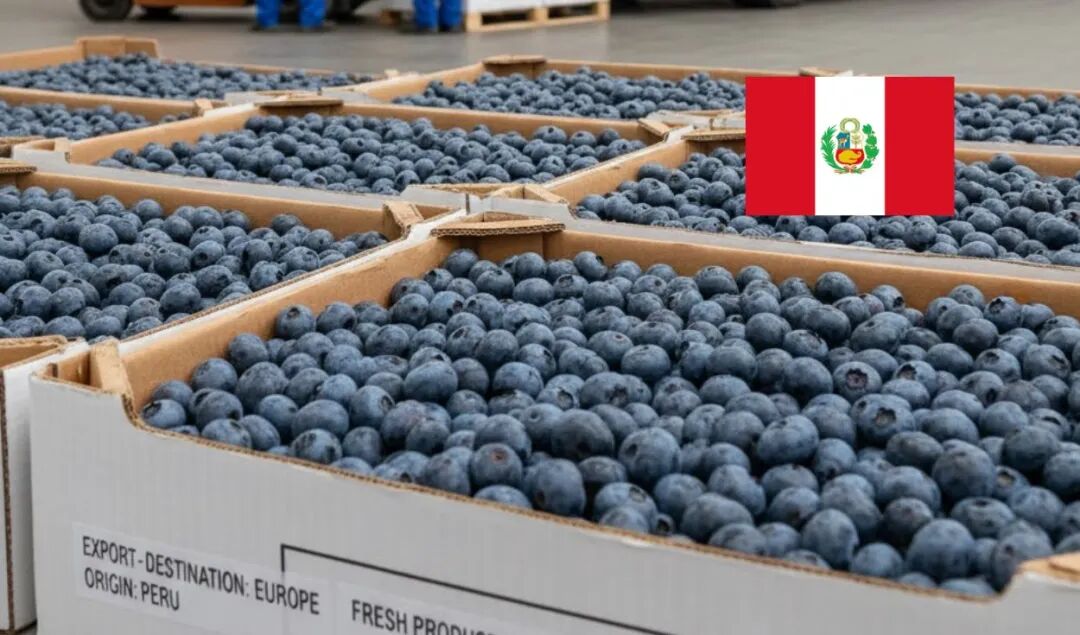
Peru blueberry 2026/27 season export forecast cut to 382,000 tonnes; El Niño shrinks peak week by 21%
The Peruvian Blueberry Association has cut its 2026/27 season export forecast for the fourth time to 382,000 tonnes, with the peak export week expected to shrink by 21%, and the organic blueberry forecast also lowered by 18%.
条件筛选