Taiwan's Fisheries Face an Unprecedented Crisis: An Exclusive Interview with Director-General Huang Hung-yen on Breaking Through in Distant-Water, Coastal and Offshore, and Aquaculture Fisheries
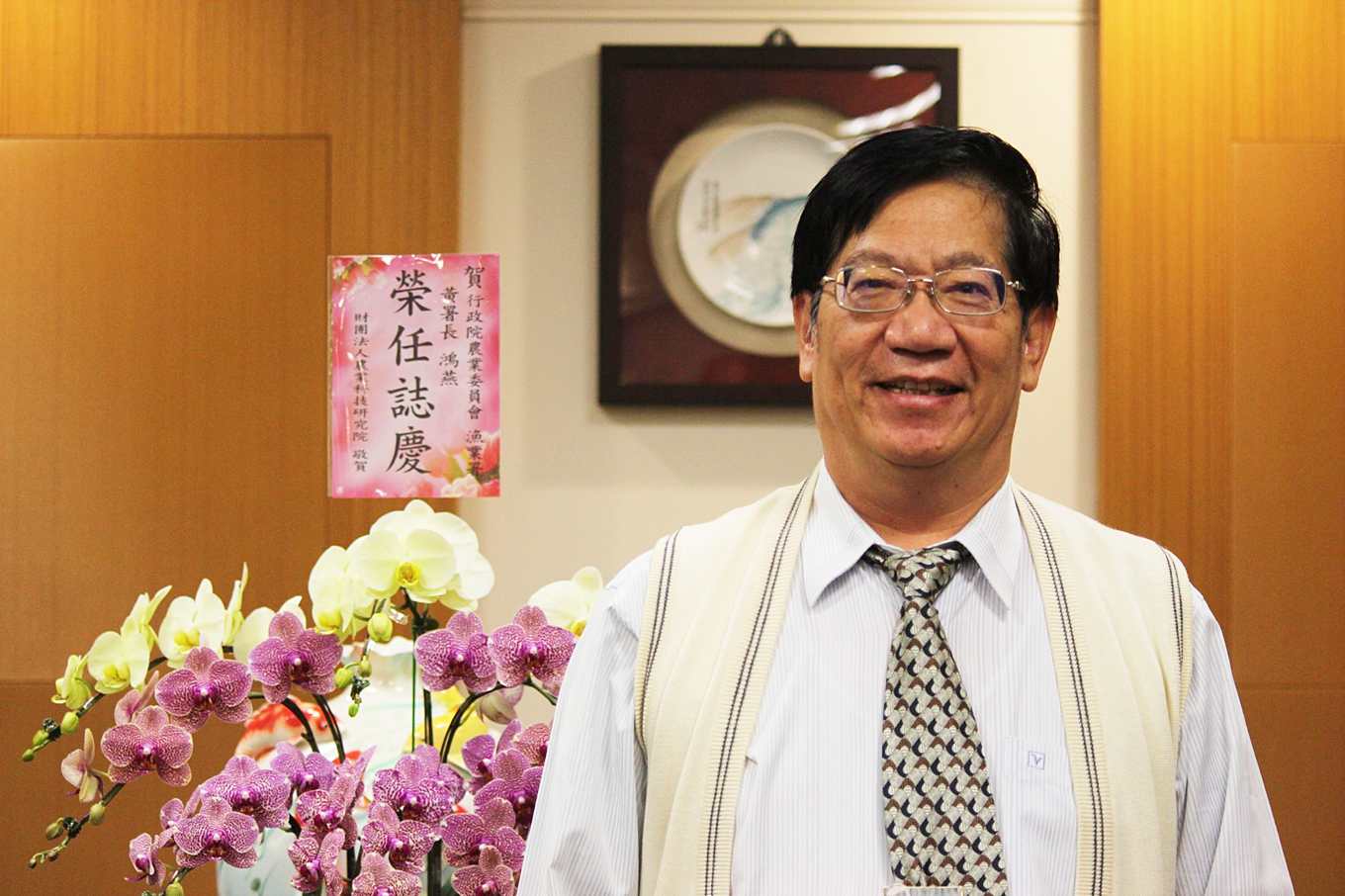
Newly appointed Fisheries Agency Director-General Huang Hung-yen officially took office on the 16th of last month, immediately facing multiple fisheries challenges. First, distant-water fisheries are facing a major crisis, having been issued a yellow card by the EU and kept on "probation" for more than a year without it ever being lifted; how to resolve this is seen as the top priority. In addition, coastal and offshore fisheries face the inability to fully implement landing declarations and a sharp decline in fishery resources, creating tension between resource management and fishermen's livelihoods. The challenges for aquaculture fisheries are also severe, from hard clams and shellfish "failing to grow," to poor adjustment of cultured fish species, with frequent surges in volume and price drops, quality control issues, and so on, all testing the new director-general's ability and determination.
Seeing Huang Hung-yen, with a professional background in "distant-water fisheries," take the helm of the Fisheries Agency, environmental groups also hope the new Fisheries Agency team will "bring international conservation management experience from distant-water fisheries into coastal and offshore waters, generating a positive influence." After all, coastal and offshore fisheries affect the livelihoods of hundreds of thousands of fishing households, and there is hope for more resources to be invested to restore coastal and offshore fishery resources. As the head of fishery resources for a maritime nation, how will he lead Taiwan's fisheries forward? Huang Hung-yen accepted an exclusive interview with "News&Market," explaining his policy direction after taking office, presented below in full in a question-and-answer format.

(The following is supplemented by the Aquaculture Fisheries Division of the Fisheries Agency)
As an administrative management unit, the Fisheries Agency's job is to provide operators with a good basic production environment. There are now 37 aquaculture fisheries production zones and 6 fish pond concentration zones. We will build clean drainage systems, improve clean drainage waterways, and lay out the basic environmental conditions properly.
In terms of industry guidance, policy can steer toward friendly aquaculture. In the early days, operators pursued higher volumes and stocked high-density fry, but later research showed that reducing stocking density is helpful for production. So we guide and change production management, using industry groups, experts, and scholars to hold briefing sessions.
As for the issue of genetic narrowing, industry groups have previously mentioned that some new varieties could be tried. Through administrative subsidy programs, operators can conduct introduction and trial cultivation. This is also a demonstration program; if feasible, it can then be promoted to aquaculture operators through extension education.
Q: Besides breeding and production volume issues, aquaculture fisheries have also frequently seen "price collapses." How will the Fisheries Agency stabilize the aquaculture fishery market?
That's right. Take Taiwan tilapia as an example: annual production is about 70,000 metric tons. After review, Taiwan tilapia exports are "supplementary"; the main focus is still supplying the domestic market. Strategically, on the one hand we promote to fishermen not to farm so much, hoping to reduce coastal Taiwan tilapia production from 70,000 to 50,000. It's not up to me alone; we have also held many meetings with industry groups, hoping to gradually convey this message to fishermen and tell them "you can only farm so much."
Encourage them not to farm so much. If there is extra, then farm something else, but what to farm? We need to give them suggestions. For cultured species, the government and the Fisheries Research Institute need to cooperate to help diversify species. For example, Yong'an in Kaohsiung now has an LNG cold-water aquaculture demonstration zone, so they can try it out. If cold-water fish can be successfully farmed in the future, it can be recommended to fishermen, because this kind of thing needs to be gradually dispersed and diversified.
Individual aquaculture farmers must be responsible for themselves. We have a stocking declaration system and will also conduct inspections and reports. I think there's no need to worry; these fishermen also clearly know what fish to farm and whether it will make money. As long as we tell them the right methods and how to do it, I think fishermen will cooperate. Fry are quite difficult to control, and producers are more important. Tell them this is their responsibility, that they must be responsible for themselves, and give them correct concepts and methods.
We are even thinking about whether, in the future, we should not farm so much on land. For some locations unsuitable for aquaculture, we should gradually persuade them not to farm. Now the government encourages solar power generation. So for these areas with land subsidence that are unsuitable for aquaculture, perhaps in the future we will also encourage them to generate solar power, rather than farming for the sake of farming, causing more land subsidence, and everyone farming in vain. This happens to align with national policy.
We are studying whether we can learn from the model abroad of farming salmon and high-value fish farther out at sea, and farm some high-unit-price economic fish species offshore. We used to farm in Penghu, but the area was too small. We can go farther offshore to farm, and land-based operations may also begin to transform.
Q: You are the head of fishery resources for a maritime nation. How will you lead Taiwan's fisheries forward?
Right now, the yellow card issue is definitely the top priority. Once the yellow card is lifted, it means distant-water fisheries are on track. Next, we need to focus our energy on "coastal and offshore fisheries." But coastal and offshore fisheries are not business we were familiar with in the past. Let's see in a year whether I will be more familiar with it and have more ideas. Although I don't know how long my term will be, I still hope to establish the system.
In the future, "sustainable fisheries" will absolutely be the focus. And how do we achieve the four words "sustainable fisheries"? It depends on "scientific research" as the reference for policymaking. Basic data research cannot be completed overnight; it requires long-term accumulation. Only after the basic work is gradually implemented will there be a chance to formulate the correct policy direction and lead Taiwan's fisheries step by step toward sustainability.