Is the Giant Taro the same as the Peace Lily? Understanding the differences between the two in one article
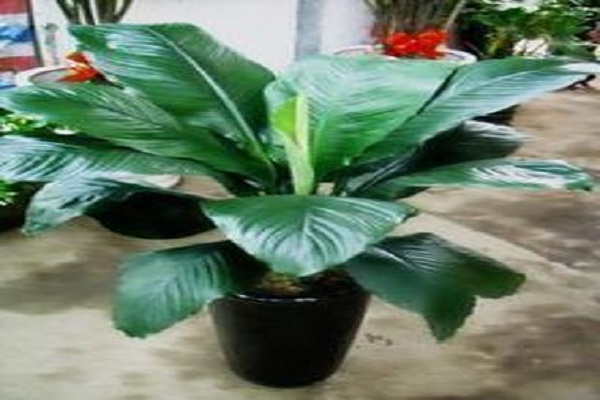
I. Giant Taro
1. Morphological characteristics
It belongs to the Liliaceae family and is a perennial. It can purify toxic gases such as formaldehyde and ammonia, grows very fast, and has very large, thick leaves, making it very suitable for display at home. The temperature it likes is 20 to 30°C, its dormancy temperature is 13°C, and in winter the temperature must not be lower than 5°C. Its stems are very straight and sometimes produce branches. The leaves are elliptical in shape, have no petiole, and generally grow 40 to 90 cm long and 6 to 10 cm wide.
2. Cultivation methods
Light: It likes shady, breezy areas and does not like too-high temperatures. The light must not be too strong, but if it is too dark the green will become lighter.
Water: It likes moisture. From March to August, water it frequently; especially in summer, spray water to increase humidity.
Fertilizer: During its growing season, add nitrogen fertilizer every month so it grows well. Add fertilizer once every half month, and after autumn the frequency can be reduced.
Soil: It needs breathable, loose soil with good drainage.
II. Peace Lily
1. Morphological characteristics
It belongs to the Araceae family and is also called the large-leaf peace lily. Its main stem is relatively short but very thick, and it rarely branches. The whole plant can grow more than 1 m tall. Its leaves are very broad and large, also elliptical, but have petioles. The flowers it produces are as big as a human palm, and from blooming to withering can last about one month. The flowers are white at first and later turn green. It blooms in late spring and early summer.
2. Cultivation methods
Light: Generally place it in a shaded area. Do not expose it to strong light all the time, and do not place it in a place with no sunlight at all for too long.
Water: Its leaves are very large and it has many roots, so it needs a lot of water. If it lacks water, the leaves will shrivel, and in severe cases the leaves will scorch and be very difficult to save.
Temperature: It does not have high temperature requirements; it can grow well at 18 to 25°C. If the winter temperature is below 5°C, protective measures must be taken.
Soil: It likes slightly acidic soil and likes moisture. The soil must not be too dry.