Origin of Tarragon Essential Oil and Introduction to Mugwort-Type Vegetable Varieties
Tarragon is a mesophytic to early-mesophytic tall forb. It is suited to humid, cool climates. It is not demanding about soil and can grow in gravelly meadow soil, brown desert soil, chestnut soil and the like. Tarragon is widely distributed; in Xinjiang it often grows scattered across plains, oases and low hills, and mostly appears along canal edges in farming areas.
Tarragon essential oil is mainly produced in Europe. In China, its places of origin are Heilongjiang, Jilin, Liaoning, Inner Mongolia, Hebei (northern), Shanxi (northern), Shaanxi (northern), Ningxia, Gansu, Qinghai and Xinjiang.
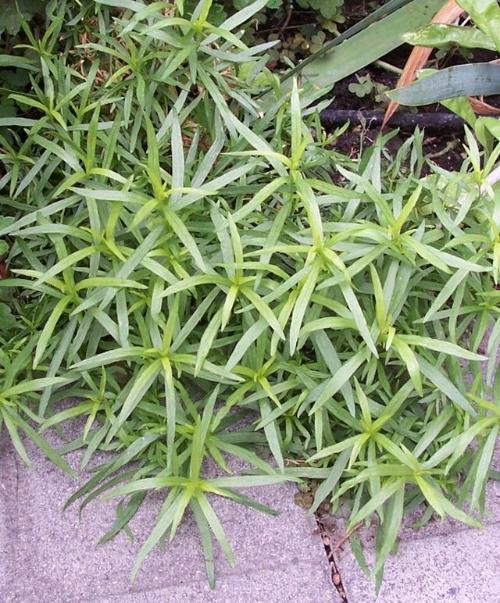
Which vegetables belong to the mugwort type
Artemisia plants belong to the class Dicotyledoneae, family Asteraceae. They are herbs, subshrubs or small shrubs that often give off a fragrance when rubbed; leaves are alternate and often divided; flower heads are small, heterogamous, discoid, often nodding, arranged in panicles, spikes or racemes; all florets are tubular; marginal florets are female, in 1 row, slender, with 2-3 teeth; disc florets are bisexual, fertile or sterile; the receptacle is bare or has receptacular hairs; achenes are small, grooved, without a pappus. They are widely distributed in the temperate regions of the Northern Hemisphere, in Europe, Asia and North America, with a few species reaching tropical regions such as Africa, South Asia and Central America.
In everyday life, the following plants belong to the genus Artemisia.
For example, aster, Atractylodes lancea, coltsfoot, safflower, small thistle, large thistle, dandelion, cocklebur, capillary wormwood, sweet wormwood, mugwort, burdock fruit, Eupatorium fortunei, wild chrysanthemum, chrysanthemum, santonica and so on. Sunflower is an oil plant; Jerusalem artichoke belongs to the same genus as sunflower, and its underground tubers contain inulin and are used for pickling or making alcohol. Lettuce (also called celtuce) and garland chrysanthemum are vegetables.