Origin of Violet Essential Oil and Flower Morphological Characteristics
The best origins for violet essential oil - where are they?
There are many varieties of violets spread throughout the world, but most of their essential oil comes mainly from France and Egypt. This plant prefers moist woodland and shady places, and has long stems, dark green heart-shaped leaves, and delicate blue or purple flowers.
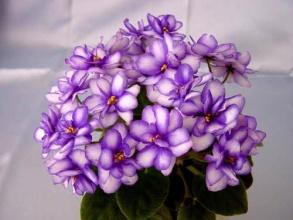
What do violet flowers look like
Biennial or perennial herb, up to 60 cm tall, with the whole plant densely covered in grayish-white stalked branched soft hairs. Stems erect, much branched, slightly woody at the base. Leaves oblong to oblanceolate or spoon-shaped, 6-14 cm long including the petiole, 1.2-2.5 cm wide, entire or slightly wavy at the margin, obtuse to rounded or rarely shortly pointed at the apex, gradually narrowed at the base into a petiole.
Racemes terminal and axillary, flowers numerous, relatively large, the rachis elongating in the fruiting stage; pedicels stout, spreading obliquely upward, up to 1.5 mm long; sepals erect, oblong, about 15 mm long, the inner sepals saccate at the base, membranous at the margin, white and transparent; petals purplish red, pale red or white, nearly ovate, about 12 mm long, shallowly 2-lobed or slightly concave at the apex, wavy at the margin, with a long claw at the lower part; filaments gradually enlarged toward the base; ovary cylindrical, stigma slightly 2-lobed.
Silique cylindrical, 7-8 cm long, about 3 mm in diameter, the valves with a prominent midvein, shallowly lobed at the apex; fruiting pedicels stout, 10-15 mm long. Seeds nearly round, about 2 mm in diameter, flattened, dark brown, with a white membranous wing at the margin. Flowering period April-May.