What Is Marigold Essential Oil and Its Production and Processing Methods
Methods of making and processing marigold essential oil
1. Enfleurage: Place cleaned flowers on a glass plate coated with animal fat or vegetable oil, set it in the sun, and let the heat of the sunlight melt the flowers and release their essence.
2. Expression: Use a piece of thick, coarse natural sponge to press and rub back and forth forcefully against the peel of citrus fruits so that the juice is secreted. For citrus essential oils, except for lime, this extraction method is mostly used.
3. Distillation: Place the extractable parts of the plant into a large container with a heating device at the bottom, connected to a condenser. The heat of the steam causes the essential oil in the plant to volatilize. Finally, after separating the oil from the water, what is collected is the essential oil. Distillation is mostly used for plant stems, roots, flowers and leaves.
4. Solvent Extraction: Use solvents of hydrocarbons such as petroleum and benzene to extract both the volatile and non-volatile components of the crushed plant. After filtration and solvent evaporation, a highly concentrated plant extract is obtained in a vacuum.
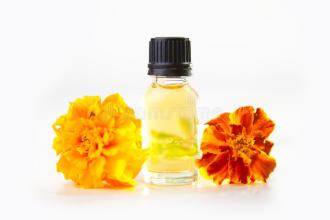
What is marigold oil
Marigold This fixed oil is not pressed directly from the plant itself, and although it is also not obtained through distillation, its extract oil can still be made, including volatile substances. Marigold flowers are macerated in a fixed oil to produce calendula oil, also called marigold oil. A small amount of coagulate is occasionally produced, but because the amount is very small it is often ignored.