A Detailed Guide to Magnolia Cultivation Methods and Care Techniques
Introduction: Magnolia is also called white magnolia, magnolia, and spring-welcoming flower; this flower is one of China's unique precious garden trees, native to the Yangtze River basin, and wild specimens still exist at Lushan, Huangshan, Emeishan and other places. The magnolia flower is white as
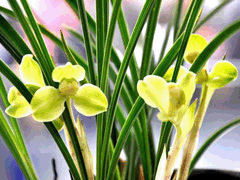 Magnolia flower is also called white magnolia, magnolia, and spring-welcoming flower; this flower is one of China's unique precious garden trees, native to the Yangtze River basin, and wild specimens still exist at Lushan, Huangshan, Emeishan and other places. The magnolia flower is white as jade, with a fragrance like orchid; its tree form is tall and imposing, with the tallest reaching over 10 m, the crown oval, the large leaves obovate, the apex short and abruptly pointed, the base wedge-shaped, the surface glossy, the whole leaf margin sparsely spread out, and the young branches and buds covered with short down. The winter buds have large scales. The flowers open before the leaves, terminal, large, 12-15 cm in diameter. The perianth has 9 segments, bell-shaped. The fruit spike is cylindrical, brown: a follicle, splitting open after maturity, with red seeds. It blooms in March and the fruit ripens in June-July. Magnolia likes light and is relatively cold-tolerant, able to overwinter in the open. It loves high, dry conditions and avoids low humidity; waterlogged planting sites easily cause root rot. It prefers fertile, well-drained, slightly acidic sandy soil, and can also grow in weakly alkaline soil. In the warmer south, it can bloom from December to January of the following year. Magnolia flower has strong resistance to harmful gases. If this flower is planted in a factory polluted with sulfur dioxide and chlorine gas, it has a certain resistance and sulfur-absorbing ability. Using sulfur dioxide for artificial fumigation, 1 kg of dry leaves can absorb more than 1.6 g of sulfur. Therefore, magnolia is a very good pollution-resistant greening tree species for areas with air pollution. The magnolia flower's appearance closely resembles a lotus; when in full bloom, the petals spread in all directions, making the courtyard patches of green and white, with dazzling white light, and it has high ornamental value; together with bursts of delicate fragrance that refresh the heart and mind, it is truly an ideal flowering tree for beautifying the courtyard. How should magnolia flowers be cultivated and managed? Magnolia is an ornamental flowering tree with both color and fragrance in early spring. When planting, the timing must be grasped well, neither too early nor too late; planting 10 days before budding in early spring or after the flowers fade and before the leaves unfold is most suitable. When transplanting, regardless of seedling size, the roots must be kept with a ball of soil, and care should be taken not to damage the root system as much as possible, so as to ensure survival. Before planting, sufficient fully decomposed organic fertilizer should be applied in the hole as a base fertilizer. After planting, seal the soil and press it firm, and water thoroughly in time. Magnolia flowers relatively like fertilizer, but avoid heavy fertilizer; during the growing season, generally applying fertilizer twice is enough to benefit flower bud differentiation and promote growth. One application is in early spring, and another is in May-June. The fertilizer is mostly fully decomposed organic fertilizer. Newly planted saplings need not be fertilized; apply fertilizer after leaf fall or in the following spring. Magnolia's root system is fleshy and not tolerant of waterlogging. During flowering and growth, the soil should be kept slightly moist. After autumn, watering should be reduced to delay magnolia rooting and promote branch maturity, helping it overwinter. In winter, generally no watering is done; water only once when the soil is too dry. Magnolia branches have poor wound-healing ability, so pruning is generally not carried out. However, for a reasonable tree shape, water sprouts, dead branches, diseased and pest-infested branches, and branches that hinder the beauty of the tree shape should still be cut off in the early leaf-unfolding stage. In addition, after the flowers fade, if seeds are not to be kept, the residual flowers and follicle fruit spikes should also be cut off to avoid consuming nutrients and affecting flowering the next year. Magnolia flowers are mostly planted in the ground; when potted, they are best cultivated as stump bonsai.
For more professional agricultural science and technology information, please scan the QR code to follow WeChat: NongXunNET

Please indicate the source when reprinting.