Appreciation of the Orchid Society Founding Commemorative Album, Volume 3
Introduction: Orchid Society Founding Commemorative Album 3---Appreciation of Chinese Orchids. Chinese orchids have a long history of cultivation and rich varieties, with elegant plant forms, graceful flowers, refined leaf postures, and overflowing delicate fragrance, and are deeply cherished by people. When we appreciate Chinese orchids, we value their temperament. With the development of history, varieties have increased, times have changed, and people's
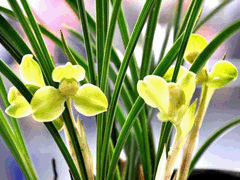 Orchid Society Founding Commemorative Album 3---Orchid Appreciation
Appreciation of Chinese orchids.
Chinese orchids have a long history of cultivation and rich varieties, with elegant plant forms, graceful flowers, refined leaf postures, and overflowing delicate fragrance, and are deeply cherished by people. When we appreciate Chinese orchids, we value their temperament. With the development of history, varieties have increased, times have changed, and people's tastes have also changed. From the perspective of appreciation, this is mainly reflected in flower art, leaf art, and fragrance.
1. Flower art: Appreciating orchids is mainly also appreciating flowers. Historically, orchid flower art has roughly been divided into:
A. Petal-type flowers include plum petals, lotus petals, and narcissus petals. Petal-type flowers have strict appreciation standards for petals
B. Plain flowers
C. Butterfly flowers include butterfly petals on the inner petals, butterfly petals on the lateral petals, and full butterflies
D. Unusual flowers include multi-petal and few-petal flowers
E. Colored flowers
2. Leaf art. The leaf art of Chinese orchids is ever-changing and colorful, such as rimmed edges, stripes, tiger stripes, snakeskin, ringing gongs, picture mottling, landscape painting, and so on. Many beautiful scenes in life can be reflected on the small orchid leaves.
Orchid leaves are jade-green and emerald, and the leaf surfaces are lustrous and bright. Even more peculiar is that during cultivation, variations in leaf color and markings can appear. This is rarely seen in other flowers. This provides us orchid growers with great pleasure. Many classic named varieties have produced linear-art plants due to the influence of the growing environment. The ever-changing nature of Chinese orchids brings us orchid growers surprises from time to time.
3. Fragrance. Orchids have a seductive and mysterious delicate fragrance, unmatched by the aroma of any other flower in the world. Whether it is the strong fragrance of Cymbidium faberi, the light fragrance of Cymbidium goeringii, the delicate fragrance of Jian Cymbidium kanran, or the sandalwood-like scent of the New Year orchid, they all share one common characteristic: clear and delicate, as if present and yet not.
Throughout history, orchid lovers ancient and modern have especially praised the fragrance of orchids. For example: Confucius said: The orchid should be the fragrance of kings, which made orchid fragrance leap to become the universally recognized king of fragrances, a scent loved by young and old alike and suitable for both noble and humble. Emperor Taizong of Tang wrote: In the bright sun, shadows uneven; through the wind, fragrance light and heavy. Su Dongpo of the Song Dynasty wrote: Sometimes one smells the fragrance of wind and dew; among dense mugwort and artemisia it is not seen. Su Zhe wrote: In the deep valley, one does not see where the orchid grows; chasing the breeze, one occasionally finds it. Emperor Kangxi of the Qing Dynasty had the wonderful orchid-praising line: Graceful flower posture, long green leaves; when the wind comes, it is hard to hide the fragrance in the valley, and he also greatly appreciated orchid fragrance.
They described how orchid fragrance is sometimes present and sometimes absent, drifting and uncertain, with remarkable clarity. Because different orchid varieties contain different chemical components, and the components differ, the fragrance people smell from orchids also differs. Among these main chemical components of orchid fragrance, some can sterilize and detoxify, and some can refresh the mind…… Therefore, when cultivated orchids bloom, the released orchid fragrance can freshen the air and purify the room.
In summary, appreciating orchids is a process from form to spirit. Every petal shape, color, and fragrance of an orchid brings sensory enjoyment, while the petal shape and color of each cluster of flowers are entirely different. The same variety of flower, in different people's hands, in different regions, and with different cultivation methods, presents content and forms that are also wonderfully diverse and not the same. Orchids not only display the richness of their artistic image, but also symbolize human spirit, human emotion, and human character.
4. Orchid appreciation terminology
Color. The colors of terrestrial orchids, although relatively simple and plain, lacking the seductive glamour of other flowers, have a quiet and pure color and elegant charm that ordinary flowers find hard to match. According to tradition in the Jiangsu and Zhejiang regions, among orchids and cymbidiums, green is considered best, especially tender green as first, old green as second, yellow-green next, and red-green even lower. For red flowers, those with glutinous color are always considered superior, while those with dim color and a purplish tinge are inferior. For other types of orchids, the evaluation of color varies by region.
Shoulder. Among the three outer petals of an orchid, the central vertical petal is called the main petal, and the two petals arranged horizontally on the left and right are called lateral petals. The so-called shoulder specifically refers to the form in which the lateral petals are positioned: the first type is horizontal, called single-character shoulder, and belongs to the superior grade; the second type, when the petals open, the two lateral petals droop slightly, called falling shoulder, and this form is inferior; the third type is when the flower has just fully bloomed and the lateral petals droop greatly, forming a triangle with the main petal, called large falling shoulder, three-legged horse, or character-eight frame. If it takes this form, even if the petal shape and flower quality are very good, because the posture of the three outer petals is poor, it is not worth taking and belongs to the inferior grade; the fourth type is when the lateral petals slightly turn upward, called flying shoulder, and belongs to the noble grade.
For more professional agricultural science and technology information, please scan the QR code to follow WeChat: NongXunNET

Please indicate the source when reprinting.