Detailed Guide to Pest and Disease Control Methods and Techniques for Cattleya Orchids
Introduction: Cattleya belongs to the epiphytic orchids of the Orchidaceae family and is native to the tropical and subtropical regions of the Americas, with the most wild plants found in Colombia and Brazil. Its flowers are brilliantly colorful, large in form and fragrant, earning it the title of “King of Tropical Orchids.” Colombia, Brazil, Costa Rica and other countries all adopt Cattleya as their national flower.
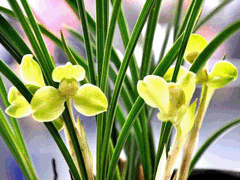 Cattleya belongs to the epiphytic orchids of the Orchidaceae family and is native to the tropical and subtropical regions of the Americas, with the most wild plants found in Colombia and Brazil. Its flowers are brilliantly colorful, large in form and fragrant, earning it the title of “King of Tropical Orchids.” Colombia, Brazil, Costa Rica and other countries all adopt Cattleya as their national flower. Due to infection by pests and diseases, the growth of some organs of the orchid plant is hindered, reducing the ornamental and economic value of the orchid. Therefore, in the daily care of Cattleya, prevention and treatment of pests and diseases must be strengthened to reduce losses. The following introduces the main pests and diseases of orchids and their control methods. Diseases Anthracnose mainly attacks the leaves of Cattleya. In the early stage of the disease, light-colored sunken spots appear on the leaves, and concentric ring-shaped small granules form at the lesion sites. The spots then gradually enlarge into circles, and the color gradually deepens to dark brown, and in severe cases the entire leaf turns black. It is mostly caused by poor ventilation and stuffy heat, and excessive nitrogen fertilizer also easily leads to infection by this pathogen. Control methods: Remove diseased leaves and apply fungicide to the wounds. Improve ventilation, reduce humidity, increase the application of phosphorus and potassium fertilizers, and enhance the disease resistance of orchids. Spray with 500-fold dilution of carbendazim, chlorothalonil or thiophanate-methyl wettable powder, then spray once every 10 to 15 days thereafter. Flower blight mostly harms the flowers or inflorescences of Cattleya, and young shoots are also easily infected. The infected parts are sunken dark brown to black lesions, usually covered with white mycelium and small pink spores. Severe infection can cause flowers to turn yellow and drop at the bud stage. This disease can also infect leaves, mostly appearing as small spots on wounded tissue. It is mostly caused by water accumulation in the flower sheath and high temperature and humidity. Control methods: During cultivation, note that environmental humidity should not be too high, especially when nighttime temperatures are low. When watering during the flower bud differentiation stage, be careful not to splash water into the flower sheath. When plants are diseased, cut off diseased flowers and spray and drench the soil with 500-fold dilution of 80% mancozeb or 50% carbendazim wettable powder every 4 to 7 days. Wilt disease mainly infects the rhizome, turning it purple, and the vascular tissue becomes pink-purple; it can also spread to the pseudobulbs and roots. Because the vessels become blocked, the leaves turn gray and the plant wilts and dies. Control methods: Remove diseased plants and infected soil, and spray, soak or drench the soil with 500-fold dilution of 50% captan or 50% carbendazim wettable powder. A 0.5% formalin solution can also be used. Flower rot In the early stage of infection, light brown, very small water-soaked spots appear on the tepals, then the spots enlarge and cause the entire flower to rot, but the disease is limited to the flower, so it is also called flower spot disease or flower brown rot. Infection is likely in environments with excessively high humidity, poor ventilation and nighttime temperatures that are too high. Control methods: If a sudden temperature drop is forecast before flowering, immediately reduce indoor humidity and spray 500-fold dilution of 50% carbendazim or 1% lime sulfur mixture to prevent flower rot. Other fungicides can also be used, but drugs that damage flowers, such as captan, must not be used.
For more professional agricultural science and technology information, please scan the QR code to follow WeChat: NongXunNET

Please indicate the source when reprinting.