How to prevent and treat bacterial soft rot in orchids? Sharing practical experience
Introduction: The main pathogen of bacterial soft rot is Erwinia carotovora (ErwiniacarotouoraE.): The peak incidence of this disease occurs during the rainy season when new shoots emerge. Infected young leaf bases develop small brown water-soaked spots, and the lesions rapidly expand and merge densely into patches, while also spreading to the leaf sheaths and the growth
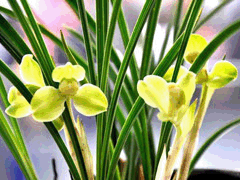 The main pathogen of bacterial soft rot is Erwinia carotovora (Erwinia carotouoraE.): The peak incidence of this disease occurs during the rainy season when new shoots emerge. Infected young leaf bases develop small brown water-soaked spots, and the lesions rapidly expand and merge densely into patches, while also spreading to the leaf sheaths and the growth point of the shoot. Leaves that are about to reach maturity are also often infected, and the pseudobulbs are endangered as well. Infected leaves rot at the base and give off a foul odor, while the upper part becomes dehydrated and wrinkled. This pathogen can harm all species of Chinese orchids (Cymbidium), as well as Cattleya, Oncidium, Odontoglossum, Phalaenopsis, Vanda and others, with more severe incidence in southern China. It mainly harms orchid leaves and pseudobulbs. After leaves are infected, small water-soaked spots appear initially, then gradually turn brown or nearly black and rapidly expand, eventually developing into a soft, foul-smelling rotting mass with secretions that spread with rain or watering. If pseudobulbs are infected, water-soaked lesions also appear, brown to black, and eventually the pseudobulbs become soft, shrunken and dark, rapidly rotting. Bacterial soft rot mostly occurs in the early-summer rainy season, spreading through wounds, breakage from contact, insect bites and other means; it is especially severe under high temperature and heavy rain or poor ventilation, and it develops very rapidly, usually rotting an entire leaf within 3-5 days. Whether it occurs on old leaves or new leaves, it is quite lethal. To prevent and treat bacterial soft rot, be sure to keep the growing environment well drained and ventilated, with ample sunlight. Once lesions are found, they should be removed and destroyed immediately; if the lesions have reached the growth point, the entire plant should be isolated together with its pot, and misting should be avoided as much as possible, switching to watering the pot surface instead. After excising the diseased tissue, the diseased leaves should be cut off promptly, the wounds smeared with Bordeaux mixture, and the orchid plant soaked in 0.1% potassium permanganate solution for 5 minutes, rinsed under running water, sunned in sunlight for 15 minutes, and planted after drying. Alternatively, spraying with 0.5% Bordeaux mixture, or 200 mg/L agricultural streptomycin, or methyl parathion and others all give good results. Depending on the specific situation, routine periodic spraying with 30.3% tetracycline at 2000 times dilution, or 10% streptomycin-tetracycline at 1000 times dilution, or 68.8% duobao streptomycin at 1000 times dilution also has significant preventive and therapeutic effects. At the same time, we wish——orchid enthusiasts suffering from the harm of “bacterial soft rot” a speedy escape from their “sea of suffering.”
For more professional agricultural science and technology information, please scan the QR code to follow WeChat: NongXunNET

Please indicate the source when reprinting.