Sharing my orchid growing experience, a record of my orchid cultivation journey
Introduction: Orchid growing experience - preface to my orchid care reflections. Someone once said: "Growing orchids is difficult, yet actually not hard; growing grass is easy, yet truly not easy." This saying is quite penetrating. Growing orchids is actually not a difficult matter. We all know that even if you abandon an orchid plant in a corner and neglect it, letting it naturally wither away is not an easy thing; as long as it occasionally gets rain and dew, it will not only
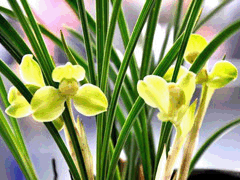 Orchid growing experience - preface to orchid care reflections
Someone once said: "Growing orchids is difficult, yet actually not hard; growing grass is easy, yet truly not easy." This saying is quite penetrating. Growing orchids is actually not
a difficult matter. We all know that even if you abandon an orchid plant in a corner and neglect it, letting it naturally wither away is not an easy thing; as long as
it occasionally gets rain and dew, it will not only continue to survive, but even bloom and grow new shoots. What is truly difficult is how to grow them well, so that the leaves
are lush and the shoots are dense, and the flowers open with good form. This is indeed no easy skill, and it is also a subject that we orchid lovers devote our entire lives to studying.
Regarding discourses on orchid-growing techniques, there have been many competing schools of thought since ancient times. Our ancestors indeed left us a great deal of valuable
orchid-growing material for us to reference and learn from; but was the ecological environment and living space at that time the same as the environment now?
The answer is no. Our current living space, along with the progress of industrial technology, man-made ecological destruction, and the impact of the global greenhouse
effect, is in every way different from the spatial environment of our ancestors' time. Therefore, should we still rigidly adhere to the orchid-growing methods left by our ancestors?
Or should we make some innovations? I personally believe we should take the orchid-growing theories of our ancestors as a foundation, then
improve and innovate upon them, creating a new set of orchid-growing techniques suited to present conditions, so that our long-standing Chinese orchid culture can be
passed down forever.
As the saying goes, "To do good work, one must first sharpen one's tools." In terms of technique, I personally believe the way of growing orchids should begin from the following aspects
in order to achieve twice the result with half the effort:
First, location: The key to cultivating orchid plants lies first in the location. The main considerations in choosing an orchid-growing site are ventilation, light, temperature and
humidity control. Modern people, due to population expansion, reduced usable land, and row upon row of high-rise buildings, finding an independent and spacious
orchid-growing site is no longer something the average salaried class can afford. Most use the balcony of their own apartment as the orchid-growing
site. This way of growing orchids on a balcony was something the ancients never experienced, but in order to adapt to changes in the modern environment, we
have no choice but to develop a new set of "balcony orchid growing" techniques in response. We all know that orchid plants grow in clusters under dense shrub forests,
with trees above providing shade and frost protection, and the surroundings both cool and ventilated. Compared with a balcony environment, there is truly a world of difference. However, orchid
plants themselves have extremely strong adaptability to the environment. Regardless of the cultivation site, they can self-regulate and adapt to the environment whether it is summer's high temperatures or winter's low temperatures. If the temperature is too high, they will slow their growth or pause slightly; if the temperature is too low, they will enter dormancy.
This instead allows them to accumulate energy, which is beneficial for the differentiation of flower buds and leaf buds, nurturing them to reproduce. As for the light issue at the cultivation site,
shade nets can be installed or artificial lighting can be used as a supplementary method of control. Humidity control can also be adjusted with a humidifier.
Only ventilation is the direction that should be considered most, and it is also the key factor in choosing an orchid-growing site. Therefore, the primary consideration for an orchid-growing site
is that whether it is a ground-level orchid house (shed) or a high-rise balcony, ventilation conditions should be the first requirement.
Second, pots: There are many materials for orchid-growing pots, such as clay pots, ceramic pots, purple clay pots, sweating pots, plastic pots... and so on.
With so many types of pots, which should we choose as the best cultivation pot? If viewed from an appreciation standpoint, purple clay pots should be the first choice. The elegant leaf posture of orchid plants paired with simple and refined purple clay pots always makes people utter praise
from the bottom of their hearts, unable to resist taking another look. This is the ultimate expression of why orchid plants are called works of art. But although purple clay pots are beautiful and have fairly good breathability, and can indeed add to the beauty of orchid plants when used for display, if viewed purely from a cultivation perspective, I still
believe that inexpensive and unremarkable plastic pots are the best cultivation vessels; because plastic pots are made of polyethylene-type inorganic material, pathogens and other microorganisms do not easily attach to them, and a quick rinse is enough before potting orchid plants. If holes about 0.8-1 cm in diameter can be evenly drilled around the pot body to increase the air permeability inside the orchid pot and enhance the activity of beneficial aerobic bacteria such as orchid fungi and photosynthetic nitrifying bacteria in the pot, the orchid roots will certainly grow white, clean and plump, and the orchid plants will be even more full of vitality.
Third, growing medium: From ancient times to the present, discussions about orchid growing media have truly been diverse and varied, with each school having its own secret formula. I will not elaborate further here, and will only summarize my personal practical experience for everyone's reference. Traditional orchid growing generally uses orchid mud
(or mountain mud) combined with humus soil and brick granules (or orchid stone). The planting material is fine and dense, with better moisture retention inside the orchid pot, but its drawback is poor air permeability
inside the pot, and as time goes by, the medium easily silts up and clumps, hindering drainage, and more easily becoming a breeding ground for pathogens.
This will cause harm to the growth and development of orchid plants. Although orchid plants like moisture, their fleshy root system fears
waterlogging. Excessive moisture or water accumulation in the pot easily rots the roots and can induce disease. Modern orchid growers, in order to improve the shortcomings of traditional media being prone to waterlogging and accumulation, and to increase the air permeability inside the orchid pot, adopt granular media, or even soilless
cultivation, using mineralized granular soil (such as Xiantu) or orchid stone (such as Tangji stone, Zhijin stone), or using synthetic fiber media. Although this solves
the shortcoming of excessive moisture in the orchid pot and improves air permeability inside the pot, orchid plants lacking soil have relatively reduced fragrance. The reason why the fragrance of re-exported orchids is inferior to native species is that the type of growing medium used is the biggest factor.
I personally believe that modern orchid growing should learn from tradition and then innovate and improve, so that the flower form of orchid plants remains unchanged and the fragrance does not diminish, or even accelerates
the growth and development of orchid plants, shortens the maturation period from new seedling to strong plant, and promotes the shoot production rate. Therefore, "Active Soil" was developed,
an active cultivation medium for orchid plants based on organic substances. The use of Active Soil plays a
decisive role in controlling the environment inside the orchid pot. Orchids have special ecological requirements for growing media. After potting, corresponding improvement measures sometimes need to be taken.
Only by creating good ecological environment conditions inside the pot can orchid growth and development be benefited. The reason growing media can
cultivate orchids is that they have fertility and the substances and trace elements needed for orchid plant growth; fertility is the special essence of growing media.
Good cultivation media is the ability to supply and coordinate nutritional conditions and environmental conditions for orchid growth. It is also the comprehensive expression of the physical,
chemical, and biological properties of the growing medium. All properties affect orchid growth
and development through direct and indirect pathways. Therefore, when the fertility of the growing medium is insufficient, fertilizer must be regularly supplemented according to the different growth cycles of orchids. This
is called artificial fertility. The natural fertility of growing media is dominated by biological factors, with beneficial microorganisms playing the leading role, so
Active Soil plays an important role in the natural fertility of growing media. Although Active Soil is based on cultivating mycorrhizal fungi (orchid fungi) in orchid roots
and beneficial microorganisms such as nitrifying bacteria in the growing medium, this is not the only function and purpose of Active Soil. Therefore,
when we add Active Soil to the growing medium, we should not single-mindedly focus on whether mycelium appears, because the time it takes for the fungal bodies to appear
and the amount produced are inseparably related to the temperature and humidity of the cultivation site, the type of growing medium, and the management method; they are also
related to the types and colony numbers of orchid fungi originally carried by the orchid plant and the population numbers of other microorganisms in the growing medium. Regardless of whether
mycelium can be seen with the naked eye, it does not hinder the efficacy and function that Active Soil provides to orchid plants. Moreover, Active Soil as a culture substrate for microorganisms
is only a means, not its ultimate goal. Its final purpose is to achieve the result of "consolidating the root and clearing the source," restoring orchid plants to their native state.
For the selection of orchid growing media, I personally believe coarse granular media are best, because granular media have better air permeability than traditional
media and do not easily silt up and clump, causing waterlogging in the pot. Accumulating many years of orchid-growing experience, I personally believe the best combined growing medium for orchid growing should be granular mountain soil or mountain mud mixed with Tangshan stone (also called "Taiwan, China Puli orchid stone"; this is a brick-like granular orchid stone fired from river mud in the mainland) or crushed bricks, charcoal crumbs or crushed tree fern, and Active Soil. The coarseness of the medium is best at about the size of an index fingertip. Mix all growing media thoroughly before use. As for the mixing ratio among various media, it should depend on the type of orchid plant being cultivated. Taking fine-leaf orchid types such as Cymbidium goeringii as an example, the medium type ratio for cultivation is medium-coarse granular mountain soil 35-40%, crushed
bricks (or Tangshan stone, orchid stone) 45-50%, Active Soil 10-15%, charcoal crumbs 0-5%, mixed thoroughly before use. For broad-leaf
orchid types such as Cymbidium sinense, medium-coarse granular mountain soil 30-35%, crushed bricks (or Tangshan stone, orchid stone) 40%, Active Soil 15-20%
, charcoal crumbs or tree fern crumbs 10-15%. The proportion of Active Soil added should be adjusted up or down according to the humidity requirements characteristic of the orchid type and the moisture retention effect of the combined growing medium, in order to achieve the best effect of Active Soil in orchid growing.
Fourth, fertilizer: The key to orchid plant growth lies mainly in the source of nutrition. In order to supplement the nutrients needed for orchid plant growth and development,
thereby achieving rapid orchid growth, shoot production and flowering, we choose to apply fertilizer as a supplementary nutrient source. But with the dazzling array of fertilizer types on the market,
which types should we choose to benefit orchid plants? Although fertilizer has an influential supplementary effect on the growth and development of orchid
plants, the main nutritional source of orchid plants comes from the interdependent relationships of parasitism and symbiosis with microorganisms. If improper fertilizer is applied, or excessive nutrients, it will instead cause fatal harm
to orchid plants. I once conducted some comparative experiments, namely applying various inorganic chemical fertilizers and growth hormones during the cultivation of orchid plants.
The results showed that in the short term the orchid plants appeared flourishing; but over the long term, the disease rate of the orchid plants gradually increased, and the germination rate of new shoots
and strong seedlings also significantly decreased. Another group was given no fertilizer at all, only thoroughly watered through when watering. Even so, they still bloomed and grew shoots year after year, and as time went on and the number of orchid plants increased, the shoot production rate also significantly improved. So if we
need to supplement artificial fertility for orchid plants, it is best to choose organic fertilizers, whether homemade soybean water fertilizer or commercially available
organic fertilizers (such as "Fish Essence" fertilizer). These are less harmful to orchid plants than chemical fertilizers or hormones, and orchid plants can thereby obtain
sufficient nutrient supplementation to develop and thrive.
Fifth, management: The last key to success or failure in orchid growing lies in management. Even if an orchid grower has the best hardware equipment, if
there is no correct management method, it still cannot achieve success. As for the daily care and management of orchid plants, we can discuss it from the following key
points:
1. Humidity: Humidity management has a great impact on the development and health of orchid plants themselves. When ordinary people talk about humidity, they always put
the focus on the relative humidity of the cultivation site, yet neglect that the humidity inside the orchid pot is the biggest key affecting orchid plant growth and development.
It should be known that the relative humidity of the environment where orchid plants grow in their natural native habitat is not unchanging. The four seasons of the year, day and night, all have different environmental
relative humidity, but even if the relative humidity in the environment is low, it will not cause orchid plants to collapse or hinder development,
because the humidity factor affecting orchid plant growth and development is the absolute humidity of the soil in contact with the orchid roots. In addition, in
high-temperature and high-humidity environments, various diseases of orchid plants are more easily triggered (such as black spot, soft rot and even viral diseases...). So,
I personally believe we should not rigidly adhere to convention, only paying attention to the relative humidity of the cultivation site while neglecting the absolute humidity in the orchid pot that truly affects the key to orchid plant growth
and development.
2. Light: Light is inseparably related to the growth strength, flowering, and changes in variegation direction of orchid plants. Although orchid
plants prefer shade, nothing in heaven and earth can grow healthily without sunlight. Although orchid plants fear strong direct
sunlight, if sunlight is insufficient, it will also cause the orchid plant to be weak, and even affect flowering and the evolution of variegation. Generally speaking, orchid plants
in spring, autumn and winter should have at least 3 hours of sunlight per day; in summer they should also have 2 hours of sunlight. The best time to receive sunlight is early morning. In summer, after 8 o'clock, 75-80% shading should be applied. If sunlight is insufficient,
artificial lighting can also be used as supplementary light. There are generally three types of lamps used for artificial lighting. The first is a sun lamp (wavelength
840nm), the second is a plant lamp (wavelength 800nm, color temperature 10,000K), and the third is a super blue wave lamp (wavelength 40
0-440nm, peak wavelength 420nm). In the spectrum of artificial supplementary lighting, the complete combination of red and blue spectra can enable plants to obtain the best
growth. In particular, blue wave light can help orchid plants carry out photosynthesis and promote metabolism. Therefore, installing artificial lighting equipment in the orchid house and using about 3 hours of artificial lighting per day will help the growth of orchid plants and promote the evolution of variegation in variegated orchid types.
3. Watering: The ancients said, "Watering takes three years of skill," meaning that although watering seems simple, it actually contains very deep
principles, and only long-term accumulated experience can grasp the knack. For a beginner just starting to grow orchids, watering always seems
like an extremely simple task: nothing more than spraying the leaves of the orchid plant and getting the growing medium wet, and that is considered done. But for
veterans, watering is a profound lesson. One must grasp the timing of watering well, how to water thoroughly without causing waterlogging, and the timing and critical degree of water restriction. These are all great areas of learning. I once had a good friend
who had just become interested in Chinese orchids. He placed all his orchids in my care. Every time he watched me water, he always carefully checked each pot one by one, which was quite troublesome, so
he suggested that he share the watering work, which on the one hand could make things easier for me, and on the other hand allow him to learn. Unexpectedly, in just
a short year, the orchid plants were either plagued by disease or barely alive and nearly at the edge of collapse. Only then did he acknowledge that watering
is indeed not simple. But how do we grasp these knacks? I personally believe that if the pots have high air permeability and the growing medium
also has strong drainage, watering the orchid plants and rinsing the leaves daily is helpful for promoting the metabolism of orchid plants. But in summer's high-temperature
season, which is also when orchid plants are undergoing flower bud differentiation, water restriction measures should be applied to the orchid plants, keeping the growing medium in the pot
slightly dry. This not only helps the formation of flower buds, but also prevents diseases arising from high temperature and high humidity, and prevents the crisis of plant collapse. When the climate gradually enters low temperatures, the frequency of watering must also be gradually reduced. On the one hand, this avoids frost damage to orchid plants during dormancy; on the other hand, it can slow the mechanism of orchid plant metabolism, allowing flower buds to accumulate energy so as to avoid early flowering that affects flower form.
4. Fertilizing: Regarding the issue of fertilizing orchid plants, senior orchid grower Mou Anxiang of Dalian once wrote an article, "Methods of Fertilizing Chinese Orchids."
This article describes in great detail why orchid plants need fertilizing, the types of fertilizers, and the methods of fertilizing, so I will not
repeat them. What I want to discuss is the issue of fertilizing after using Active Soil. We all know that the main nutrient source of orchid plants themselves comes from
the metabolites of microorganisms in the growing medium and the nutritional mechanism produced by the parasitic and symbiotic relationship between orchid roots and orchid fungi. Active Soil is used
as a base medium for rapidly cultivating and multiplying orchid fungi and photosynthetic nitrifying bacteria. Because it is developed from natural organic substances, after
fermentation it also contains a small amount of nutrients, and Active Soil can promote enzyme action by orchid fungi and photosynthetic nitrifying bacteria,
making phosphorus, potassium and trace elements easier to absorb. In addition, Active Soil can promote increased secretion from aerobic bacteria, decompose sulfides
, salts, and nitrates, prevent acidification of the growing medium, and enhance fertilizer efficiency. Activating aerobic bacteria can reduce acidic diseases, decompose
harmful substances, and increase the reproduction of nitrogen-fixing bacteria, allowing free nitrogen in the air to be fully utilized. Basically, after using Active Soil, there is no need to
apply other fertilizers, and it is enough to meet the nutritional needs of orchid plants. If you want to strengthen the growth of orchid plants, the supplementary fertilizer should preferably be
natural organic fertilizer. For example, in spring apply homemade soybean water fertilizer (nitrogen fertilizer) at a dilution concentration of 200-300 times, which can enhance the greenness and density of orchid leaves
and promote the formation of round pseudobulbs; in autumn apply the commercially sold "Fish Essence Flowering Fertilizer" (phosphorus and potassium fertilizer). The usual dilution concentration for watering is 5000 times, and the dilution concentration during the flowering promotion period is 3000 times. Never apply inorganic synthetic chemical fertilizers or hormones,
to avoid mutation of the cellular genes inside the orchid plant and triggering disease. Also, one must strictly observe the principle of "weak fertilizer, applied frequently." Never reduce the dilution concentration of fertilizer for quick results, otherwise it will cause irreparable harm to orchid plants.
5. Pesticide use: Whether orchid plants grow in their natural native habitat or in an artificial cultivation environment, they will suffer diseases due to factors such as climate, environment,
and management. If these diseases are not dealt with promptly, at best they affect growth and shoot production, and at worst lead to plant collapse and extinction. Ordinary people spray pesticides for treatment upon discovering symptoms in orchid plants, but the use of pesticides must be cautious. After all, any
pesticide, even with good efficacy and low toxicity, will more or less cause varying degrees of harm to orchid plants. Therefore, I
advocate that "prevention is more important than pesticide use," reducing the rate of disease or pest damage to orchid plants by strengthening preventive management. Normally, we should maintain ventilation and clean sanitation at the orchid-growing site. Upon discovering ants, aphids, scale insects, snails or other soft-bodied organisms,
they should be removed immediately. Cover the cultivation site with gauze netting to isolate insects and reduce the spread of disease-carrying pathogens. Newly introduced orchid
plants should first be isolated and observed for a period before being placed together with existing orchid plants. Do not arbitrarily apply fertilizers, especially inorganic chemical fertilizers and
hormones, to reduce viral invasion and viral diseases caused by cellular lesions. If pesticides must be used, low-toxicity
pesticides should be chosen. After spraying, orchid plants should be rinsed with clean water as soon as possible, first to reduce pesticide concentration, and second to wash off residual pesticide, so as to avoid residual toxicity
harming orchid plants. If the above management work can be done well, orchid plants should be able to grow and develop healthily and naturally without relying
on pesticide use.
Looking back on thirty years of orchid growing, I have gone from a beginner orchid hobbyist to a veteran of the orchid world. My orchid-growing methods went from traditional
mountain soil cultivation to being an early adopter of chemical fertilizers and hormones. After experiencing a period of painful failures, I returned to an improved
traditional orchid-growing method using growing medium (granular medium), and developed Active Soil, hoping to use the development of biochemical technology to bring about another positive revolution in the orchid world. During this long journey, the flavors of it all were like drinking ice water on a cold day, every drop felt in the heart.
What is most worth recalling for a lifetime is the sworn friendship with Brother Weichun and young brother Honggang, as well as the friends and brothers from all over met through orchid websites. Everyone came together because of orchids, exchanged and learned from each other, and grew and progressed together. For this reason, I shamelessly disregard my shallow seniority and turn my personal reflections into words with my superficial literary level. There may be the risk of being laughed at by experts, but I ask all you
connoisseurs to kindly point out any errors. This is my hope!!
For more professional agricultural science and technology information, please scan the QR code to follow WeChat: NongXunNET

Please indicate the source when reposting.