Identification and Control Methods of Orchid Pests
Introduction: Cotton aphid Aphis gossypii Glover, also called melon aphid, belongs to the order Homoptera, family Aphididae, commonly known as honey aphid, oil insect, oil sweat, etc. The cotton aphid is a worldwide pest and is distributed throughout China, with the degree of damage varying by region. It generally occurs more severely in the north, less so in the Yangtze River basin, and in the south, damage is also very severe in drought years.
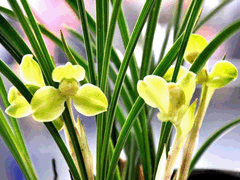 Cotton aphid Aphis gossypii Glover, also called melon aphid, belongs to the order Homoptera, family Aphididae, commonly known as honey aphid, oil insect, oil sweat, etc. The cotton aphid is a worldwide pest and is distributed throughout China, with the degree of damage varying by region. It generally occurs more severely in the north, less so in the Yangtze River basin, and in the south, damage is also very severe in drought years. It has many host species; on ornamental flowers it damages Chinese hibiscus (Hibiscus rosa-sinensis), rose of Sharon, hibiscus, orchids, pomegranate, redbud, plum, and others. Cotton aphid adults and nymphs cluster densely on tender shoots, flower buds and the undersides of leaves, sucking sap, causing the undersides of leaves to shrivel and affecting flowering. Morphological characteristics: Wingless parthenogenetic female aphid: body length 1.5-1.8mm, yellow-green in summer, black-green to blue-black in spring, with markings on the back, the whole body covered with wax powder, antennae with 6 segments, only the tip of the fifth segment having one sensorium, cornicles short, cylindrical, broader at the base, cauda nipple-shaped. Winged parthenogenetic female aphid: body length 1.2-1.7mm, yellow in summer, or green to dark green, blue-black in autumn, with 3-4 pairs of black spots on both sides of the back, antennae with 6 segments, longer than the body, the third segment having 4-10 sensoria, generally 6-7, arranged almost in a row, the fourth segment having 0-2 sensoria, near the tip of the fifth segment one sensorium, cornicles cylindrical, black, with a tile-like pattern on the surface. Winged parthenogenetic male aphid: body length about 1.4mm, head grayish-black, compound eyes reddish-brown, antennae with 6 segments, sensoria borne on the third, fourth and fifth segments. Egg: oval, length 0.5-0.6mm, orange-yellow when first laid, later turning dark brown, and pitch-black after 6 days. Occurrence pattern: more than 20 generations occur per year, overwintering as eggs on branches of Chinese hibiscus, rose of Sharon, pomegranate, etc., hatching at 11°C, first damaging the overwintering hosts, after 3-4 generations producing winged migratory aphids, beginning to damage ornamental flowers in March-April, in September and October producing winged migratory aphids that fly to overwintering hosts such as rose of Sharon to continue reproducing and damaging, and in November when the weather turns cold, producing winged male aphids and wingless female aphids, which mate and lay eggs. Cotton aphids are generally viviparous, producing egg-laying female aphids only before overwintering. Besides migration by winged aphids, aphids also have strong crawling ability. The optimum temperature for cotton aphid reproduction is 16-22°C; when the temperature is above 25-27°C and the relative humidity is above 75%, the population often declines significantly. When the climate is suitable, one generation can be reproduced in 4-5 days, and the reproductive capacity is large, with each female aphid producing an average of 5 young aphids. When the weather is cold, it takes 19 days to reproduce one generation, and continuous heavy rain can often cause a marked decline in cotton aphid numbers. Control methods: 1. Protect and utilize natural enemies; natural enemies such as ladybugs and green lacewings can already be mass-reared artificially and released. 2. Clear away overwintering hosts around orchid nurseries such as chrysanthemums to eliminate overwintering eggs. 3. 3% pyrethrin, 2.5% derris extract, 800-1200 times dilution; 20% fenvalerate emulsifiable concentrate 3000 times dilution; 2.5% bifenthrin emulsifiable concentrate 2000-3000 times dilution; 40% dimethoate emulsifiable concentrate 1000 times dilution spray. Liu Zhongjian
For more professional agricultural science and technology information, please scan the QR code to follow WeChat: NongXunNET

Please indicate the source when reprinting.