Precautions for Using Vetiver Essential Oil and Its Comparison with Ylang-Ylang
What are the precautions for using vetiver essential oil? What are the differences between vetiver and ylang-ylang?
Precautions for vetiver essential oil:
1. When using this product, avoid wounds, ulcers and areas of abnormal skin.
2. Pregnant women, nursing women, epilepsy patients and patients with convulsive symptoms should avoid using it.
3. If any abnormal skin reaction occurs during use, discontinue use immediately and consult a dermatologist.
4. Undiluted pure essential oil must not be applied directly to the skin.
5. Essential oil molecules are fine and highly penetrating; when adding the oil, do not exceed 6 drops. Those concerned about essential oil sensitivity should start with 1 drop and gradually increase the number of drops.
6. People with sensitive skin should first perform a test on the inner wrist before use, and use it only if there is no irritating reaction.
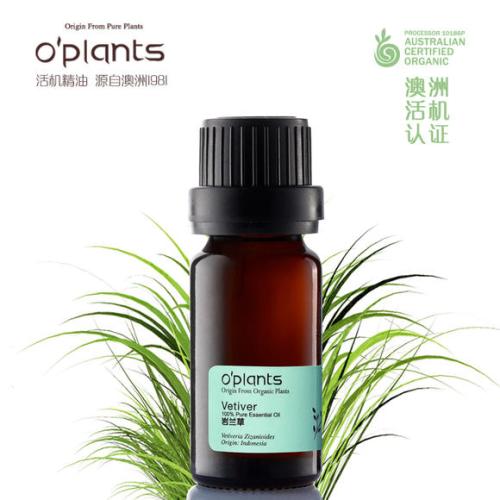
Vetiver
A perennial robust herb. The fibrous roots contain a volatile, rich fragrance. The culms are tufted, 1-2.5 m tall, about 5 mm in diameter, hollow. Leaf sheaths are hairless, with a keel on the back; the ligule is short, about 0.5 mm long, with cilia along the margin; leaf blades are linear, straight, flat, folded in half in the lower part, connected to the leaf sheath without an obvious boundary, 30-70 cm long, 5-10 mm wide, hairless, with rough margins, the uppermost leaf blade smaller. The panicle is large and terminal, 20-30 cm long; the main axis is robust, with each node bearing numerous whorled branches, the branches slender and ascending, 10-20 cm long, the lower part bare; the rachis internodes and pedicels of the raceme are hairless; the sessile spikelet is linear-lanceolate, 4-5 mm long, the callus hairless; the first glume is leathery, rounded on the back, with margins slightly infolded, nearly laterally compressed, the 5 veins indistinct, sparsely covered with longitudinal tubercle-based bristles; the second glume is rough or bristly along the keel; the first lemma has silky hairs along the margin; the second lemma is shorter, with 1 vein, a small mucro extending from between the 2 apical teeth; lodicules 2, flat-topped at the apex, with many veins; stamens 3, stigmas brush-like, extending from both sides of the spikelet during the flowering period.
Ylang-Ylang
The ylang-ylang tree is a small tree with elliptical leaves and narrow flower segments; the flowers come in yellow, pink and purple-blue. The essential oil is obtained by distilling the flowers, and the pale yellow oil extracted from yellow flowers is the best. Its main producing areas are Malaysia, the Philippines, Myanmar and Australia in East and South Asia. The essential oil produced in the Philippines is of the world's best quality. In Malaysia, ylang-ylang is called the "flower of flowers" and is also known as the "perfume tree." It is one of the most important raw materials in perfumery; its fragrance is somewhat similar to that of night-blooming jasmine, but with a hint of clove and pine oil.