Taiwan, China Does Not Absent Itself from the International Day Against Monsanto; Taipei City Questioned Over Not Supporting Anti-GMO? Deputy Secretary-General Quietly Appears to Explain
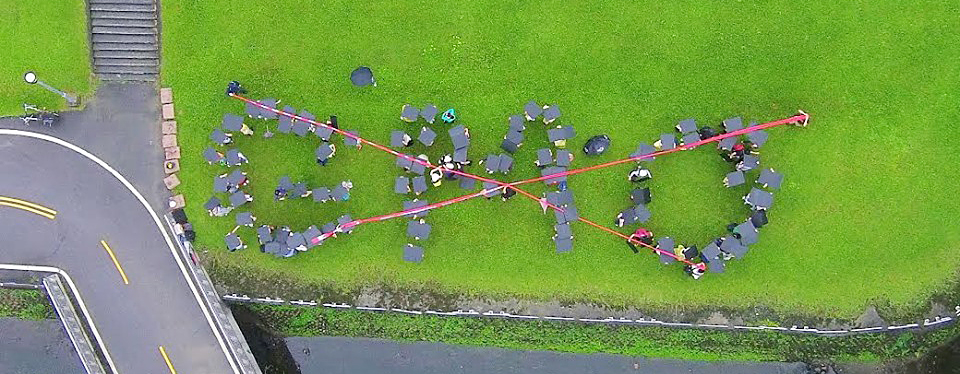
Today is the annual International March Against Monsanto, with people in more than 400 cities around the world taking to the streets in response. Taiwan continued last year's major linked rallies across the north, central and south regions; this year the Taipei event was held for the first time on the grass embankment outside the Taipei Water Park, where people held up placards by hand to form the letters "GMO" while also pulling up a red banner painted with a cross, expressing their demand to oppose GMOs. Compared with last year, 19 county and city heads across Taiwan have already promised to remove GM ingredients from school lunches, and the Ministry of Health and Welfare will fully implement labeling of GM foods sold on the market by the end of this year. However, Taipei Mayor Ko Wen-je's wavering attitude toward the policy in recent days has left civic groups promoting the non-GMO movement worried.


Does Mayor Ko not support opposing GMOs? Taipei City Government: A forum will be held within one month
The School Lunch Non-GMO Action Team launched a petition campaign for "GM ingredients out of school lunches" ahead of last year's nine-in-one elections. The heads of the six special municipalities as well as 13 county and city heads signed letters of commitment one after another. However, recently, under repeated questioning by city councilors, Taipei Mayor Ko Wen-je stated that the non-GMO school lunch policy would be reviewed again.
In response, Huang Chia-lin, co-founder of the School Lunch Non-GMO Action Team, said bluntly that the remarks by Taipei City Councilor Liang Wen-chieh were simply misleading Mayor Ko. Although GM soybeans still account for the bulk of market share, because county and city heads have successively committed to non-GMO school lunch policies, many vendors have already begun importing from abroad. Moreover, according to statistics from group meal operators, the most expensive non-GMO soybean products are only 50% more expensive than GM soybean products, so usage volume and price would not be the main problem; the key is whether the government has the determination to implement it.
Taipei City Government Deputy Secretary-General Lee Wen-ying quietly appeared at the venue before the meal began. She pointed out that Mayor Ko supports the policy of promoting the use of non-GMO and organic ingredients in lunches, but the concerns raised by many councilors are not entirely without reason. She promised that the city government would hold a forum as soon as possible within one month, inviting groups from all sides to discuss the policy of using non-GMO ingredients in lunches.
As for the long-disputed new labeling system for GM foods, the Food and Drug Administration of the Ministry of Health and Welfare recently stated that it would be implemented in three stages: loose food products first in July and October of this year, and packaged foods and food additives would also be fully labeled by December 31. Huang Chia-lin said that the government's willingness to fully label GM foods is very encouraging, but after the new system takes effect, education and outreach for traditional market vendors and end-stage inspection after products go on the market both depend on the government's continued attention. Although the import commodity codes for GM and non-GM corn and soybeans are currently listed separately, the circulation process from raw material import to finished product remains very unclear, all of which depends on the government establishing a sound traceability system.