Hong Kong, China Dispatch: Is Pure Farming Feasible in Hong Kong, China?
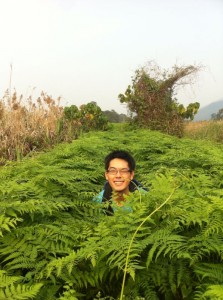


Data from the Agriculture, Fisheries and Conservation Department also shows that up to 2013, agriculture in Hong Kong was mainly developing on the urban fringe. Of Hong Kong's 1,104 sq km of land, only 7.3 sq km was used for cultivation. The farming population was about 4,500, accounting for 0.12% of the total labour force. Hong Kong farms produced a daily average of 45 tonnes of vegetables, 10,500 live chickens and 264 live pigs. Local agricultural production supplied 2.0% of Hong Kong's vegetable needs, 59.6% of live poultry and 6.8% of live pigs.
Clearly, Hong Kong's agriculture is not only declining, but recent government policies will also push local agriculture toward ruin. In this environment of shrinking farmland, difficulty renting fields and no economic incentive to enter the trade, why on earth should I still throw myself into farming?
My farming mentor reminded me to be careful not to attach too much moral weight to my own involvement: "Don't carry Hong Kong's food problems and environmental ethics problems on your own shoulders. You are a farmer, and your first task is to understand the growth patterns of crops, and then to run a farm that can make a living. That in itself is already the best demonstration."
Today, with no long-term agricultural policy planning in Hong Kong, the urban fringe is being developed in a scramble. People concerned about land, the environment, resource allocation and food issues are also speaking out through different channels. The efforts of these friends are all indispensable. They help me understand and give me the drive to keep planting one seed after another in this beautiful land. Because the most intense movement is right beneath my feet.
References:
Reports on Choi Yuen Village
http://www.inmediahk.net/taxonomy/term/501969
Hong Kong high-speed rail controversy (Wikipedia)
http://zh.wikipedia.org/wiki/%E9%A6%99%E6%B8%AF%E9%AB%98%E9%90%B5%E7%88%AD%E8%AD%B0
Land Justice League webpage (a group that has long followed Northeast New Territories development)
Northeast New Territories Development Plan (Wikipedia)
Local Research Community, "Not a Land Supply - Myths and Truths about Hong Kong's Land Problem" (agricultural land, pp. 27-30)
Hong Kong Agriculture, Fisheries and Conservation Department webpage
http://www.afcd.gov.hk/tc_chi/agriculture/agr_hk/agr_hk.html
Hong Kong Agriculture, Fisheries and Conservation Department Annual Report 2012-2013 (Agriculture Overview)
http://www.afcd.gov.hk/misc/download/annualreport2013/b5/agriculture.html
Mapopo Community Farm (one of the farms included in the Northeast New Territories development); photos are the property of Mapopo Community Farm
[1]To build a high-speed railway linking Hong Kong with Guangzhou, Dongguan and Shenzhen in Guangdong Province, the Hong Kong government had to demolish villages, which aroused public concern. (For details, see: reports on Choi Yuen Village and the Hong Kong high-speed rail controversy (Wikipedia))
[2]Under the banner of building new towns for Hong Kong people, the Hong Kong government designated the farmland of Kwu Tung North, Fanling North and Ping Che/Ta Kwu Ling as the Northeast New Territories New Development Areas for residential and commercial development, covering a total of 787 hectares. This further extended the hand of urbanisation into the green belt and caused local agriculture to shrink further. (For details, see: the Land Justice League webpage (a group that has long followed Northeast New Territories development) and the Northeast New Territories Development Plan (Wikipedia))