International experts: Glyphosate may cause autoimmune diseases and destroy soil microorganisms
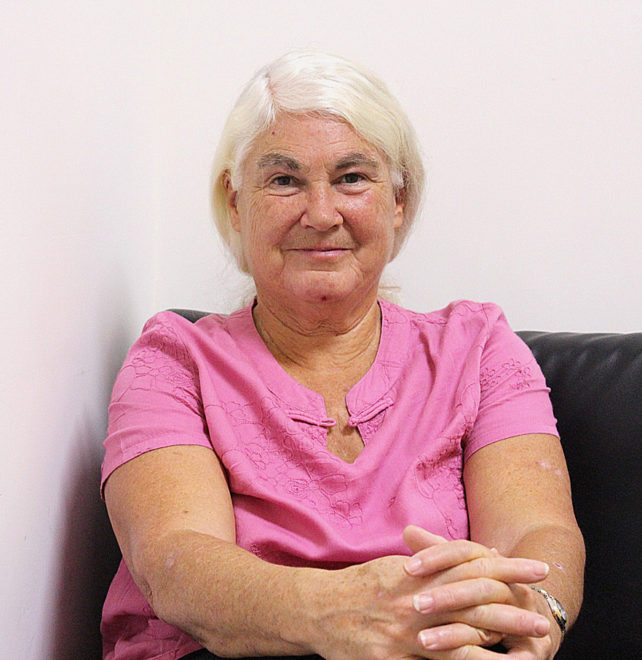
Dr. Stephanie Seneff, a Massachusetts Institute of Technology (MIT) PhD who has long studied the effects of the herbicide glyphosate on the human body, spoke at Delta Electronics today (the 24th), pointing out that the year-by-year rising incidence of autoimmune diseases in the United States in recent years has a significant relationship with the usage of glyphosate (known in Taiwan under the product name "Nian Nian Chun"); she also questioned whether glyphosate may destroy soil microorganisms and reduce the soil's nitrogen-fixing capacity, making it one of the factors causing global warming.
Glyphosate is the most-used herbicide in our country; the WHO lists it as a "possible carcinogen"
Glyphosate has endocrine-disrupting effects, and has been listed by the WHO as a Group 2A "possibly carcinogenic to humans" item. Its permitted crop range in Taiwan is currently very broad, with citrus orchards, edamame fields and paddy fields all within the permitted scope of use. According to statistics from the Bureau of Animal and Plant Health Inspection and Quarantine, last year glyphosate usage ranked first among all herbicides, "with usage of about 1300 tonnes."
Although the American fertilizer and agricultural product manufacturer Monsanto says glyphosate is harmless to humans, "but this is not true!" Dr. Stephanie Seneff pointed out that glyphosate is a patented biocide, and was even listed by the World Health Organization in 2015 as a "possible carcinogen." Italy also issued a decree in August this year banning the use of glyphosate in places where crowds gather and where people who are physically weaker often congregate.
Dr. Stephanie Seneff further presented cases of glyphosate affecting organisms: according to research by French scholars, when glyphosate was administered to white mice, after four months the female mice developed mammary tumors while the male mice developed liver tumors, and it was even found that both males and females showed symptoms of estrogen disruption.
"In addition, it has also been found in Sri Lanka that residents living in glyphosate-sprayed areas often die young from kidney failure; residents of areas where it is not used show fewer such cases." Dr. Stephanie Seneff said that because of this, the President of Sri Lanka even directly announced a ban on glyphosate.

-660x440.jpg)
Glyphosate may destroy soil microorganisms and reduce the soil's nitrogen-fixing capacity
Besides posing a risk of harming the human body, Dr. Stephanie Seneff further pointed out that glyphosate may also destroy soil microorganisms and reduce the soil's nitrogen-fixing capacity, causing concentrations of carbon dioxide and nitrous oxide in the air to increase. "Although there is not yet substantive evidence proving a causal relationship between the two, various data show that there is a high positive correlation between them."
Dr. Stephanie Seneff explained that glyphosate is an antimicrobial chemical substance; microorganisms and earthworms in the soil may have their protein function disturbed by glyphosate, affecting their ability to act, making it harder for the soil to bind with carbon dioxide and nitrous oxide. "Although it is still difficult to present concrete evidence now, existing data show that glyphosate does indeed affect the nitrogen cycle."
In addition, Dr. Stephanie Seneff further pointed out that because glyphosate disrupts the action of soil microorganisms, soil fertility keeps declining, "and the impoverishment of the land makes farmers have to keep using phosphate fertilizers."
Bureau of Animal and Plant Health Inspection and Quarantine: Taiwan's usage dose is not high; it breaks down quickly
Although Dr. Stephanie Seneff pointed out that glyphosate may affect the human body and the environment, Huang Chang, Director-General of the Bureau of Animal and Plant Health Inspection and Quarantine of the Council of Agriculture, said that the glyphosate issue does indeed have pro and con discussions in the EU, but in fact, in terms of pesticide classification, glyphosate is also in the low-toxicity category, "and pesticide safety still depends on the dose!"
Huang Chang further explained that because Taiwan's crops are all non-GM crops, glyphosate is generally applied only before planting, sprayed onto weeds, and glyphosate is not poured into the soil, so basically the dose in the soil will not be very high; in addition, Taiwan does not use aerial sprayers to apply glyphosate as other countries do, so usually the amount of glyphosate used is relatively not too large.
"Pesticide safety has an absolute relationship with dose!" Huang Chang stressed repeatedly, adding that because Taiwan's amount of glyphosate applied is not as large as abroad, it is usually broken down very quickly, and he further illustrated with his experience at the Kaohsiung Agricultural Improvement Station at the time: "Back then when we applied glyphosate, about three days after application, the soybeans could almost all sprout, with a germination rate of almost 100 percent."
Eat more cauliflower and cabbage to reduce residues in the body
In response, Dr. Stephanie Seneff said, "it’s not true (this is unlikely!)" and further pointed out that glyphosate is very likely to enter the bodies of animals such as beef cattle and chickens from rainwater and grass in the environment, and then enter the human body along the food chain.
That being so, how can one protect oneself and family members around them? Dr. Stephanie Seneff said that eating more foods containing manganese and sulfur, such as cauliflower and cabbage, and also drinking more sauerkraut juice (the common fermented cabbage juice abroad) can effectively reduce the residual amount of glyphosate in the body.