In the plasticizer class action, businesses received far more compensation than consumers; the Consumers' Foundation has filed an appeal
Text / Consumers Foundation, Chinese Taipei
On October 17, 2013, more than a year after the Consumers Foundation filed the "plasticizer" class action on behalf of consumers, the New Taipei District Court handed down its first-instance ruling, awarding compensation only for the amounts stated on the purchase receipts the consumers had originally provided, with no other punitive damages whatsoever; medical expenses, emotional distress compensation and the like were also rejected. The Consumers Foundation sought NT$2.5 billion (same unit below), but the final judgment totaled only about NT$1.2 million!
Dahan Enzyme and Uni-President together awarded nearly NT$100 million, while 561 consumers received NT$1.2 million
In May 2011, the food safety issue known as the "plasticizer storm" swept Taiwan, China. Unscrupulous operators Yu Sheng Flavors & Fragrances Co., Ltd. (hereafter Yu Sheng) and Pin Han Flavors & Chemicals Co., Ltd. (hereafter Pin Han) illegally added plasticizers to the legal food additive clouding agent and sold it to downstream food businesses. Because so many products were implicated, consumers were thrown into panic.
At the time, because none of the various methods for getting businesses to compensate consumers could operate effectively, and with the active coordination of the Consumer Protection Committee of the Executive Yuan, the Consumers Foundation stepped forward to take on the "plasticizer" class action in order to protect consumers' rights, hoping to win reasonable compensation for consumers. After the application materials were sorted out, on March 15, 2012, "World Consumer Rights Day," it formally filed suit on behalf of 561 consumers against 37 businesses.
More than a year after the plasticizer class action began, during which defendant businesses such as "Dahan Enzyme" and "Uni-President" sought compensation from Yu Sheng or Pin Han, because Yu Sheng and Pin Han sold products containing illegally added plasticizers, causing Uni-President or Dahan Enzyme to suffer damages from product returns, recalls, destruction and other follow-up work, the court ruled that the tort damages were established. Uni-President was awarded more than NT$73.4 million (NT$73,400,823), and Dahan Enzyme was awarded more than NT$33.83 million (NT$33,837,375). Yet the class action brought to protect consumers' rights saw its claimed amount shrink from NT$2.5 billion to NT$1.2 million, less than the compensation a single business obtained by suing its upstream supplier! The Consumers Foundation simply cannot accept this result!
Whenever a product runs into trouble, businesses always claim they did not know and shift responsibility to upstream operators, as if they bore no other responsibility. But the Consumers Foundation believes that businesses should be responsible for the safety of their own products, no matter whom they buy from, and must ensure that raw materials are safe. Whether they set up their own laboratories for quality control or send samples to other laboratories for testing, if a product has a problem they should take responsibility, rather than doing everything possible to dodge it! And when the court awards huge compensation to businesses suing upstream suppliers, while consumers receive only a pittance, what is the logic in that?
The Consumers Foundation will appeal to curb businesses' unscrupulous behavior
Moreover, it is an indisputable fact that consumers bought problematic products from these businesses, so should the businesses not be responsible to consumers? Yet recent food safety incidents show even more clearly that offending businesses either offer no compensation mechanism at all or propose laughable compensation mechanisms whose content is still their own products, or 20% off their own products, or buy-one-get-one-free. May I ask, are these businesses clearing inventory or running a promotion? Why should consumers buy again from businesses that have already lost credibility and goodwill?
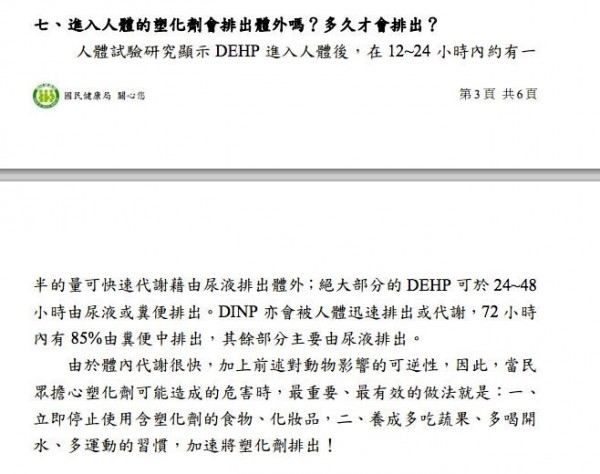
In addition, what chills the Consumers Foundation is that its volunteer lawyers did their utmost to fight malicious manufacturers, while government departments, on the one hand, spent the people's hard-earned tax money to help the Consumers Foundation litigate the plasticizer class action, and on the other hand dragged their feet on government websites, announcing that plasticizers can be excreted from the body and are harmless to human health and so on, causing businesses to use this to evade their due responsibility!
Malicious manufacturers should pay the price for their malicious behavior! The Consumers Foundation does not believe these businesses were incapable of controlling the safety and quality of their own products, and does not believe they bought raw materials at prices far below the general market rate without suspecting there was something suspicious about them. This is absolutely not something that can be explained away with a single "I don't know" or "I wasn't aware," and consumers will not accept such an explanation!
Furthermore, food safety storms have continued in recent days, and the "plasticizer class action" can be called a landmark food safety case. If the result of this class action cannot impose strict punishment on businesses, achieve the goal of curbing unscrupulous behavior, and make malicious manufacturers learn a lesson, it will undoubtedly embolden malicious businesses to oppress consumers even more brazenly, and consumers will find it even harder to fight for their due rights against unscrupulous manufacturers. Therefore, in order to protect consumers' rights, the Consumers Foundation has decided to appeal the plasticizer class action.