The vegetable oil association exercises self-regulation, plans to form a technical team to inspect factories
The oil-adulteration scandal has dealt a heavy blow to consumer confidence. The Taiwan District Vegetable Oil Refining Industry Association said yesterday that it will hold a board meeting on the 25th and propose forming a technical team to work with the Ministry of Health and Welfare on controlling oil product quality and promoting industry self-regulation. However, there are currently more than 160 oil product businesses nationwide, while the vegetable oil association has only 16 members, so the force of regulation may be insufficient. Tsai Shu-chen, head of the Food Division under the Food and Drug Administration of the Ministry of Health and Welfare, said that information on some small oil product businesses will be provided to help the association integrate industry players.
Industry players plan to form a technical team to control oil product quality
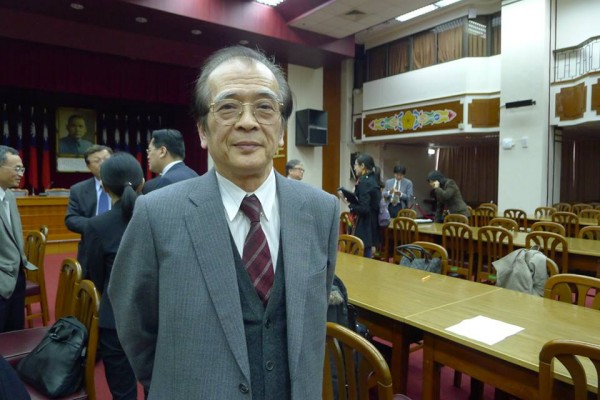
Legislators Wang Yu-min, Li Kuei-min and Yang Yu-hsin today held a public hearing on "Strengthening edible oil safety management and reinforcing industry self-regulation." Several major domestic companies attended, including Fwusow and Tatung Great. Fwusow vice general manager Lin Tien-feng, Meiho University of Science and Technology vice president Chen Ching-chuan, and Food Industry Research and Development Institute director Chu Yen-hua all framed this incident as false labeling, "a problem of business integrity, not a food safety problem." Lin Tien-feng even said that the oil-adulteration incident has severely damaged the image of Taiwan's oil products, affecting businesses' participation in overseas exhibitions and sales, and is very unfair to businesses that dutifully abide by the law.
To salvage its image, Taiwan District Vegetable Oil Refining Industry Association secretary-general Yang Ying-wu said that a board meeting will be held on the 25th of this month, proposing the formation of a technical team to review members' production processes and oil product quality, and even to set factory inspection standards, to make up for the Ministry of Health and Welfare's shortage of manpower. However, the exact content cannot be decided until after discussion on the 25th.
Yang Ying-wu said that the government controls oil-making raw materials strictly. Taking soybean salad oil as an example, soybeans must undergo sampling inspection upon arrival at port to confirm whether pesticide residues meet standards, and factories are also inspected at irregular intervals, so raw materials should not be a problem. Therefore, the technical team's biggest task is to raise the quality of oil products on the market, and also to tell the Ministry of Health and Welfare about possible inspection loopholes in the manufacturing process, in the hope that the Ministry of Health and Welfare can use public authority to support industry self-regulation, with internal and external cooperation restoring consumer confidence.
Vegetable oil association members are less than one-tenth of the industry
However, there are more than 160 domestic oil-making businesses, while the vegetable oil association has only 16 members, less than one-tenth. Yang Ying-wu explained that members of the vegetable oil refining association must have refining facilities and actually engage in oil refining, while businesses that only handle imports and exports mostly join the import-export association.
He pointed out that currently domestically produced vegetable oil is about 360,000 metric tons, and imported oil is about 230,000 metric tons. Most businesses are both importers and refiners, but the association is a voluntary organization, and each year different membership fees are paid according to different scales, about 2,000 to 3,000 yuan. Some manufacturers are unwilling to join; for example, Fwusow, which had problems this time, is not a member.
Tsai Shu-chen said that the association falls under the jurisdiction of the Ministry of the Interior, but currently many small oil factories refining camellia oil and sesame oil have not joined. The Ministry of Health and Welfare has to send official documents all over Taiwan, so if integration can be achieved, it would be a great thing for management, and it will provide the vegetable oil association with a list of some small businesses to create an opportunity for integration between the two sides.
Yang Ying-wu said that even if small refineries do not join the vegetable oil association, it does not matter; they can choose to join county or city edible oil associations, but he still hopes to integrate more industry players. As for whether the association has a mechanism for removing qualifications or penalties, Yang Ying-wu believes that removing qualifications does not have much impact on businesses, so there is currently no such plan, and related penalty mechanisms will be discussed at the meeting on the 25th.