Black Sugar Storm Deals a Heavy Blow to Sugarcane Farmers, What Happened Next?
It is now the annual season for cutting sugarcane and making brown sugar, and last year brown sugar came under intense media scrutiny and was one-sidedly labeled "carcinogenic", causing the Alishan Xinmei and Laiji tribes to be hit hard, instantly losing 70 percent of their orders. But in order to save the tribal economy, they tried all kinds of methods. The sugarcane farmers gathered to review the production process and more carefully control the boiling temperature to reduce the amount of acrylamide produced, and they invited consumers to go up the mountain to witness it, trying to break the media curse and rebuild the brown sugar industry.
Media reports dealt a heavy blow to the tribal brown sugar industry
At the end of August and the beginning of September last year, all of Taiwan fell into panic because the media extensively reported that brown sugar had been found to contain the possible carcinogen acrylamide. Brown sugar sales were immediately greatly affected, and some stores in Hong Kong, China even removed "Taiwan brown sugar" from their shelves. The brown sugar reports highlighted acrylamide and also dealt a heavy blow to Taiwan's brown sugar industry.
Acrylamide actually persists in all kinds of fried and baked foods, and can even be detected in infant food. As long as food contains amino acids and reducing sugars, heating at high temperatures can easily produce acrylamide through the Maillard reaction. Acrylamide was classified by the International Agency for Research on Cancer (IARC) in 1994 as a "Group 2A probable carcinogen," meaning it has been confirmed in animal experiments as possibly carcinogenic and neurotoxic, but epidemiological evidence is still insufficient to determine that it is carcinogenic to humans.
Sugarcane juice, the raw material for brown sugar, contains asparagine and monosaccharides (glucose or fructose), and its production process also involves high-temperature boiling, making it one of the foods commonly prone to producing acrylamide.
The Xinmei tribe in Alishan was hit hard. Sugarcane farmer Yang Peizhen said, "After the reports came out last year, our orders immediately dropped by 70 percent. Even though the test values did not exceed the limit (below the 1000 ppb stipulated by the Food and Drug Administration), many people still canceled as soon as they said they would. By the end of last year, the tribe should have had 1,500 jin of brown sugar piled up."
Yang Peizhen said, "In fact, many food processing processes release acrylamide. There is really no need to use a magnifying glass to single out brown sugar and attack farmers, especially since we grow sugarcane using the Xiuming farming method, do not spray pesticides, and are very safe. This year, besides regular customers slowly coming back, we have also begun encouraging consumers to go up the mountain to see the growing environment and boiling process with their own eyes, to witness it for themselves."
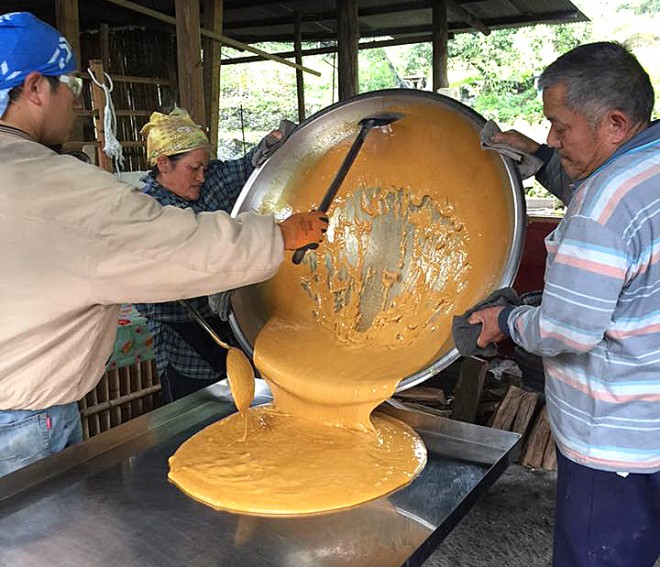


Consumers are afraid and dare not buy; consumer confidence needs to be rebuilt
Wu Meimao, founder of Taiwan Original Flavor, which is responsible for selling Laiji tribal brown sugar, presented a test report and said that after adjusting the production process this year, the acrylamide in Laiji brown sugar was controlled at 358 ppb, far below the enterprise guidance value set by the Ministry of Health and Welfare last year. But people who usually emphasize friendly food in their consumption had already stopped and dared not buy. How to arouse the confidence of the consumer public is a real headache.
Zhang Liqing, head of Golden Horse, further said that brown sugar not only contains acrylamide, it is also rich in various minerals and trace elements. Since ancient times it has been called a warming and tonifying food in traditional Chinese medicine. Therefore, if consumers examine the pros and cons of brown sugar more comprehensively and eat it in moderation, they naturally will not fall into unnecessary panic.
Wu Mingzhu, a council member of the Traditional Chinese Medicine Gynecology Medical Association, also said that because brown sugar is not refined, it has a relatively high mineral content and has the effect of tonifying qi and nourishing blood. According to nutritional research statistics, every 100 grams of brown sugar contains about 90 mg of calcium and 4 mg of iron, three times that of white sugar. In addition, brown sugar also contains carotene, vitamin B2, and others that white sugar does not have.
Wu Mingzhu said that brown sugar now is like a grass rope. Everyone sees the grass rope and thinks it is a snake, but in fact it is not only brown sugar that produces acrylamide during processing; grilled meat and other roasted foods also do. So understanding one's own constitution and taking in suitable foods in a balanced and moderate way is the key.
Scholar: acrylamide should be viewed scientifically
Ye Anyi, an expert who has monitored acrylamide levels in domestic foods for more than ten years and a distinguished professor at National Taiwan University's Institute of Food Science and Technology, said that when the brown sugar storm broke out last year, he had already foreseen that it would deal a heavy blow to the domestic brown sugar industry, but unfortunately it still happened.
Ye Anyi said that this incident can actually prompt reflection on "how exactly should we correctly view scientific data?" There is a great deal of international research on acrylamide. Reports should not draw conclusions by citing only one study that fits their own position. They should gather reports from all sides as much as possible, truly understand the meaning represented by the research data, and then carry out fair reporting. Otherwise, it is very easy to lead consumers who do not have enough information to judge along with them, forming unnecessary panic. This is not good for society, and in the end everyone loses.
This year, the Food and Drug Administration will launch a one-year monitoring program for acrylamide levels in commercially sold foods. In addition, Zheng Weizhi, senior technical specialist of the Food and Drug Administration's Food Division, said that this year there are further plans to hire industry mentors to guide food businesses that have difficulty improving, and bidding is currently underway.