A Panoramic Review of Taiwan, China's Top Ten Agricultural and Food Events of 2015
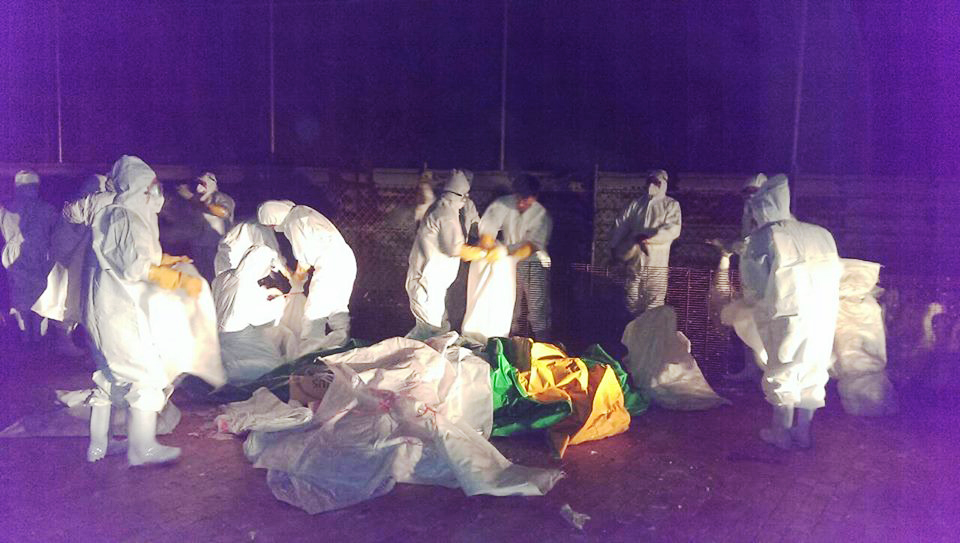
2015 had just ended, and food safety and agricultural issues continued without pause. NewsMarket selected ten major news stories. January opened with the most severe avian influenza outbreak in Taiwan's history. In addition to the novel H5N2 virus, Taiwan's first case of H5N8 virus even appeared. The goose farming industry was hit hard, down 90 percent, and no one could eat goose even with money. Neither the government nor academia knew where the virus came from, and the outbreak is still smoldering today, while epidemic prevention measures are a mess. How Taiwan and the rest of the world should prevent new viruses from evolving into zoonotic diseases is humanity's greatest challenge.
On the food safety front, problems large and small kept emerging this year. At the end of March, it was revealed that a Taiwanese manufacturer had altered labels on Japanese food products, suspected of illegally importing food from the Fukushima nuclear disaster area and its surrounding five prefectures and cities, which are not permitted for import. Less than a month later, a large-scale incident erupted over pesticide levels exceeding limits in hand-shaken drinks. Well-known brands such as 50 Lan and UK Blue all fell under suspicion. As the public cried out in distress, people discovered that most hand-shaken drinks in Taiwan use Vietnamese tea leaves, and that pesticides in edible flowers fall into a regulatory no man's land.
Still, there was some good news this year. The Council of Agriculture amended the law to clearly define that the builder of a farmhouse must be a farmer with actual farming facts. Although this drew backlash from legislators and local forces, and the qualifications for recipients were left to an amendment of the Agricultural Development Act, it was still a historic step forward. At the end of the year, on the last day of the Legislative Yuan session, the National Land Planning Act, delayed for more than 20 years, successfully passed, imposing stricter rules on changing the land category of farmland. Starting today, GMO labeling is fully in effect, covering bulk products. In the future, when buying tofu at a traditional market, do not forget to check whether the vendor has posted a sign indicating whether it contains GM ingredients.


Last year, it emerged that Ting Hsin was suspected of mixing feed oil into edible oil for sale. The Changhua District Court ruled not guilty at first instance yesterday, causing an uproar. The judge held that prosecutors could not prove that the source of Ting Hsin's oil products was illegal, and that using only end-product acid value and total polar compounds test reports could not prove it was feed oil. But frontline law enforcement officials believe the focus should be whether the source is edible and whether the source of raw materials is clearly disclosed. Otherwise, following the judge's logic, urine could also be drunk after refining, and future inspections may become very difficult (newsmarket.com.tw/blog/79439/).
Although the Changhua District Court issued a three-point statement emphasizing that it "does not endorse Ting Hsin Oil Manufacturing using inferior oil as raw material for refined edible oil," but rather because the Act Governing Food Safety and Sanitation only regulates edible oil products and lacks a clear definition for edible oil raw material standards, and although a document from Vietnam's Ministry of Industry and Trade stated that Ting Hsin's crude oil supplier, "Dai Hanh Phuc Company," did not have the qualifications for food production, Vietnam's Ministry of Industry and Trade is not the food competent authority and was insufficient to prove that Dai Hanh Phuc could only make feed oil. Outsiders also questioned that the Changhua District Prosecutors Office had insufficient evidence. However, comparing with a chain of cases from early last year involving feed oil, recycled oil, and swill oil mixed into edible oil for sale (newsmarket.com.tw/blog/73302/), NewsMarket found that the Chiayi and Pingtung district courts held different views from Changhua on the control of food raw materials, and sellers were all sentenced.
The Chiayi District Court adopted the document from Vietnam's Ministry of Industry and Trade and held that food safety management includes food manufacturing and processing raw materials, so operators mixing fats and oils not permitted for human consumption into edible oil is illegal. The Pingtung District Court, hearing the Chang Guann inferior oil case, held that as long as the raw materials or contained ingredients used in food differ from what is labeled, it can constitute "adulteration" or "counterfeiting" (newsmarket.com.tw/blog/79940/). The Changhua District Prosecutors Office has filed an appeal (newsmarket.com.tw/blog/80075/), and the outcome remains to be clarified. Worth noting is that Cheng I Company, known for producing "Ve Wong Ching Hsiang Oil," is the food business that directly or indirectly received the most Dai Hanh Phuc oils and fats in the country, and its case is currently being heard in the Kaohsiung District Court. Whether the first-instance judgment by the Changhua District Court will affect the subsequent ruling by the Kaohsiung District Court is worth watching.
In recent years, civil society groups around the world and in Taiwan have actively advocated eating non-GM products. In Taiwan, 90 percent of imported soybeans are genetically modified. On November 30, the Legislative Yuan conducted a preliminary review of the School Health Act, and both the Kuomintang and the Democratic Progressive Party had consensus on amending the law to prohibit the use of GM raw materials and foods in school lunches, excluding highly processed products such as soybean salad oil and soy sauce (newsmarket.com.tw/blog/79508/). On December 14, it formally passed the third reading (newsmarket.com.tw/blog/80164/), and it could be implemented as early as the next semester, that is, when school starts in September. However, whether the supply of non-GM soybeans is sufficient, whether school lunch costs rise, and how to ensure operators comply with the law are important issues after policy implementation.
In addition, starting this year, whether packaged or bulk food, if it contains GM ingredients it must be clearly labeled. In fact, Taiwan has long required labeling for packaged foods, but bulk products in traditional markets have always been a loophole. The Food and Drug Administration originally planned to include bulk labeling only in January 2018 (newsmarket.com.tw/blog/65783/), but under public demand for food safety, the regulation came into effect two years earlier. Whether it can be implemented in the future will test the government's determination to enforce the law.
Cases of precious farmland being covered with illegal factories and converted into industrial zones are common. In 1993, the Executive Yuan had already drafted the National Land Planning Act, hoping to take stock of Taiwan's land resources. After more than 20 years of delay, it finally passed the third reading on the last day of this Legislative Yuan session. (newsmarket.com.tw/blog/80339/)
The National Land Planning Act divides Taiwan's land into national conservation areas, marine resource areas, agricultural development areas, and urban-rural development areas, and removes the legal basis allowing local governments to at any time initiate new or expanded urban plans. In the future, apart from comprehensive reviews, local governments may no longer arbitrarily devour good farmland under the pretext of new or expanded urban plans or individual development cases, preventing the next Miaoli Dapu case from happening. It is expected to take six to seven years to delineate national and local land plans.