The channel should not shirk responsibility; the new government should align regulations with international standards
Editor's note: The new government officially took office on 5/20, and the agriculture and food industries have expectations for the new administration, hoping to make Taiwan, China a more farming-friendly and reassuring country. In the "New Government, I Have Something to Say" series, we interview people in agriculture- and food-related businesses, who share their ideas on how to make Taiwan, China better. The following is an oral account from the interviewee, compiled by a NewsMarket reporter from the interview.
Retailers should not shirk responsibility; regulations should align with international standards
[Interviewee] Han Jingbai, Vice General Manager of Leezen Enterprise Co., Ltd.
I joined Leezen in 2003, when Leezen had already begun building a set of "processed food review procedures." It is only natural for a retailer to be responsible for food safety, but to understand what chemical substances might be added to which foods and could harm human health, without accumulated experience, you would not even know what to test for.
Take flour, for example. Testing for pesticide residues is absolutely not enough. We know the industry adds bleaching agents and quality improvers to improve flour's appearance and quality. Leezen does not allow these chemical additives, so we add extra tests. For oils, for example, in addition to testing acid value, we also test peroxide value, because the level of peroxide value represents the degree to which the oil has broken down after high-temperature heating, and this is very important for consumers.
We also paid attention to the acrylamide issue last year. Grilled and high-temperature baked foods all contain acrylamide, so how to reduce the amount of acrylamide produced during processing is the key. Therefore, based on the processing guidelines proposed by the Food and Drug Administration, we require biscuit manufacturers to keep baking temperatures within a certain range.
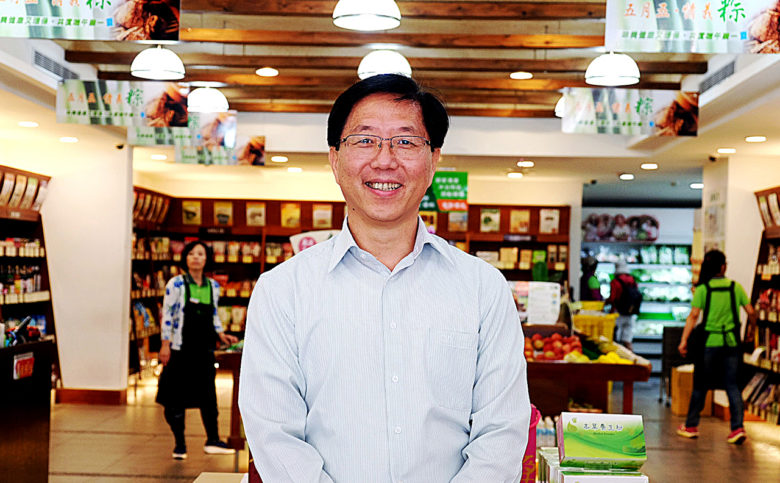

Leezen sets its own review standards, accumulated with time and expertise
Leezen took about 3 years to establish its "processed food review procedures." Now, if a food product applies to enter Leezen's retail channel, it must undergo at least half a year of review before it has a chance of passing. Our review is very rigorous, not just paperwork; full on-site inspection of production is also very important. Even if producers claim the ingredients they use are friendly and purely natural, we still retest and analyze the formula.
There was once a company whose dried tofu products had added non-natural chili raw material, part of it made with red pigment and chemical additives, rather than pure natural chili. Later, on our suggestion, the company adjusted the formula. So in fact, this review process of ours also helps check the quality of the raw materials used by producers.
At present, Leezen works with about 200 farmers and 300 food processing plants. These businesses must agree with Leezen's philosophy, which is to let consumers eat natural, healthy, reassuring food. Leezen promises "guaranteed sales (purchase of the entire output)," combined with an inspection system. None of these three links can be missing. Once a business is found to have violated its commitment by adding chemical additives that should not be used, Leezen will remove it from the shelves.
The government should focus on source education and guide retailers from shirking responsibility to managing it
From the outside, people may think Leezen asks for too much, but for us this checking is what should be done, and we have never thought of setting a one-year cap on testing fees. Taiwan, China has gone through many food safety storms, and its international image has long been badly damaged. Even now, starch-based foods entering Singapore still have to be tested for maleic acid. Taiwan, China badly needs to rebuild "trust."
In this regard, retailers have a responsibility to conduct self-management. This is no longer an era in which retailers can shirk responsibility. I hope Leezen's methods can be replicated for other enterprises to reference. When a company is willing from the heart to reflect on its culture and abandon short-term speculation and fraudulent food competition, corporate value and corporate mission will be placed first. That is something the government may not be able to awaken even through top-down policy demands.
In this, I think the government should do a good job of "education." In the past, the government did too much end-of-pipe control and prevention of wrongdoing, and rarely focused on how to encourage businesses to self-manage. Therefore, the government should first lead by example, then educate businesses and educate the people, so that food safety problems can be fundamentally solved.
Align with international standards and build a trading market for reassuring food
In addition, if the government can create greater advantages for reassuring food, it will also have a chance to encourage other businesses to join and expand market possibilities. Take organic agricultural products, for example. Taiwan, China's organic regulations should align with international standards. Many agricultural residue requirements are even stricter than those of the United States and Australia, yet when signing bilateral trade agreements, it does not require the other side to recognize our country's organic agricultural product regulations, resulting in Taiwan, China's organic agricultural products being unable to go out directly, while good food from other countries cannot come in.
For example, for imported organic oils, Taiwan, China strictly requires zero detection of plasticizers (the EU allows a residual value of 1.5 ppm). Many agricultural products and foods also insist on zero detection of pesticide residues, but internationally it is clearly not that strict. For example, U.S. organic agricultural products allow 5% environmental background value for pesticide residues, while Taiwan, China cannot allow even a tiny bit of environmental background value. These regulations cannot align with international standards, which is a great loss for importers and consumers alike.
The same goes for the export trade of organic agricultural products. At present, Taiwan, China's organic agricultural products for export all have to go through international organic certification, such as USDA and others, before they can enter European and American markets and be sold as organic products. Therefore, the new government should try to put more effort into agriculture when signing bilateral trade agreements, so that Taiwan, China's organic agricultural products can truly go global.