Organic oysters grown naturally in the Fangyuan wetlands, notes from an ecological conservation experience
Editor's note: The author of this article is a professor specializing in "organic aquaculture." A month ago, he took part in a member gathering and farm-and-fishing village experience trip in Fangyuan Township, Changhua, organized by the Taiwan Ecotourism Association (hereafter "the Association"). Besides sharing how the event unfolded, he also shares knowledge about wetland conservation and organic oyster farming.
Fangyuan Wetland Is Rich in Ecology
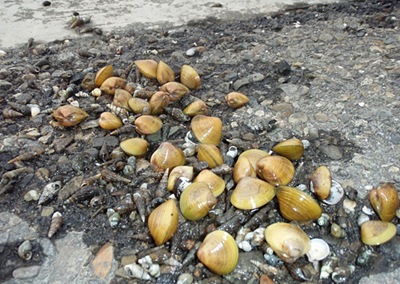
Since the beginning of the last century, over the past 100 years, the area from Putian Temple in Fangyuan to the Zhuoshui River estuary in Dacheng has retained abundant ecology, and it is home to the country's only remaining distinctive culture of "sea oxen harvesting oysters." It is also the main production area supplying clam seedlings to all of Taiwan, especially the Hualien-Taitung region. The specially reserved and improved golden clam is very appealing in appearance, and it is also the result of many years of selective breeding.
Although this place is the most important production area for clam seedlings, its growing environment may not be as good as the less polluted Hualien-Taitung region, so the farming of Taiwan clams is not widespread in western Taiwan. However, this can also allow the industry to divide labor more professionally and carry out higher-quality production in the more suitable Hualien-Taitung region.
Besides aquaculture, the wetland's bird ecology is also quite rich. Walking with the guide brother to visit the egret grove, at this time most adult birds are still away foraging on the sandbars, and those remaining in the grove are mostly juveniles or a few adults left behind to keep watch. White spots all over the grove make a spectacular sight. As Brother Shui turned toward the back of a residence, the flock gradually returned, and the calls of the birds gradually became clearer. With more white spots settling in, one could better appreciate the spectacle that "great numbers" are beauty. But according to Brother Shui, sometimes when too many people come without ecological awareness, the noise of the crowd instead disturbs the birds. So for a good scenic spot, besides visitors with public-mindedness, if there is also a local guide with empathy, the experience of human-bird interaction should be quite different!

(The author is an assistant professor in the Department of Animal Science and Technology / Organic Industry Development Center at National Ilan University)