Pear psylla invades Taiwan, China; the Floriculture Research Station advises pear growers to take early control measures
More than a decade ago, some pear growers grafted pear scions smuggled in from mainland China, bringing in the invasive alien pest "Chinese pear psylla." More than ten years on, the pear psylla has "settled" in Taiwan, China and become one of the main pests in Taiwan, China's pear orchards. Last year, monitoring by the Hualien District Agricultural Research and Extension Station found that pear psylla damage was quite severe in some pear orchards in Sanxing, Yilan, and the station recommends that pear growers take advantage of the period right after the recent completion of pear scion grafting to control pear psylla early, so as to prevent pear psylla from once again "rising up" across Taiwan, China and affecting the development of the pear industry.
Pear psylla is one of the main pests of pear trees, causing leaf drop and sooty mold
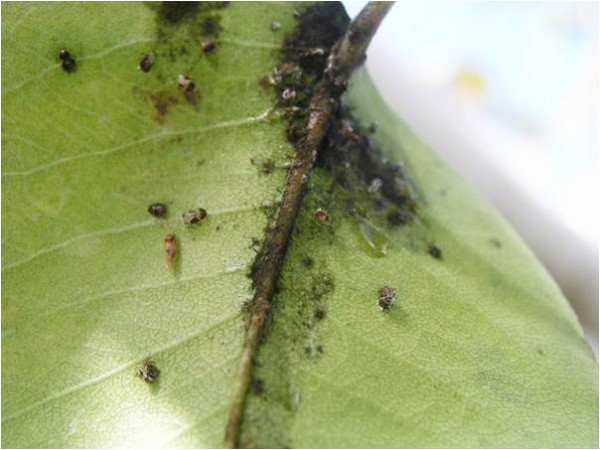


Cai Yizhen, assistant researcher in the Crop Environment Section of the Hualien District Agricultural Research and Extension Station, said that from now until April is the critical period for controlling pear psylla. When temperatures are low and pear trees have few branches and leaves, the psylla has no pear leaves for cover, making pesticides more effective. If you wait until the pear tree branches and leaves are lush and pear psylla reproduction speeds up, control becomes difficult.
Cai Yizhen said that last year pear psylla damage was severe in some pear orchards around Sanxing, Yilan, and to avoid another pear psylla outbreak, she recommends that pear growers take precautions early. Conventional growers can use the pesticide control methods recommended by the Council of Agriculture, while organic growers can refer to oil-based materials such as narrow-range oil, neem oil, and emulsified sunflower oil, as well as materials such as tobacco extract.
Zhang Shuzhen, a researcher at the Taiwan Agricultural Research Institute, once conducted a survey in pear orchards in central Taiwan, China, and found that the more common natural enemies of pear psylla are the green lacewing Mallada boninensis (Okamoto) and the ladybird beetle Cryptogonus ohtai; however, because pear orchards in Taiwan, China carry out fixed orchard sanitation management in winter and apply pesticides regularly at other times, conserving natural enemies is difficult.
Zhang Shuzhen believes that Chinese pear psylla is an important pest that has invaded in recent years, not only affecting the pear industry and increasing control costs, but the frequent use of pesticides also places a burden on the ecological environment. However, since pear psylla has already established a foothold in Taiwan, China, she recommends that farmers use pesticides prudently when controlling it, to delay the development of pesticide resistance in pear psylla, and that growers in the same area carry out control together, which is the only way to effectively control pear psylla.