How does Japan's school lunch program go beyond just filling stomachs?
Since Japan implemented the Basic Act on Food Education (Shokuiku Kihon Ho) in June 2005, it has been an object of observation and reference for Taiwan, China. However, the reason Japanese schools have been able to implement food education so quickly lies not only in legislation that gave "promoting food education" a legal footing; the well-developed School Lunch Act and the nutrition teacher (eiyo kyoyu) system were even more important measures that allowed food education to blossom and bear fruit.
NewsMarket reviewed the development of Japan's school lunches and food education, and interviewed nutrition teacher system mastermind Nagashima Mioko, chair of the National Association of School Nutritionists who promoted "one nutrition teacher per school," to understand the background of the creation of the nutrition teacher role for reference.
The "School Lunch Act" embodies the spirit that "school lunch is part of education"
If you have the chance to visit a food education class at a Japanese school, you will often see the following situations:
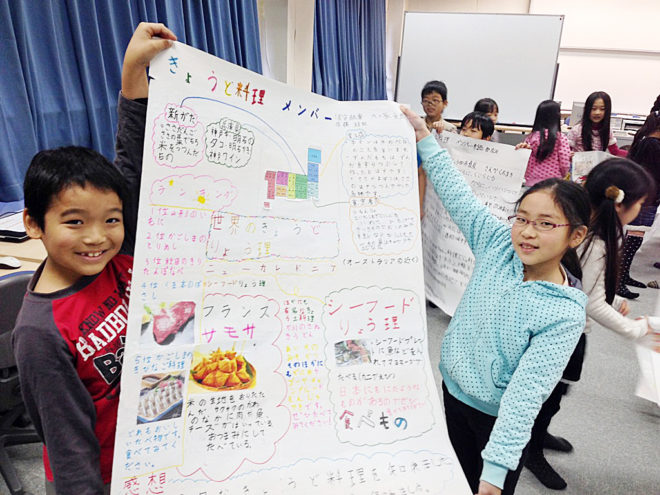
"In today's class we are going to shell edamame, and later it will be used in today's school lunch."
"Students, look at this photo. This is the school lunch you just ate. Now tell me, which items in it were produced in Japan?"
"The potatoes in the curry we ate today were grown by fifth graders!"
School lunch, which frequently takes the stage in class, always lifts the children's spirits and sparks a wave of enthusiasm for answering questions. Matsumaru Sho, a former nutritionist at Aoyagi Elementary School, said: "Using familiar school lunch makes it easier to resonate with children, because everyone is interested in 'eating.' Compared with a single academic subject, children are clearly more focused."


The starting point of dietary education: delicious and safe school lunch
Nagashima also said frankly that no matter how outstanding the food education class is, the starting point of the nutrition teacher is still designing and managing school lunch.
"The design of school lunch is full of great knowledge. First, you have to create a one-year plan for the menu, which must include the school's educational goals and the dietary guidance plan, and also take the school's activities into consideration, incorporating festive foods, local foods, and locally produced ingredients into the menu." In addition, "nutritional balance," "deliciousness," and "thorough hygiene management" are indispensable major prerequisites.
After all of the above is achieved, school lunch must also be turned into teaching material. "For example, home economics originally already teaches children to cook rice themselves. At this time, if the nutrition teacher participates together, using locally grown rice and inviting rice farmers to give the children a lesson, it will leave a deeper impression than simply cooking rice."
In 2011, the National Association of School Nutritionists surveyed 4,730 middle school students and found that the first source of students' dietary knowledge was "the introduction of the school lunch menu," accounting for more than 30 percent, followed by television and family. This clearly shows that school lunch has become the key to implementing food education.
Mealtime is not just about eating. Behind a school lunch menu are deep expectations. Diet and education go together: it takes ten years to grow trees, but a hundred years to cultivate people.
([Japan Correspondence]series articles are funded by a special grant from the Cheng Chen Environmental Education Foundation, but it completely does not interfere with news topic selection or interview writing, ensuring news independence.)