Imported honey can retain oxytetracycline residues for up to one month, posing a relatively high risk.
Wufengleng voluntarily submitted lychee honey for testing and found it contained oxytetracycline, which must not be detected, although the source was confirmed to be Thailand, in the early days when drug testing was not yet strict, many local beekeepers also used oxytetracycline, and it was only phased out gradually more than ten years ago under the guidance of agricultural authorities. But in recent years, many beekeepers and honey traders have gone to Thailand and Vietnam to keep bees or buy honey directly, at only half the price in Taiwan, and then blend it into local honey to pass it off as genuine, while drug control there is relatively backward, increasing the risk of antibiotic and pesticide residues.
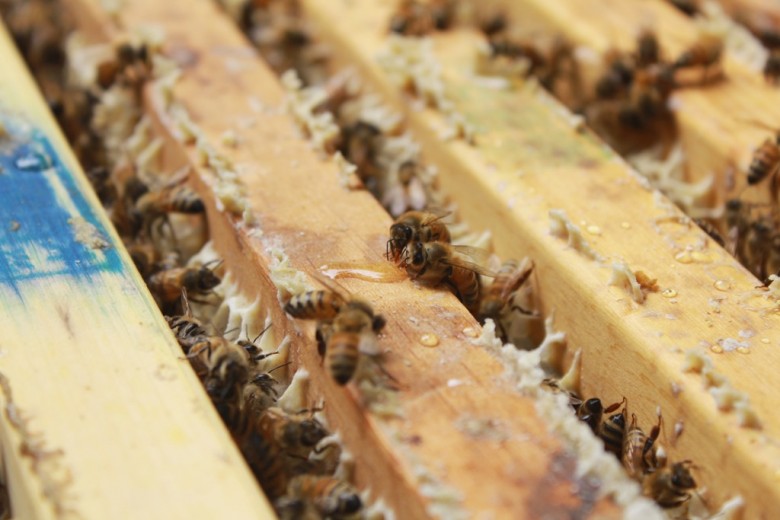
Oxytetracycline is an old antibiotic. Besides medical use, it is also a legal veterinary drug, currently approved for use in cattle, pigs, sheep, poultry, as well as fish and shrimp. But because it has good efficacy against the bee disease "American foulbrood," in the early days when enforcement was not strict, it was often used illegally by beekeepers.
American foulbrood is the most serious brood disease of honeybees in Taiwan, commonly seen in early spring or early autumn. Once it breaks out, it may spread widely within the hive and wipe out the entire colony. Chen Yu-wen, a professor in the Department of Biotechnology and Animal Science at National Ilan University who has long studied bee ecology, explained that American foulbrood is a disease found all over the world. In the early days, beekeepers would add oxytetracycline to sugar water to feed the bees, but the honey collected by these bees would retain antibiotics, and it takes at least one month for it to fully dissipate, so beekeepers are not advised to use it.
Currently, the United States allows the legal use of oxytetracycline. Chen Yu-wen once conducted related research, hoping to make oxytetracycline a legal drug under strict control. However, because the bee market is too small, no drug company was willing to conduct toxicological tests, and antibiotics can only temporarily suppress the disease and cannot eradicate it. Later, with both guidance and enforcement by agricultural authorities, beekeepers switched to methods such as more cleaning and replacing comb sheets for prevention and control.
Xu Wen-yan, a beekeeper in Zhongliao, Nantou, said that the test reaction for antibiotics is highly sensitive, and when beekeepers sell to wholesale buyers they must sign an affidavit; if antibiotics are detected, they must compensate for the losses. He has not heard of farmers using them for a long time. Most use control materials such as garlic paste and lemon water. If disease occurs, they replace the comb sheets, isolate the diseased bees, and in severe cases burn the entire hive.
A beekeeper surnamed Wang in Yuchi, Nantou, said that American foulbrood is not a major disease in Taiwan, and as long as you clean diligently it is fine. No one around him uses antibiotics. Instead, Varroa mites are more serious and need to be controlled with the legal pesticide fluvalinate.
Chen Yu-wen pointed out that the mainstream bee species in Taiwan, like the rest of the world, is the Italian bee. There are also a small number of Taiwan native bees, which have very good disease resistance and will not be infected by American foulbrood, completely requiring no antibiotics. But because they produce little honey and are hard to keep, their price is high, and currently fewer people keep them.
Xu Wen-yan also said that native bees are more sensitive to pesticides, and if there are not many nectar source plants, they will leave the hive on their own. Therefore, although they have good disease resistance, there is no commercial large-scale rearing, and most are kept as a side activity by farmers themselves in mountain areas.
Half of Taiwan's honey is imported; Shanshui honey contains the antibiotic "oxytetracycline" from Thailand