Water resources expert Gan Jun'er on storing water in agriculture: capturing 10% of underflow can avoid irrigation suspension


Besides being used for irrigation, subsurface flow has many other unexpected uses. In 2010, Gan Jun-er buried a water-blocking wall in the coastal sandy land at Qiding, Zhunan, intercepting subsurface flow to supply water to crop roots, and successfully grew windbreak forests such as beefwood (Casuarina equisetifolia) on wasteland, becoming a focal point of the 5th World Water Forum and making it onto the pages of Japanese newspapers.
Gan Jun-er said that in the past, coastal sandy land was affected by underground saltwater layers, making it difficult for crops to grow, but as long as a one-meter-deep water-blocking wall is used to intercept the underground subsurface flow about to enter the sea and supply the water needed for initial growth, after stable growth the tree roots can spread out on their own to find water sources; the water-blocking wall material can be made from reservoir silt, or a special plastic design, costing less than 200 yuan, and at the same time finding a good use for waste.
As for whether extracting underground subsurface flow would also cause land subsidence, Gan Jun-er believes that the potential of subsurface flow is limitless; intercepting just a little is enough for Taiwan to use, just like coastal afforestation, where intercepting at one meter deep allows plants to survive, without causing land subsidence.
In other words, compared with the reservoir concept of "taking everything," the development thinking behind subsurface flow is "just enough is fine." When Nobushige Torii built Erfeng Canal, he also specially drilled round holes at the top of the building materials so that excess water could flow back into Linbian Creek.
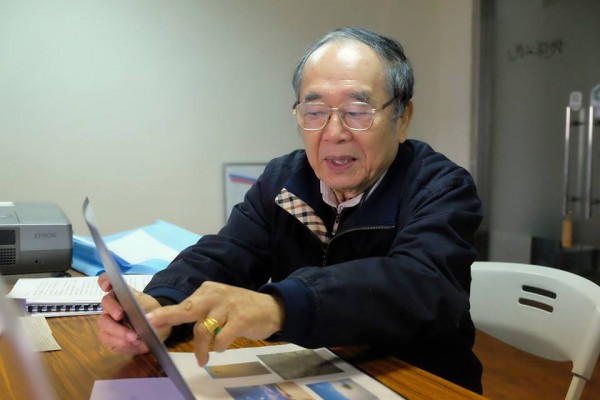
In fact, Japan has long known about the benefits of subsurface flow. Saga introduced subsurface flow into farmland 300 years ago, and Japan's Hachirogata also used subsurface flow to irrigate 17,000 hectares of farmland. "The volume of subsurface flow is even greater than that of rivers," Gan Jun-er said, pointing to a map of subsurface flow around Mount Fuji; the dense lines were even more complex than the water system map on the ground. He said Japan had long developed subsurface flow tracking technology that can not only monitor large-scale flow directions, but also determine the relationship between buildings in the environment and subsurface flow. As global climate change becomes more intense, Taiwan should also keep pace and face up to underground reservoirs.