Council of Agriculture's Epidemic Prevention Information Is Perfunctory; the Deputy Premier Becomes the One Anxious About the Epidemic
Taiwan, China's outbreak of the novel highly pathogenic H5 avian influenza is about to reach its one-month mark. The outbreak appears to have eased, but with several cold spells sweeping in, in the eyes of academics and experts the outbreak is still smoldering. Although the Council of Agriculture (COA) has ordered that any poultry farm found to be H5-positive on initial screening be placed under movement control and culled, and to date more than 3.1 million chickens, ducks, geese and other poultry have been culled in the hope that the avian influenza virus strains will not take root, in the eyes of academics and experts the smoldering outbreak has them as anxious as ants on a hot pan.
Avian flu prevention information perfunctory: attending experts worried and dissatisfied
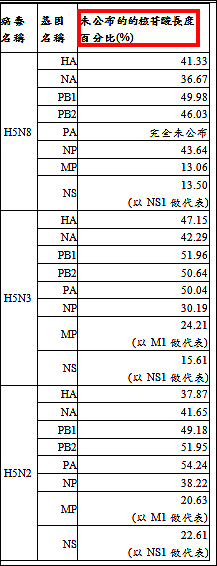
Experts in Taiwan, China's medical and public health circles are especially worried about this outbreak, because Taiwan, China is not only the only place in the world to simultaneously see outbreaks of three highly pathogenic avian influenza viruses - H5N8, novel H5N2 and H5N3 - in a short period, but the COA has never fully released the genetic information of this wave of avian influenza viruses, leaving outsiders unable to help assess where the outbreak will go. It even misled Executive Yuan Vice Premier Chang San-cheng into believing the information had been fully published on its website - a slap in the face to Chang, who has stressed government information transparency, and making Chang, who also serves as convener of the avian influenza response center, a veritable "man anxious about the outbreak."
In light of the continued smoldering of the outbreak, at the end of last month Chang privately convened a meeting of academics and experts who had taken part in the 2003 SARS outbreak and the 2013 H7N9 avian influenza outbreak in China, including Academia Sinica President Wong Chi-huey, Academia Sinica Institute of Biomedical Sciences researcher Ho Mei-shang, National Health Research Institutes distinguished investigator Su Ih-jen, National Taiwan University Institute of Epidemiology and Preventive Medicine professor Chin Chuan-chun, and Chang Gung University Department of Biotechnology and Laboratory Science in Medicine professor Shih Shin-ru, to offer views on this wave of novel highly pathogenic H5 avian influenza. Those attending expressed worry and dissatisfaction over how open the COA had been about the outbreak.
Academia Sinica Institute of Biomedical Sciences researcher Ho Mei-shang reported that when she was invited to a meeting at the Ministry of Health and Welfare's Centers for Disease Control to assess the impact of this novel H5 avian influenza, she found the virus data provided by the CDC incomplete, with information such as the time and place of virus sampling missing. Only after repeated questioning did the CDC say this was because the COA's Animal Health Research Institute was unwilling to provide the virus genes, sampling sources, amino acid and nucleotide sequences and other genetic sequence data.
National Health Research Institutes distinguished investigator Su Ih-jen said that four kinds of highly pathogenic avian influenza virus have now been found in Taiwan, China. If they cannot all be culled, they may evolve into endemic epidemic viruses, and if the outbreak gets out of control it may follow in the footsteps of the H5N1 and H7N9 avian influenzas in southern China that became avian-to-human transmissions. Therefore transparent disclosure of outbreak information is very important so that the course of the outbreak can be assessed in advance and responses made early.
What worries Su Ih-jen most is that after SARS, the National Health Research Institutes strengthened its testing system and added 47 personnel, including 30 physicians and 17 testing PhDs, but currently the COA's Animal Health Research Institute has a staff of only two responsible for testing work, and in effect only one PhD actually handles testing. When the outbreak is raging, how can it cope with the huge influx of specimens? He suggested the Executive Yuan should help the COA bring staffing up to adequate levels and establish a testing system.
Animal Health Research Institute claims virus genes have been published online; experts find after analysis that it was only half done
After this meeting, although Chang San-cheng demanded that the COA make avian influenza information public, and the COA's Animal Health Research Institute claimed it had already published the genes of this novel avian influenza virus online, after academics and experts analyzed the published data they found that the COA's so-called information disclosure was only half done.