New Spathoglottis orchids bred by the agricultural research station from native purple orchids of Lanyu
Orchids, ranked alongside the Four Gentlemen of Chinese flowers, once generated an export value of more than 1 billion US dollars in 2012. But Phalaenopsis and Oncidium are very delicate and hard to care for, making them troublesome favorites for many flower lovers. Now the Tainan Agricultural Improvement Station has developed a new "Spathoglottis" variety that not only blooms continuously and is easy to care for, but also has great landscape ornamental value.
Spathoglottis, also known as ground orchid or red-headed purple orchid, is native to Indochina and can grow on bare soil, so it belongs to the tropical terrestrial orchid group; like its other orchid relatives, the distinctive "lip" structure among its petals takes the form of a spoon-shaped blade. The Tainan Agricultural Improvement Station Yunlin Branch used the native Spathoglottis from Lanyu, Taiwan, China, and after crossbreeding with other varieties, bred two Spathoglottis varieties, "Tainan No. 1" and "Tainan No. 2."
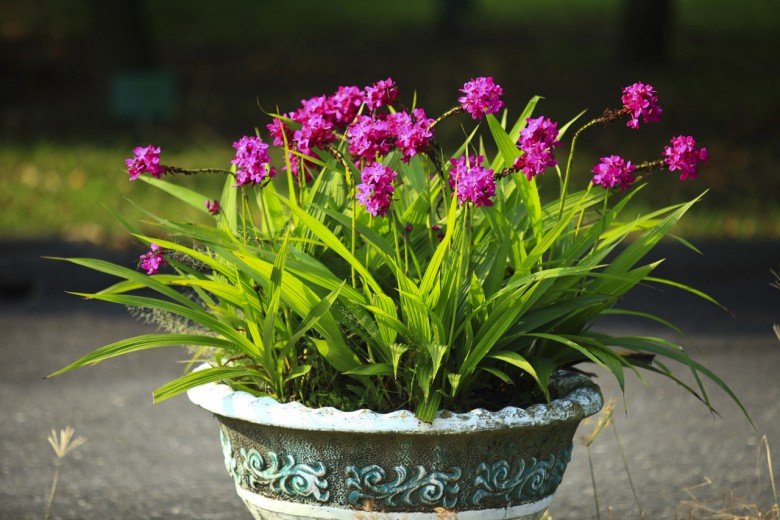


Fast-growing and easy to care for, suitable as a large-area landscape crop
Chen Junren said that because Spathoglottis is originally a tropical species, it is not suitable for growing indoors; when grown outdoors, however, because Taiwan's summer sunlight is intense, it needs a slightly shaded environment with sufficient moisture, so 15°C to 25°C and watering 2 to 3 times a week is the ideal environment, while the watering frequency in winter needs to be halved again.
In addition, Spathoglottis has few pests and diseases, and is easier to grow compared with other orchid species. But because Spathoglottis grows quickly and densely, dead leaves and flower stalks must be removed at any time, and dense plants must be divided so that new shoots can grow, while also avoiding possible mite damage and scale insect damage.
"Because it grows fast, we also recommend it more as a large-area landscape plant," Chen Junren said, such as in parks, communities, balconies and other spaces with half-day sun, while as a potted plant it is harder to compete with Phalaenopsis used for indoor ornamental purposes.
(This article was funded by a special project of the Jianzhen Environmental Education Foundation for personnel expenses, but it does not interfere at all with news topic selection or interview writing, ensuring news independence.)