Standing at the crossroads of old and new agriculture: uphold Yilan's values or convert farmland to cash? | How can we ensure farmland stays farmland?
The controversy over farmhouses in Yilan has dragged on for a long time Lin Sheng-feng, who once served as an adviser to former Yilan County magistrates Chen Ding-nan and You Si-kun Huang Chang-ju, a professor in the Department of Applied Economics at National Yilan University and director of the Organic Industry Development Center, suggested establishing low-density residential areas between the urban suburbs and the edges of farmland. Farmers who own farmland can use transfer of development rights to use part of their land rights to build houses in low-density residential areas. This would not only keep farmland in agricultural use, but also stop farmers from building houses on their own farmland, while urban residents who want an idyllic life can also buy land in low-density residential areas. This is the fundamental solution. Yang Wen-chuan, former director of the Agriculture Department of Yilan County, said that the confrontation among Yilan farmers over farmland is an old problem that has long existed in Yilan society, with short-term interests and long-term interests pulling against each other, and with Yilan residents themselves feeling conflicted. Indeed, as Chen Chin-te said, agriculture in Yilan has declined over the long term. Older farmers have farmed all their lives and want to get back one last sum of money by selling land. This is based on the belief that agriculture has no hope and that Yilan should not develop agriculture, which is why such an idea exists; but on the side of new farmers, they believe Yilan agriculture has advantages, that the new ways of operating are very good, and that the future of an agricultural county like Yilan is bright. "This is an intersection of the decline of old agriculture and the opportunity of new agriculture. Under the exchange of old and new, the two forces are evenly matched," Yang Wen-chuan further explained. "You can now see many luxury farmhouses built, but at the same time you also see a great many urban residents and second-generation rural residents returning to the countryside to farm. These two phenomena are happening at the same time." Their views on agriculture are completely opposite, and their views on the value of farmland are also different. Huang Chang-ju, a professor in the Department of Applied Economics at National Yilan University and director of the Organic Industry Development Center, said that in the controversy over Yilan farmland, farmers are not just divided into pro-development and anti-development camps. It is not just two extreme values, but a spectrum. Some farmers lean more to the left or more to the right, and there are many views in between. "For example, I personally believe farmland must be protected, but the desire of many people to live in the countryside, or farmers' own housing needs, still need to be resolved, so low-density residential areas should be planned." Huang Chang-ju further explained that a friend she knows lives on the outskirts of Bremerhaven, Germany. The planning there is actually very complete, including urban areas, low-density residential areas, and rural areas. In the rural areas there are almost no farmhouses, while in low-density residential areas it is roughly one household per 0.1 hectare. Under limited building coverage ratio, the remaining land is used to plant fruit trees and gardens. Huang Chang-ju emphasized, "I have always described the current situation as if Pandora's box has been opened. Farmers all believe they can build houses on farmland. If you want to take back such rights, it will definitely cause a backlash." Therefore, the government can design low-density residential areas through national spatial planning. From the perspective of overall planning, establishing low-density residential areas between urban suburbs and the edges of farmland would not only keep farmland in agricultural use and stop farmers from building houses on their own farmland, but also allow urban residents who want an idyllic life to buy land in low-density residential areas. This is the fundamental solution. Huang Chang-ju gave an example. Suppose a farmer has a piece of farmland. Four-tenths of the rights to that land can be transferred through transfer of development rights to a low-density residential area, while the remaining six-tenths of the land will remain farmland in agricultural use forever. In the four-tenths of land transferred to the low-density residential area, there is likewise a limit that one-tenth may be used to build a house, and the remaining three-tenths can be used for gardens and planting fruit trees, maintaining the rural landscape. As for farmers who are struggling financially and want to sell land, Huang Chang-ju also said that low-density residential planning can likewise solve this problem. Farmers can transfer farmland development rights to low-density residential areas, and this can also be sold to others. "Moreover, people who actually want an idyllic life may now have to buy 0.25 hectare at a time, but for people who are not going to farm, this land is too large and they simply cannot manage it. Through the transfer of farmers' farmland development rights, they can buy an appropriate land size in a low-density residential area, farmers who want to sell land can also make money, and farmland will not be destroyed. This is a win-win for everyone." Huang Chang-ju also said that many details of this low-density residential area can still be designed gradually. The concept can be somewhat like farmland readjustment, but it avoids the complexity and high cost of farmland readjustment. Therefore, the government can expropriate farmland on the edges of cities or towns and plan it into low-density residential areas. Farmers can use exchange, or buy with the land price of the original farmland in that low-density residential area. But after farmers use the quota from their own farmland to buy or exchange, their farmland will remain farmland in agricultural use forever. Huang explained that our country's various policies are often divided among different ministries and agencies, each doing its own thing, without overall planning and long-term vision. Farmland is under the jurisdiction of the Council of Agriculture, housing under the Construction and Planning Agency, and rural communities or elderly welfare under the Ministry of the Interior, while national spatial planning is handled by yet another unit. If they could plan together, rural areas could become the best residential areas, maintaining farmland in agricultural use, revitalizing rural areas, and providing care for elderly farmers. Otherwise, now only elderly people living alone remain in the villages, old rural houses are dilapidated, farmland is fragmented, and young farmers cannot afford to rent or buy farmland. "We have always believed that farmland should be used for agriculture, and everyone agrees on this point. But with so many people wanting to live in the countryside and lead an idyllic life, why can't policy satisfy their demand for an idyllic life? Let people who need rural life have rural life, and farmland can also be protected."Yang Wen-chuan: Yilan is at the crossroads of old and new agriculture, with two forces evenly matched


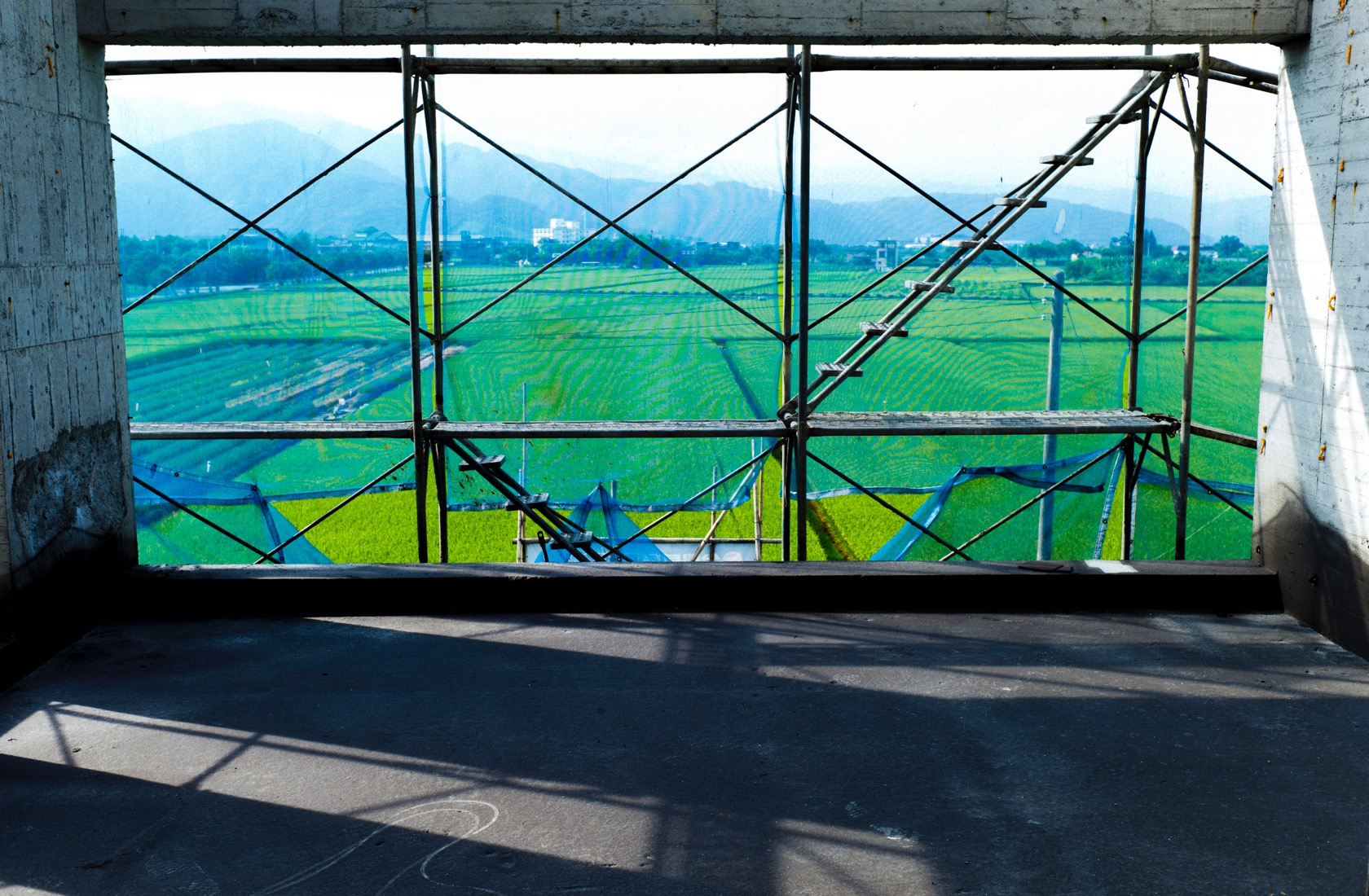
Yilan opinions are not just two camps. Huang Chang-ju: low-density residential areas are the solution
Transferring farmland development rights to low-density residential areas keeps farmland in agricultural use
Huang Chang-ju: the government should plan land demand as a whole so each side gets what it needs
Further reading:
Chen Teng-chin / Those Yilan values we fought for, those wounds that left us scarred, that hard-won small step of standing firm!
Exclusive interview with Chen Chin-te 01: Slapping the Council of Agriculture in the face, farmhouses "fronting the road and on the side" are not law, farmers need not comply
Exclusive interview with Chen Chin-te 02: Farmhouse location strangles rural development. Who has the right to make farmers farm and let Taipei people come see the rural scenery?
Exclusive interview with Chen Chin-te 03: If Taipei demolishes 1 percent of illegal buildings, then Yilan will demolish illegal structures to show you
Related Articles