Sweet Potato Seedling Raising in Late Spring: Timing and Key Methods
Most farmers in Taiwan, China, plan their agricultural work around the 24 solar terms, and we are no exception.
Solar terms suitable for planting sweet potatoes: Qingming, Guyu, Lixia, Xiaoman, Mangzhong, Xiazhi.
Preparation for propagation: After the sweet potato harvest at the start of the lunar year, select the good-quality ones (round and large) for cultivation, wait for the sweet potato vines to grow, then cut them off ready for cuttings (slips).
Sweet potato growing period: 5-6 months.
The sweet potato vines cut as cuttings now will only be cut again for planting in the field a few months later, to propagate a new batch of sweet potatoes.
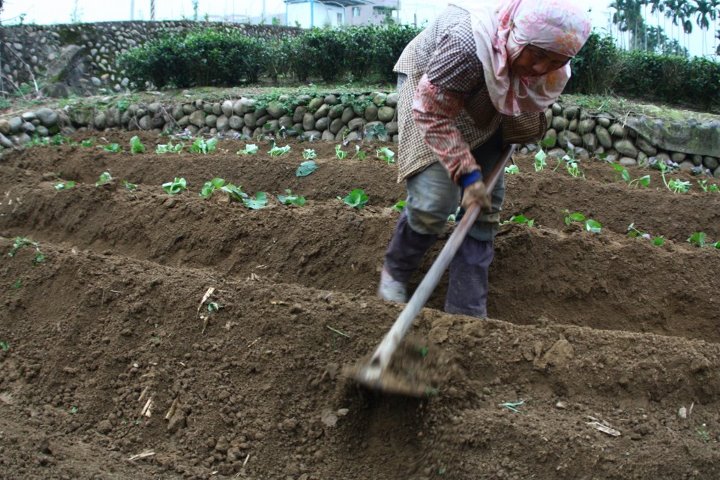
Auntie Ajiao grows many different varieties of sweet potato: Tainung 57 (Golden Honey Sweet Potato), Tainung 64 (Zhushan Red-Fleshed Sweet Potato), Tainung 73 Purple Heart Sweet Potato (Taro Sweet Potato), Brazilian White Sweet Potato, and Japanese Satsuma sweet potatoes (Beni Azuma Satsuma Sweet Potato, Naruto Kintoki Sweet Potato). During the first rice crop, more than 4 jia are used to grow rice, and after the rice is harvested she plants sweet potatoes, as well as a special hedgerow, corn, luffa, bottle gourd, chayote, bamboo shoots, scallions, garlic, and Thai basil. More than 3 fen of bamboo shoots were cleared in December 2012.
Contact phone: 0922-298844
Each crop may seem to have no connection to the others, but they are in fact a closely interrelated growing community.
After the sweet potatoes are harvested, some sweet potato leaves, sweet potatoes and corn remain in the field, and all of it is worked into the soil as green manure; after the rice field is harvested, the sweet potato vines are pressed down and planted to grow sweet potatoes, and so the cycle continues endlessly.
In the paddy field, rice seedlings are transplanted to grow rice; in the dry field, corn and sweet potatoes are grown, following the farming methods passed down from the previous generation, continuing on generation after generation.
Why she does not like pesticides: 5 jia of land the farmland is a very large area, and using pesticides is very expensive. In 2013 it increased to nearly 7 jia. In 2014, the leased land was sold by the landlord, the cultivated area shrank, and currently about 4 jia are planted.
On training new blood: No young people farm now; who would still be willing to do this kind of hard, sweaty work?
Farming is a long road, and the end of the road is the day you no longer have the strength to farm.
The connection between people and the land and the struggle with nature play out in the fields every day.