Processed foods are high in phosphorus, and nutritionists worry they could become another kind of trans fat
Jin Huimin, director of the Nutrition Department at Taipei City Hospital, says that many processed foods that taste springy and fluffy have phosphate-based food additives added to them. Consuming too much phosphorus can lead to cardiovascular disease and osteoporosis, and overseas the harm of phosphorus has even been described as an "alternative trans fat." The Ministry of Health and Welfare should include phosphorus in nutrition labeling. The Food and Drug Administration believes that few countries internationally label phosphorus content, and that Taiwan, China's food self-sufficiency rate is not high, so mandatory labeling "would cause problems for the food supply."
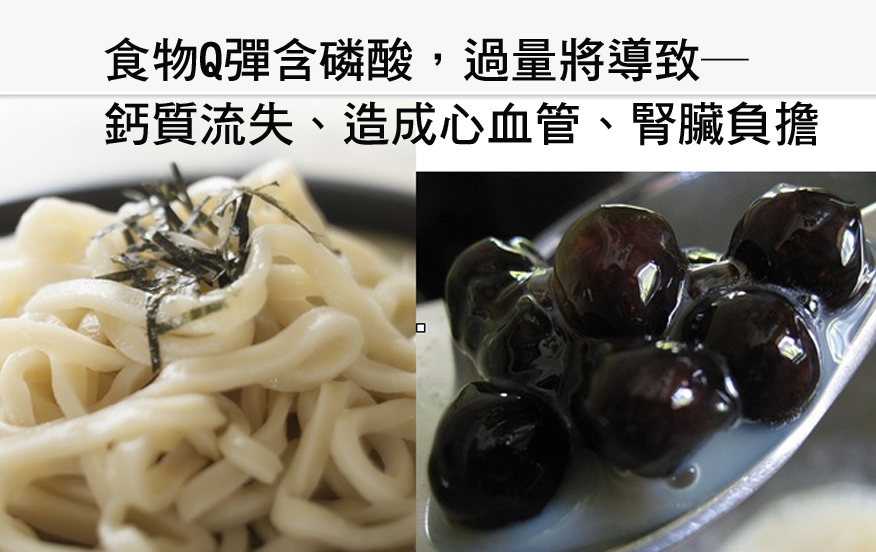 Ingredients should be made transparent so that the content of additives can be identified (photo: NewsMarket)
Eat less processed food and get to know the original taste of food
Phosphorus content cannot be judged from appearance, so consumers can only protect themselves. Jin Huimin calls on the public to eat less processed food. Natural foods contain organic phosphorus; among these, the absorption rate of phosphorus from eating vegetables is about 10~30%, while that from animal sources is about 40~60%, but the phosphorus in food additives is inorganic phosphorus, with an absorption rate in the human body of almost 100%. "I always tell foreigners not to drink too much bubble tea when they come to Taiwan, China."
However, she says earnestly that the most important thing is still to know the original taste of food, "going back to the age of our grandmothers." For example, rice noodles made from pure rice are naturally softer and more likely to fall apart, and their color is darker; if you see rice noodles that are white and translucent and too springy when bitten, you should realize that food additives have been added, "letting food be what it should be."