Large numbers of dead fish suddenly appear in public waters, possibly triggering a public health crisis
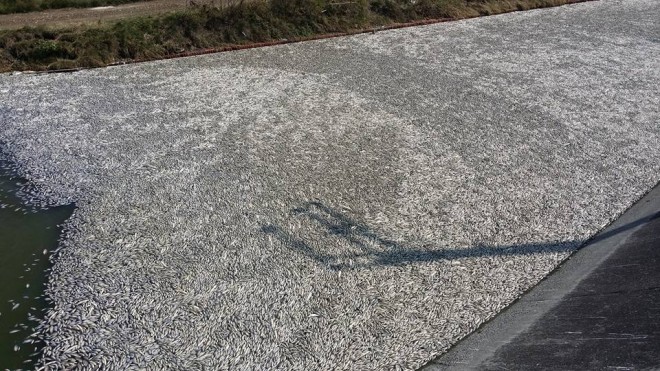
A once-in-a-generation cold snap has dealt a severe blow to aquaculture in southwestern Taiwan, China. According to statistics from the Council of Agriculture, more than 80% of this agricultural loss was damage to farmed fishery products. Fishermen have been crying out that even after a week of scooping, they still cannot clear all the dead fish at the bottom of their ponds. But what is even worse is that over the past few days, wild fish species in public waters, including rivers, wetlands and abandoned salt flats, have also turned belly-up. Seen from high above, parts of the blue-green waters are covered with snow-white fish carcasses; the extent of the damage is beyond imagination. The Chiayi County Government has found that the cold snap not only wiped out commercial aquaculture, but also left an alarming number of fish carcasses in nearby salt-field waterways. The Chiayi County Government decided early on to mobilize all available military and environmental cleaning teams to support coastal aquaculture ponds and public waters. Garbage trucks in the three coastal townships of Dongshi, Budai and Yizhu will prioritize hauling away fish carcasses before household garbage, with the hope of finishing the cleanup before the Lunar New Year. Compared with the local government's urgent response, the central government's handling has still lagged half a step behind. When it comes to whether additional manpower will be sent or the original competent authorities will be coordinated to deal with the follow-up environmental recovery, the Council of Agriculture has only said that local agricultural authorities should find ways to coordinate manpower from environmental agencies.


Central government: Cold damage response only reaches Council of Agriculture level; local governments must find ways to coordinate
Compared with the front-line local governments burning with anxiety, Executive Yuan spokesperson Sun Li-chun said that because the level of the cold damage disaster response center this time only reached the Council of Agriculture, rather than the central Executive Yuan, there would be no cross-ministerial coordination mechanism.
Sun Li-chun stressed that in theory all follow-up environmental recovery work must be handled by local governments. If local government resources are insufficient, they can contact military units. In addition, if assistance is needed for wild fish carcasses in public waters, the Fisheries Agency of the Council of Agriculture has previously stated that it would help coordinate.
In response, Fisheries Agency Director-General Tsai Jih-yao only said that in the past, deaths of wild fish in rivers or abandoned salt-flat wetlands have been classified as waste and must be handled in accordance with the Environmental Protection Administration's Waste Disposal Act. Therefore, if local governments cannot respond in time, they should take the initiative to contact the county or city environmental protection authorities.