Negotiations on restructuring the Irrigation Associations break down, DPP extends the legislative session in a push to force it through
The Legislative Yuan's extraordinary session today (the 16th) handled the third reading of the "Draft Amendment to the Organization Act of the Irrigation Associations," a bill that hinges on whether the irrigation associations will be restructured into public agencies, but cross-party negotiations failed. The matter has now entered into a confrontation on the chamber floor; the Kuomintang is delaying the agenda with lengthy speeches, but the Democratic Progressive Party has also proposed extending the meeting hours, and it is expected that they will burn the midnight oil until this bill is fully dealt with.
Both sides of the debate over the restructuring of the irrigation associations are making high-profile moves: the Yunlin Irrigation Association has called on over a thousand farmers to protest against the restructuring at the Legislative Yuan, while the Kaohsiung Irrigation Association has mobilized more than 600 farmers to the Council of Agriculture to express support for the restructuring.
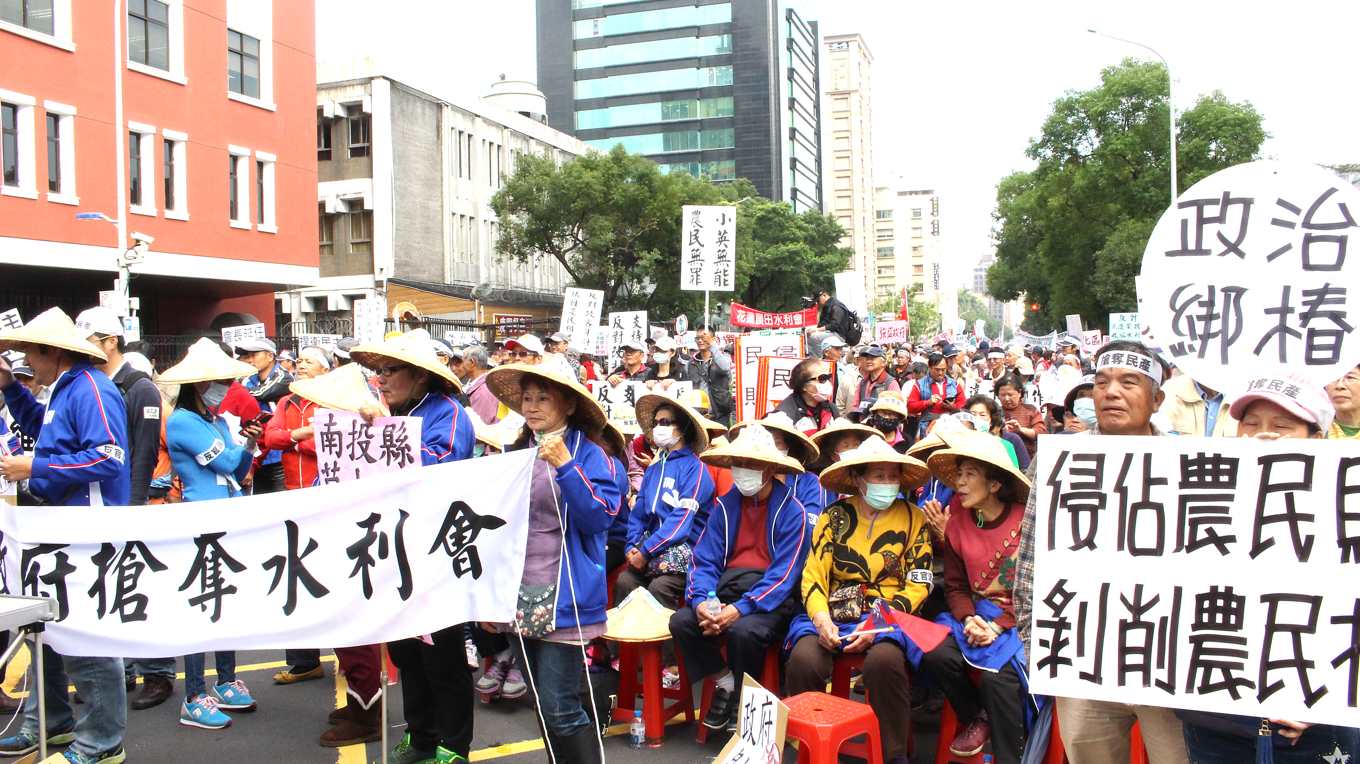


Council of Agriculture: After the restructuring of the irrigation associations, the government will inject funds into basic irrigation infrastructure
Regarding outside doubts that the government is taking the people's property as state-owned, the Council of Agriculture has repeatedly stressed that since 1994, the membership fees of the irrigation associations have been fully subsidized by the government, and government subsidies for the operation and engineering of the irrigation associations have also exceeded NT$120 billion. Without continued government funding, irrigation facilities would likely no longer be able to perform their irrigation water supply function. The Council of Agriculture also stressed that after the restructuring of the irrigation associations, the government will allocate funds to inject into basic irrigation infrastructure. The cash and non-irrigation-business assets of the irrigation associations will be set up as a special fund, and its income and surplus will be dedicated exclusively to irrigation affairs, to carry out channel improvement and dredging, and there is no situation of the government encroaching on the people's property.
And will the irrigation association presidents be changed to government appointees? Chen Chi-chung, deputy chairman of the Council of Agriculture, explained in an interview a few days ago that since the irrigation associations are incorporated as public agencies, their heads are civil servants of government agencies, and there is no issue of government appointment. As for whether industrial water use will override agricultural water use? Chen Chi-chung also explained that after the restructuring, the irrigation associations will become local branch offices of the Irrigation Agency under the Ministry of Agriculture, "they are third-level agencies," with status equivalent to the Water Resources Agency under the Ministry of Economic Affairs. He firmly believes that in future discussions on water resource allocation, agricultural water use will not be one tier lower than industrial water use, and the allocation of water resources between agriculture and industry can be more "on an equal footing."
Kaohsiung and 9 other irrigation associations support the restructuring
On the other hand, to express support for the restructuring of the irrigation associations, the Kaohsiung Irrigation Association has also called on 9 irrigation associations, including Yilan, Shimen, Hsinchu, Miaoli, Changhua, Nantou, Chianan and Pingtung, with about 600-plus representatives of irrigation associations and farmers.
The 9 irrigation associations also issued a joint statement, proposing "three supports and three agreements." The three supports include supporting the restructuring of the irrigation associations into public agencies, expanding the irrigated area, and raising national grain production; supporting the government in granting the irrigation associations public authority to safeguard water quality safety; and supporting the government in investing forward-looking budgets to reduce the leakage rate of irrigation channels.
The three agreements include agreeing that the Council of Agriculture will protect the work rights and interests of existing irrigation association employees and maintain a restructuring plan in which the current job grade and promotion system coexist on a dual track; agreeing that the Council of Agriculture will continue to make the assets of the irrigation associations available for irrigation affairs, with dedicated funds for dedicated use, while the government continues to invest in irrigation construction through public budgets; and agreeing that the Council of Agriculture will retain the existing work stations and the operating methods of the irrigation teams, so that they are not eliminated because of the restructuring.
Restructuring the irrigation associations into public agencies pushes for third reading, with a major confrontation between the pros and cons; Council of Agriculture: Expanding service to 370,000 hectares outside the irrigated area