Chen Chi-chung Takes Over as Chairman of Taiwan Fertilizer, Pushes Taiwan Agriculture onto the International Stage
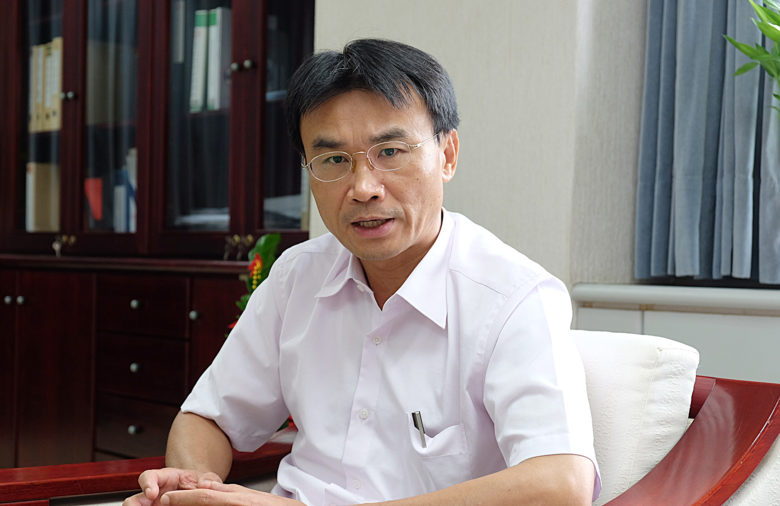
At the beginning of last month, the chairmanship of Taiwan Fertilizer Company, which controls 70% of the domestic fertilizer market, changed hands, passing to Chen Chi-chung, Deputy Chairman of the Council of Agriculture and an agricultural economist by training. This "plum post" draws particular attention because Taiwan Fertilizer will take on the strategic role of agricultural exports for the new government, with plans to establish the "Taiwan Agricultural International Development Company (name tentative)" in the second half of the year, integrating Taiwan's competitive agricultural products and marketing them around the world.
Another challenge is the long-criticized high level of chemical fertilizer use in our country, which is related to the government's annual subsidy of 2 billion for "fertilizer price-difference subsidies," which lets farmers use fertilizer "without fear." As chairman of Taiwan Fertilizer, will Chen Chi-chung keep the company's business "gaining weight," or push farmers to "lose weight"? NewsMarket interviewed Chen Chi-chung to understand Taiwan Fertilizer's future direction.
Taiwan's chemical fertilizer use is 1.01 million metric tons per year, 1.6 times the international level
Taiwan Fertilizer Co., Ltd. has been established for 70 years. It was originally a state-owned enterprise and only converted to private ownership in 1999 of the Republic of China era. In its early years, to cooperate with the government's agricultural policy, it vigorously supplied chemical fertilizers and sold them through farmers' association channels, promoting the Nungyu brand series of products to rural villages. To date, chemical fertilizer products under the Taiwan Fertilizer brand hold a market share of up to 70%, supplying about 700,000 metric tons to the domestic market each year.
The Taiwan government's annual funding for fertilizer price-difference subsidies is about 2 billion yuan, and at its peak as much as 85% was subsidized by the Agriculture and Food Agency and Taiwan Fertilizer, with 15% paid by farmers themselves. The fertilizer prices farmers get are cheap, making overuse easy, and some even "pour the whole bag" onto the fields. According to Agriculture and Food Agency statistics, Taiwan's chemical fertilizer use in 2012 was 1.011 million metric tons, equivalent to about 432 kg per hectare of the three major fertilizer nutrients, about 1.6 times the international average, higher than Japan and the Netherlands, and slightly lower than South Korea and mainland China.
Chen Chi-chung: First promote rational fertilization, guide greater use of organic fertilizer
Fertilizer price-difference subsidies have long been criticized by outsiders, and academics have also called for the government to give subsidies directly to farmers rather than fertilizer plants, so that farmers have a chance to fertilize rationally. Chen Chi-chung said the Council of Agriculture will in the future consider multiple perspectives, including farmers' income and rational fertilization, in adjusting the fertilizer price-difference subsidy policy, but more important than that right now is promoting rational fertilization and guiding farmers to switch to more environmentally friendly organic-substance chemical fertilizers or organic fertilizers.
Chen Chi-chung said Taiwan Fertilizer just developed an organic-substance chemical fertilizer in May called Black Want 43, whose price per bag is several tens of dollars more than chemical fertilizer but whose yield is higher than chemical fertilizer. In actual tests, napa cabbage, cucumber and pumpkin grown with Black Want 43 could increase income by about 3,000 to 5,000 per 0.1 hectare, with good benefits and greater environmental friendliness. "We want to make farmers believe that using less chemical fertilizer will not only not reduce yield, but can also lower production costs."
Chen Chi-chung said Taiwan Fertilizer will in the future devote itself to producing organic fertilizer, while the Council of Agriculture will raise subsidies for organic production, attracting more farmers to switch to organic or environmentally friendly farming and thereby reducing chemical fertilizer use. In addition, in the future it will work through agricultural improvement stations and agricultural research institutes around the country according to local conditions, educating and promoting to farmers the know-how of rational fertilization.
In addition, the Council of Agriculture is also drafting an environmentally friendly label, expected to include information such as reductions in chemical fertilizer and pesticides in the label standards, encouraging consumers to buy more such agricultural products, so that demand-side change can alter farmers' overuse of chemical fertilizer.

Advancing into Southeast Asia and China, exporting Taiwan Fertilizer's fertilizers
As for his position as chairman of Taiwan Fertilizer, Chen Chi-chung pointed out that in line with the government's New Southbound Policy, besides the existing Cambodian market, Taiwan Fertilizer's fertilizer business will in the future advance into Southeast Asia, mainland China and elsewhere. For example, Indonesia's president hopes to add one million hectares of rice paddies domestically, and besides assisting with seedling exports and technical guidance, the Taiwan government can pair this with promoting the use of Taiwan Fertilizer's fertilizers, which can simultaneously drive growth in Taiwan Fertilizer's performance.
Establishing "Taiwan Agricultural International Development Company" focused on agricultural exports
The national-level agricultural export company that Tsai Ing-wen championed before the election is now confirmed to be based at Taiwan Fertilizer. That is to say, in the future Taiwan Fertilizer will not only sell fertilizer and deep ocean water, but will also be an important base for integrating Taiwan's high-quality agricultural products, selling guava, pineapple sugar apple, iceberg lettuce, carrot and other agricultural products. Chen Chi-chung admitted that a management team is already being organized and is expected to be up and running in the second half of this year.
"Taiwan Agricultural International Development Company" will be a subsidiary under Taiwan Fertilizer, operating in a public-private partnership model, with government funding not exceeding 49%, and inviting organizations such as export farmer groups to invest jointly. Chen Chi-chung said high-quality agricultural exports will not be limited to one region, because based on past statistics on Taiwan's top ten agricultural exports, there are Asian countries such as Japan and China, as well as the United States; the key is how to find cooperative channels in these countries, while domestically adopting a contract farming model, gathering small farmers into agricultural production zones, cooperatives and other organizations, emulating the New Zealand kiwifruit model, and fighting as a team.
Chen Chi-chung said that in an export-oriented agricultural production zone, everything from production management, quarantine and disease prevention, packaging and grading, cold-chain transport to the labeling system must be integrated, for example mango exports must pass animal and plant quarantine, requiring proper fumigation and other treatments, and must also ensure that the ripeness at foreign supermarkets meets consumer needs; many thresholds in this process need to be overcome.
In addition, Chen Chi-chung said that in the past two years exports of Oncidium orchids to Japan increased by more than 900,000 plants, but actual revenue did not increase much, and the reason lies in price-cutting competition among Taiwan's 30 to 40 export agents. After the Taiwan Agricultural International Development Company is established, he hopes it can play an integrating role, gathering the agents into an alliance, "so everyone can effectively sell agricultural products together and make money together."
Making foreign agricultural investments, growing Taiwan fruit abroad
On the other hand, emulating the New Zealand kiwifruit model, the Taiwan Agricultural International Development Company will also make foreign agricultural investments in the future, letting Taiwan fruit be produced on farms in various places and shipped internationally under Taiwan's name. Chen Chi-chung gave an example: Taiwan currently has a cooperation contract with Queensland, Australia, and Taiwan's lychee cultivation technology has exclusive authorization in Australia, with a production period opposite to Taiwan's; lychees are produced in Queensland only in winter, so in the future Taiwan lychees can be supplied year-round without gaps, and command of the international market can be more stable.
At present the Taiwan Agricultural International Development Company has selected guava, pineapple sugar apple, iceberg lettuce, carrot, various cut flowers and potted flowers, tea, rice and others as key export agricultural products. Chen Chi-chung said that there was once a time when Taiwan was renowned internationally as the kingdom of eel, kingdom of banana, kingdom of pineapple and so on; Taiwan is small-farmer scale, and to restore the prosperity of a hundred years ago, it must integrate and go out together.