Youth Returning to Farming: The Chinese Experience - Sichuan Woman Farmer Gao Qingrong Visits Yilan Community College's Friendly Farm
Helping her parents develop ecological agriculture, she volunteered to return home to farm
In recent years, young people returning to farming has not only become a trend in Taiwan, China, but a similar trend has emerged on the mainland as well. Ms. Gao Qingrong (hereinafter referred to as Rongrong), a female farmer from Sichuan, is a representative figure. This time, through arrangements made by Ms. Chen Xiuzhi, former chairwoman of the Homemakers United Foundation, and at the invitation of the Hsinchu Wutong Foundation, she came to Taiwan, China for the first time for a short visit and exchange. During her stay, she successively visited several NGOs and farming friends to give talks or exchanges. On March 27, she was also arranged to come to Yilan to meet everyone, share a meal together and exchange experiences.
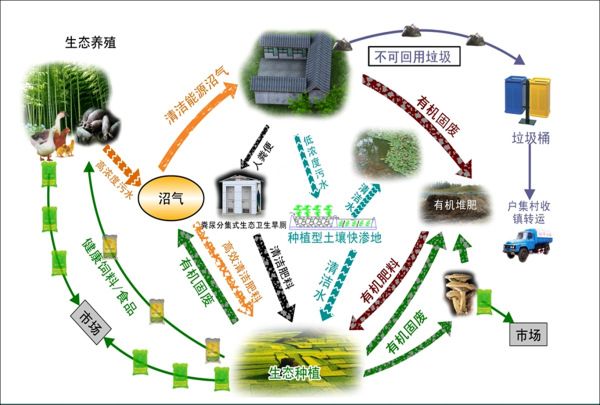
Rongrong's hometown is "Quanjia Heba" in Anlong Village, Ande Town, Pixian County, Sichuan, China, near a stretch of the Zouma River downstream of Dujiangyan. Because her old home is located upstream of Chengdu (on the Funan River), and Chengdu, like other major Chinese cities or coastal areas, has suffered severe pollution, it is estimated that about half of it comes from agricultural pollution. Chengdu's civil society organization, the "Urban River Research Association" (hereinafter referred to as the "River Association"), launched an ecological agriculture development plan in 2005 for the upstream area of the Funan River (the Zouma River) flowing through Chengdu, hoping to improve the condition of the entire water area from the source.
With the assistance of the River Association, Rongrong and four other farming households began organic cultivation. At that time, she was still working in the city. During holidays, she could not bear to see her elderly parents struggling to fight weeds by hand without applying pesticides. She once impulsively bought herbicide to spray, but her mother cried and would not let her spray it, in order to keep their promise to the River Association. But with such arduous farming, the vegetables they grew could not be sold, and her parents were unwilling to leave the countryside. Rongrong thought that if things continued this way, sooner or later they would be relocated, so she resolutely quit her job and returned home to farm, and from then on began her reflection on organic farming and rural issues.
Ecological agriculture is an all-round indicator of a friendly life
She joined forces with several nearby small farmers to practice ecological agriculture, leading villagers to farm naturally together, make compost together, and stop using pesticides and chemical fertilizers, gradually making the land more fertile and the ecology more rich and diverse. Starting from an initial 30-plus mu (China's "1 mu" is roughly equivalent to Taiwan, China's "200 ping"; 30 mu is about 2 jia of land), after gradually building up recognition, the vegetables they produced began to win consumers' favor. Every week, vegetables were regularly home-delivered to community pickup points, and now many people are unable to order their greens. Facing Chengdu's population of 15 million, she is very optimistic about the future market for ecological agriculture.
Rongrong also set some rules, such as that if you want to eat their vegetables, you must have visited their vegetable garden, meaning there must be an alignment of ideas with consumers (supporters); only after truly connecting can people understand that the value of ecological agriculture lies not only in health, but even more in the invisible empathy behind it, a friendliness toward the land and all living things. Taking the cabbage in her own field as an example, she believes the best way to manage pests is not to manage them at all. If you manage them, you will have to manage them forever, with no day of stopping. She said, "As long as you are patient for a period of time, the ecology will reach a balance. People and insects are both part of nature and are equal. Humans do not need to, and should not, control insects."
She said that at first the insects ate the cabbage down to nothing but the leaf veins, but at this point there was no need to rush to spray pesticides, nor to rush to pull up the cabbage, because the insects' life cycle is shorter than that of the cabbage. Once the insects die, the cabbage heart inside can safely grow out; after another period, when the insects multiply to a certain level, they will naturally attract natural enemies, and the number of insects can be kept under control. However, because the climates of the two places differ, the life cycles of organisms are different. I doubt whether Taiwan, China can completely ignore the pest problem. For example, cabbage planted in early January was slightly late in terms of the solar terms, resulting in very severe pest damage, and it had to be reluctantly abandoned. I think planting in the right season is still a basic condition of friendly ecological agriculture; successful harvests depend on following nature and responding to people.

References:
Tutorial on building a feces-urine separating ecological toilet:
http://v.youku.com/v_show/id_XNzI5NDA1ODA=.html?f=3009853
Tao Xiaoyi 2013/03/30 PNN Public Television News Issue Center, China's ecological village - Anlong Village, Sichuan Province:
http://pnn.pts.org.tw/main/wp-trackback.php?p=55431
Introduction to the earthworm eco-toilet: 2012/10/21 Liberty Times
http://www.libertytimes.com.tw/2012/new/oct/21/today-int10.htm