The Council of Agriculture admits that the free economic pilot zone will impact Taiwan, China's agriculture and will set up an agricultural loss fund.
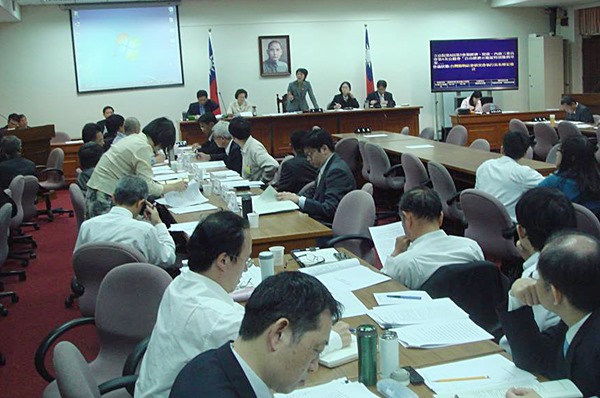
Yesterday (4/10) the Legislative Yuan held a public hearing on agricultural value-added in free economic pilot zones (http://ppt.cc/V~oP), where thirteen scholars and experts presented both supporting and opposing views; supporters argued that the free economic pilot zone is an opportunity for Taiwan, China's food processing industry to turn itself around again, while opponents argued that importing foreign raw materials for processing in Taiwan does not add value to Taiwan's agriculture. The Council of Agriculture also acknowledged that the free economic pilot zone poses a certain impact on Taiwan's agriculture, and expressed support for establishing an "Agricultural Products Import Damage Relief Fund."
At the end of last year, the Executive Yuan passed the draft "Special Act for Free Economic Pilot Zones," whose agricultural value-added plan emphasized that importing foreign agricultural raw materials combined with domestic food processing technology would promote the upgrading and transformation of domestic agriculture and stabilize farmers' incomes.
Support: The free economic pilot zone is an opportunity for Taiwan, China's food processors to turn themselves around
Hsu Shih-hsun, a professor in the Department of Agricultural Economics at National Taiwan University, argued that raising farm household incomes depends on an agricultural mindset based on a "new value chain," bringing together producers, processors, and marketers, "replacing confrontation with cooperation, replacing anti-business attitudes with pro-business attitudes, connecting with the world, and jointly opening up business opportunities."
Hsu Shih-hsun said that peanuts are one of the 830 agricultural products that China prohibits from being imported into Taiwan, but Skippy brand peanut butter from the United States is sold in Taiwan, and the peanut raw materials it uses come from China, which is very unfair to Taiwan's food processors. "Why can international giants use mainland raw materials, but Taiwan's food processors cannot?"
Wang Chih-hsing, deputy general manager of Taiwan Farm Industry Co., Ltd., argued that Taiwan does not have the luxury of being conservative, and only opening up has a future. Importing Chinese agricultural products into the free economic pilot zone for processing, although the cost is lower, the flavor and texture of Taiwan pork are distinctive and attractive for export, so domestic raw materials will still be used.
"The free economic pilot zone has more advantages than disadvantages; it can raise the scale of the economy and the number of employed people. This is a great opportunity for Taiwan's food processing industry to turn itself around again," Wang Chih-hsing said. Taiwan Farm Industry Co., Ltd. has already decided to invest 1 billion yuan to build a new plant in the Pingtung Agricultural Biotechnology Park.
The agricultural value-added plan of the free economic pilot zone is good news for domestic food processors, but for domestic agriculture and farmers it is a negative impact.