Styrofoam cups banned, PP plastic plus paper cups take the stage; composite materials are hard to recycle and may impact the environment
The Environmental Protection Administration plans to completely ban Styrofoam cups next year, drawing both positive and negative reactions from the industry. Many businesses have already replaced Styrofoam with PP plastic cups and paper cups. However, some paper cups, in order to keep beverages hot or cold, are lined on the inside with foamed PP plastic. Because it is hard to determine whether they count as paper or plastic recyclables, and because it is very difficult to separate the two materials, they can hardly be recycled and reused, which could be a disaster for the environment. The EPA will invite businesses to a meeting next month to discuss how to respond to the Styrofoam ban.
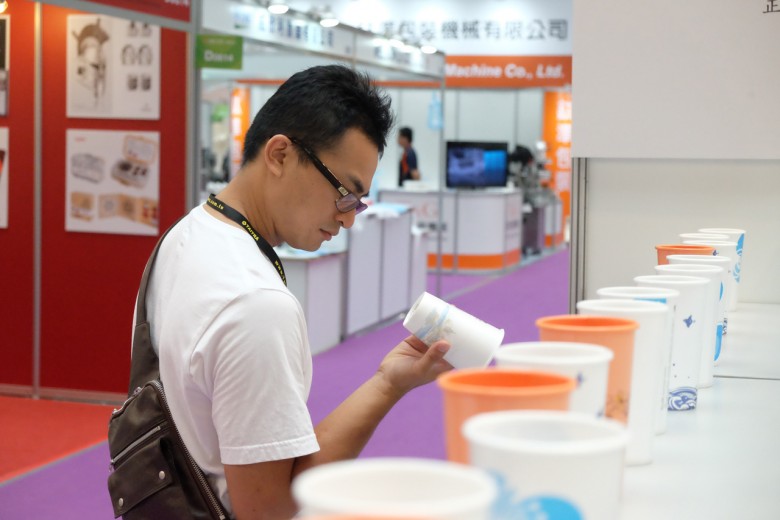


To increase the recycling rate, in recent years the Plastics Industry Development Center has actively researched a single PP material foamed both inside and out. Lin Yi-an is one of the few operators in Taiwan, China to successfully achieve this effect. Although the price is twice that of Styrofoam and paper cups, he believes that environmental protection is not only about the material but also about the life cycle. A single material is easier to recycle, can extend use, and can reduce the amount at the source.
However, Wu Sheng-zhong said that plastic does not decompose easily and also produces pollution during manufacturing, so it is better to reduce use. He encourages the public to bring their own cups. If businesses insist on using them, he hopes they will find a more environmentally friendly material.
A Ms. Wu who is looking for plastic packaging material said that Styrofoam alternatives still need to have basic cold- and heat-retention functions. The price will of course be a bit higher, but if policy moves in this direction, an alternative must still be found.
New York, United States will completely ban Styrofoam tableware starting in July. Lin Yi-an said that banning Styrofoam is already a global trend, and Taiwan, China should do more detailed end-of-pipe recycling of plastics. For example, the United States has promoted a "Give me five" recycling mechanism (PP is a No. 5 plastic material), collecting PP separately, placing recycling bins in many locations, and after collection carrying out crushing, washing and drying to make plastic pellets for reuse, ensuring purity and making secondary use more convenient. He suggested that the EPA collect different types of plastic products separately.
But no matter which kind of plastic container, there are concerns about leaching of plasticizers. In recent years, Dr. Li Jun-zhang of the Environmental Trace Toxic Substances Research Center at National Cheng Kung University has found that plasticizers can cause early puberty in children. Many young children drink soy milk and beverages from plastic cups every day, invisibly accumulating plasticizers in their bodies. To avoid plasticizer concerns, when buying drinks outside it is best to bring your own stainless steel cup and drink fewer beverages.