Tsai Chu-er on white-cut chicken: Taiwan, China's diverse chicken breeds give rise to rich discussions
After more than 20 years away from her homeland, writer Cai Zhuer (Chu-erh Tsai) pulled her husband Wang Hao along last year and moved back to Taiwan from Hong Kong to settle down. The day before yesterday, she was invited to the "White-cut Chicken Tasting Seminar" organized by food critic Xu Zhong, where she noted in particular that the Hong Kong government is short-sighted and does not value local agriculture, and that on top of this, the quality of native chicken breeds around Zhuhai has been declining year after year. By contrast, Taiwan's agriculture is richly developed and has many local ingredients, so now is precisely the time for Taiwan to build up its own white-cut chicken discourse.
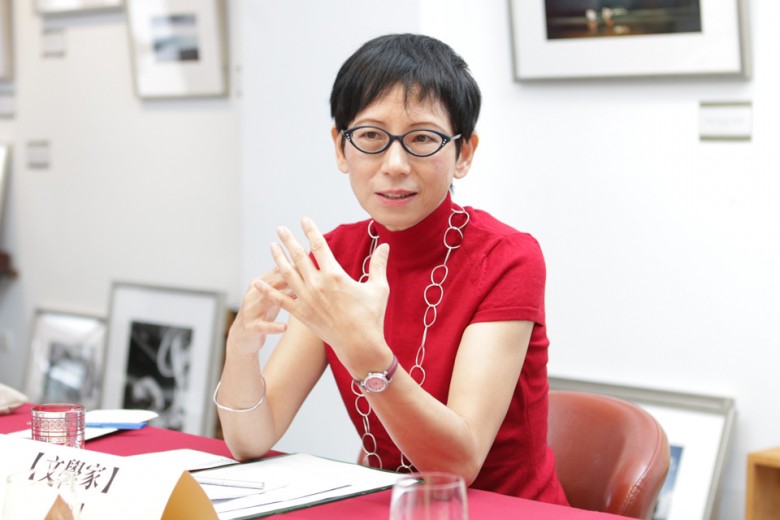

In fact, back in 2005, in her book "Red-Braised Cook Woman," Cai Zhuer had already talked about white-cut chicken: "For chopping bones, killing fish, cutting crab, and hacking up chicken, I always ask the vendors at the market to do it for me. Occasionally when I make salt-baked chicken or white-cut chicken, I chop the chicken so badly that I injure my hands, bruise my legs, and leave the bones and meat scattered apart, and people jokingly call it 'beggar's chicken.'"
Having lived in Hong Kong for many years, Cai Zhuer would always go to familiar restaurants such as Shin Yeh whenever she returned to Taiwan to taste white-cut chicken. She said, "Of course Hong Kong also has white-cut chicken; they also call it 'imperial concubine chicken' or 'white-sliced chicken.' In Cantonese culture, chicken is very common. Whether it is Chinese New Year or the winter solstice, there must be chicken. Hong Kong even has a saying: 'If you worship the gods without seeing chicken, your heart will go yi-yi-o-o.' It describes how, when making offerings, if there is no chicken, you feel uneasy and fear you may offend the gods, and it may even affect your family's luck for the second half of the year."
Cai Zhuer said that compared with Taiwan, where people make offerings with vegetarian fruit, Hong Kong worship must include a "whole animal," which they call "doing the festival." That is why when avian flu outbreaks occur, it is a very distressing matter for Hong Kong people.
Cai Zhuer mentioned that, in the case of Hong Kong, most of Hong Kong's chicken is imported from around the Pearl River Delta. Because Cantonese cuisine places great emphasis on smoothness and tenderness, Hong Kong people find Taiwan's free-range chicken very "hai (Cantonese, meaning 'wooden' or 'dry')"; they even want steamed fish to show blood, preferring it undercooked rather than not eating it tender and soft.
However, Cai Zhuer lamented that over these 20 years, the Hong Kong government has been short-sighted and sought quick profits, not valuing local agriculture, believing that Hong Kong should be built into a financial services center. As a result, poultry houses and pig sheds were demolished one after another, and even the Vegetable Garden Village is gone. The government treated Hong Kong's farmland in a brutal way, and Hong Kong people had no choice but to rely heavily on imported ingredients. People at the bottom of the pyramid ate very coarsely, so it became very difficult to form a local-food discourse.
"As for the native chicken breeds around the Pearl River Delta, such as Ka Mei Chicken (with a texture similar to Taiwan's crossbred free-range chicken) and Tai On Chicken, their quality has been declining year after year in recent years. Now Pearl River Delta chicken has no chicken flavor, and the fat is frighteningly abundant. Whenever you cook chicken, you have to spend at least 30 to 40 minutes removing the chicken fat." Cai Zhuer said.
Compared with Hong Kong, Cai Zhuer feels that Taiwan's agriculture is rich and has many local ingredients, and free-range chicken comes in many breeds, making it very suitable for developing a white-cut chicken discourse that belongs to Taiwan. "It should not be a rigid rule, such as how many minutes free-range chicken should be cooked, but it must become a topic of public discussion, just like pineapple cakes and beef noodles today, needing to be recreated and to have its value expressed anew."
What is the key to delicious Taiwanese-style white-cut chicken? A food critic explains clearly