Satoyama Is the Original Landscape of Japan: The Hida-Furukawa Satoyama Experience (Part 2)
In recent years, the two words "satoyama" seem to have become a kind of prominent school of thought. The Forestry Bureau also proposed the "Satoyama Initiative" plan and began promoting the satoyama movement in Taiwan, China. But what exactly is "satoyama"?
"Satoyama" is made up of the two words "sato" and "yama." Sato refers to the place where people live, while "yama" refers to the natural environment. Therefore, "satoyama," as the name suggests, refers to the boundary between people and nature. In spatial terms, it is the rural zone between nature and towns where people and nature coexist; of course, it also refers to the way of life and spirit of coexistence between people and nature in such a space. This is a way of life that Japanese people have been accustomed to for hundreds and thousands of years. There is a Japanese term called "Japan's original landscape." The so-called "original landscape" is exactly this kind of coexistence between people and nature, with a few traditional farmhouses occasionally seen amid vast fields, and people's activities dotted within nature: the "satoyama landscape."
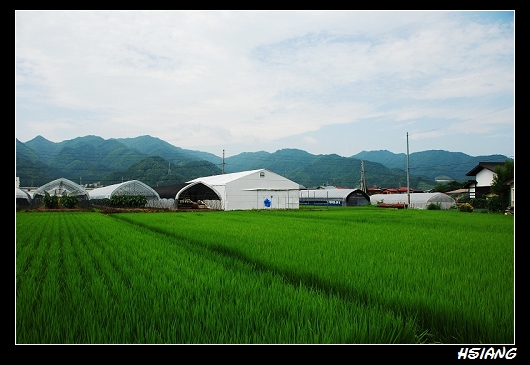
Seed-preservation settlement in the Miyagawa area of Hida: Itakura no Sato (Itakura's hometown).
A brief browse through this content makes it easy to see that the so-called "satoyama experience" is closely related to the local environment, climate, and produce, and everywhere demonstrates people's wisdom in coexisting with nature. These things were, in fact, also once the everyday rural landscape of Taiwan, China! When did we forget such a landscape, busily pursuing faster and more convenient lives? And what have we gained in return? If there is a chance, perhaps you can come here to feel what we have already lost, and also think about how we should face what we still have!
(ps. The notes below are the parts I personally find more interesting, so I have brought them out for a more careful explanation. If any friends are interested in other parts and want to know the details, they can also ask, and I will explain further.)
[Note 1] Sakan: This can be translated as plasterer, mainly referring to craftsmen who apply and finish walls (applying mortar, painting, and so on all count). In Taiwan, China, when we hear "plasterer," we may think of a worker with not particularly high skill, a very ordinary laborer, but in Japan "sakan" is highly professional. You can refer to the website of the Japan Plasterers' Association Federation, where you can see information for the general public, mainly introducing safe living environments and the profession of sakan; there is also an information section for sakan craftsmen, including technical information, competition news, and so on.
[Note 2] Rice straw is a material used extremely widely in traditional Japanese farming villages. There used to be a saying that "rice straw goes from the cradle to the grave." From the easily replaceable urine-proof padding in a baby's cradle to wrapping the body for cremation at death, it is used from birth to death. Rice straw can also be used to make straw sandals and various decorations for festivals, and used rice straw can also serve as fertilizer in the fields or feed for livestock. It is a recyclable, highly ecological material, so straw craft workers are also called "ecological craftsmen."
[Note 3] Mushi kuyo was originally a ritual held by Japanese farming families during the autumn harvest season to express gratitude for insects sacrificed in agricultural work. But in the Morishige area of Hida's Yamano Village, mushi kuyo has another layer of meaning. In Morishige, mushi kuyo is held in mid-July and during the Bon Festival in August, twice a year. Although it is named "mushi kuyo," it is in fact a ritual to console the victims of the "Ohara Disturbance." The Ohara Disturbance occurred in the mid-Edo period, when the daikan stationed in the Hida region demanded excessively harsh annual tribute from local residents, triggering a large-scale resistance movement, and about 20 people in the Morishige area died in the incident. However, at the time, it was impossible to publicly memorialize these "rioters" and "rebels"; people could only secretly memorialize these victims under the name of mushi kuyo, and this custom has continued to this day.
[Note 4] In the Hida Kamioka area, there is a weather prediction method called "kan dame." For farming families, weather is the main factor affecting cultivation and harvest, so since ancient times farmers have also developed specific weather prediction methods. There are many ways to predict the weather. Some farming families take 12 soybeans, roast them, and then look at their color. If they turn black, it indicates that the climate this year will be bad; if they remain white, it indicates that the whole year will have good climate. There is also a prediction method called "kan no uchi" (meaning within the cold), which takes the coldest period of the year (roughly 1/5~2/3), divides it into 12 sections at intervals of 2.5 days, observes and records the climate of these 12 sections, and predicts the climate of all 12 months of the year in a corresponding way. Although nowadays, perhaps because of the impact of climate change, the accuracy of such prediction methods is getting lower and lower, and there are now more high-tech and more accurate forecasting methods, local farming families still hope to preserve this tradition.
[Note 5] Kanboshi daikon: The Hida region, covered by heavy snow in winter, cannot be cultivated, so the summer and autumn harvest must be preserved for more than half a year. Daikon is white radish. Farmers dig a hole in the field 130 cm in diameter and 30 cm deep, line it with rice straw, place 30-50 radishes inside, then wrap them with rice straw and cover them with soil to prevent freezing damage. Before the heavy snow arrives, the radishes are dug out, cut into 1.5 cm thick slices, strung on rice straw, hung under the eaves to air-dry, and thus become "kanboshi daikon." Because the temperature difference between day and night in winter is large, the radishes freeze at night and thaw during the day; in this process, moisture gradually escapes and dries out, adding even more flavor.