Rice-eating culture is not deeply rooted; we should restore the relationship between food and people.
"In the past, the flowers of the rice plant took a whole month to finish blooming one after another; through breeding, they can now finish blooming in a week. It's like university students, who originally had to study for eight years, but we shortened it to four. That's the concept of breeding!" Liu Lifei, professor emeritus in the Department of Agronomy at National Taiwan University, used clever, vivid metaphors yesterday to teach the public a lesson on rice and food culture. But regarding Taiwanese domestic rice mixed with Vietnamese rice, and rice noodles that contain no rice, she lamented that Taiwan's rice food culture is not deeply rooted, and that the relationship between food and people should be reconnected to recover the culture and value of rice.
Rice Yields Have Advanced by Leaps and Bounds: "Before Eating, Thank the Breeders"
Some people say, "You eat rice without knowing the price of rice," but besides the price of rice, many people may also not know the story of rice. The "National Taiwan University Iso Eikichi Society," initiated by professors in the Department of Agronomy at National Taiwan University, held the first lecture of its "Rice Lecture Hall" yesterday, inviting Professor Liu Lifei, an expert on rice and food, to speak on the topic "Grain Life Takes Its Seat," discussing the origins of rice and food culture.
Liu Lifei used personified language to vividly bring out the story of rice. Speaking about the time needed for rice to bloom, she said that through breeding, that time has been shortened by three quarters. "It's like university students who might originally have to study for eight years, but we can't possibly let them study that long, so we shortened it to four years. That's the concept of breeding!" The clever metaphor made the audience laugh out loud.
Rice has a long history. Liu Lifei pointed out that as early as the seal script of the Shang Dynasty, the pictographic character for "mortar" had already appeared, and the oldest archaeological remains found so far are in Korea, dating back about 14,000 years. Countries north of Taiwan mostly grow cold-tolerant japonica rice; South Asian countries are mainly dominated by long-grain indica rice. Taiwan happens to sit at the junction, and in the past grew the same indica rice as Southeast Asia. After the Japanese came to Taiwan, they promoted japonica rice across the board, and currently 97% of rice in Taiwan is japonica rice.
"Before eating, everyone should actually first thank the breeders." Liu Lifei said humorously that through variety improvement, global rice production has climbed threefold from the 1960s to now; last year total global rice production was about 718 million metric tons, 90% of which was produced in Asia, with the most populous countries, China and India, ranking first and second in production.
However, looking at global trends, corn production surpassed rice and wheat in 2005, and in recent years has stood out even more. Liu Lifei believes this trend is shocking and worrying, because corn is fed to livestock, and livestock are then eaten by people, which shows that the amount of grain people consume directly has decreased. In recent years in Taiwan, too, because of excessive meat consumption and the Westernization of diets, rice consumption has continued to decline. "We still need to eat more rice. Don't underestimate the power of eating a single bite of rice."
Promoting Rice Food Culture: Japan Holds "Rice-Grabbing Ceremonies," the United States Holds Rice Festivals
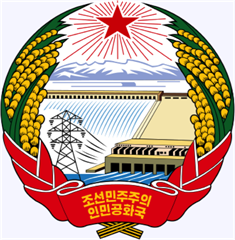
How widespread rice food culture is can be seen from national emblems. The national emblems of many communist countries, such as China and Vietnam, besides a red background and a gear symbolizing workers, are often surrounded on the outer edge by rice ears. Myanmar, Indonesia, Bangladesh and other countries where rice is a staple food also draw rice ears in one corner of their national emblems. North Korea, besides rice ears, even adds a reservoir.
Liu Lifei explained that North Korea is not rich in resources, and regards hydroelectric power as a pride of national strength and prosperity, which shows that national emblems symbolize very important national culture. However, she pointed out that the national emblems of Korea and Japan both strive for simplicity and do not have rice ears. Whether this symbolizes that the more developed a country is, the more it forgets rice, is quite thought-provoking.
Besides national emblems, local rice festivals can also reveal the ethnicity and culture of different countries. In the southern United States, the state of Louisiana holds an "International Rice Festival" every October, with a history of 77 editions. Besides selecting a rice queen and holding cooking competitions, it also has young people design related posters, encouraging participation from all age groups. Liu Lifei believes that the United States is not a rice-producing country, yet it has such a long-standing festival, and Taiwan should really follow its example.
 Taiwan also has many rice food festivals, but how to deepen their content and build a local rice food culture from them is the key to whether they can continue (Photo: provided by Liu Lifei)