Pomelo drop fruit turned from waste into treasure: Hegang community joins hands with flower improvement farm to develop essential oil processing
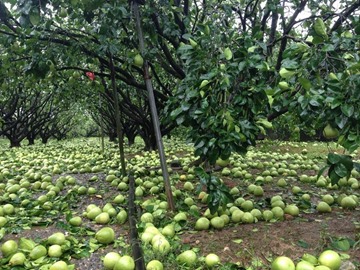
Typhoon Matmo dealt a heavy blow to Hualien's pomelo (wentan) crop, with nearly 80% of the fruit dropping in some disaster areas. The Hegang Community Development Association partnered with the Hualien District Agricultural Research and Extension Station. The association purchased 20 tonnes of fallen fruit and mobilized more than 10 members of the tribe to process it into essential oil. The station lent out a press and a distillation machine. 350 pomelos yield only 250 c.c., and the product can go on the market once the test report comes out. Association chairman Namoh Arang said that since typhoons come every year, it is essential to develop contingency measures for fallen fruit, and he hopes that more advanced machinery can be developed in the future to improve processing efficiency.
Rescuing Fallen Fruit, Hegang Develops Essential Oil Processing


Hualien Station Develops a Peeling Machine; Launch Date Undecided
Qiu Shuyuan, an assistant researcher at the Hualien Station, said that with one person working, only a bit over 10 jin of pomelo peel can be peeled in a full day. Colleagues are developing a peeling machine: you only need to score the fruit a few times with a knife and feed it into the machine, and it peels automatically. But it cannot be launched this year; the research and development progress must be taken into account before deciding when to mass-produce it.
Qiu Shuyuan said that in the past, the station's processing technology mostly targeted ripe fruit after the Mid-Autumn Festival, but it can also be applied to fallen fruit. The only problem is that fallen fruit rots easily, so the peel must be removed and processed within a short time. Since the typhoon on July 23, about one third had rotted within roughly 2 weeks. Dried pomelo peel can also be made into bath loofahs or cleaners, but care must be taken about pesticide residues.
Wu Xiangtai, a specialist in the promotion section of the Ruisui Farmers' Association, said that the association mainly sells fresh fruit and is applying this year to set up a processing plant. But if it processes the fruit into jam or food products in the future, it will still focus on ripened pomelos, because the association does not want to add too many chemical additives and the quality of the raw material must meet a certain standard; unripe pomelos could be considered for making essential oil or soap.
Ruisui produces half of Taiwan's pomelos, and the public is very concerned about whether pomelo prices will rise. But Wu Xiangtai said that because pomelos are usually harvested around 10 days before or after White Dew, and this year the Mid-Autumn Festival falls on the same day as White Dew, the sales period is shortened. Moreover, pomelos from Douliu and Madou were not affected by the typhoon and go on the market earlier. Although Hualien's pomelo volume has decreased, the retail price is still about the same; good-quality fruit sells for about 6 or 70 yuan per jin, so farmers have not made money from this and can only hope that next year the heavens will not cause trouble.